Receiving and feed entry are often owned by different teams, yet the coil crosses every space between them. Review that journey as one chain: identification, storage, orientation, unwrapping, lifting and handover. A coil-route review package puts coil condition, people, space, equipment interfaces and responsibility on the same controlled map. It is prepared before the handling arrangement is selected and deliberately leaves lifting equipment, feeder choice, crane or forklift size, tooling, controls and the final safety arrangement unresolved.
Contents
- Treat the coil path as one decision
- Capture incoming-coil conditions
- Map people, equipment and zones
- Issue the review package
- FAQ
Treat the coil path as one decision
The useful procurement question is not “Which decoiler looks suitable?” It is “Can the complete coil journey be reviewed against controlled project inputs?” That question belongs beside, but does not duplicate, the broader roll-forming line specification or the separate roof-level route decision.
Receiving boundary
Begin where custody changes. Record the delivery unit, unloading responsibility, identification method, inspection point and the status that allows the coil to move into storage. A receiving label should connect the physical coil to the ordered material record without exposing customer, supplier or project identity in public systems.
Identify who deals with visible damage, broken restraint, uncertain mass, moisture or an unreadable label. Do not let a receiving exception drift into production because everyone assumed another party had checked it. The route package should show the hold location and the person authorised to resolve the discrepancy.
Staging boundary
Temporary storage is part of the route even when a coil is expected to move quickly. Show the support method, restraint concept, permitted orientation, identification visibility, surface-protection needs and the owner of housekeeping. Avoid treating an empty floor area as an automatically suitable staging zone.
In U.S. general-industry context, OSHA 29 CFR 1910.176 addresses clear mechanical-handling passageways and stable, non-hazardous storage. That U.S. rule is jurisdiction-specific planning context, not a global coil-handling design rule and not a conclusion about this project.
Feed-entry boundary
Mark where general material handling ends and the guarded line system begins. Define the condition expected at that point: orientation, packaging removed or retained, identification confirmed, lifting attachment status, operator position and handover signal. The package should not prescribe a threading sequence unless an approved operating document owns it.
The feed-entry boundary also needs a stop rule. If the coil differs from the recorded geometry, is damaged, lacks identification or cannot enter the planned zone without an improvised movement, the review should return to the responsible owner. A smooth-looking path on a layout does not close those conditions.
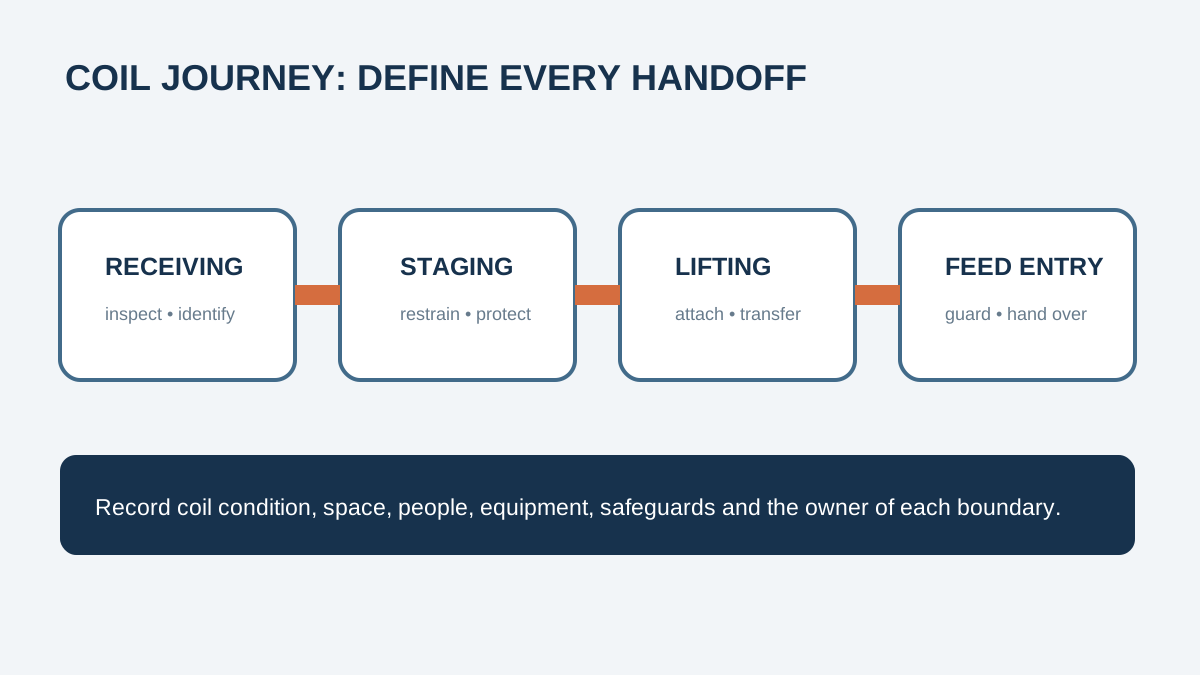
AI-assisted editorial diagram; not evidence of ARCLIFT equipment, configuration, project, capability or result. Illustrative flow; handling method, safeguards and responsibilities are project-specific.
Capture incoming-coil conditions
The route package should describe the coil actually expected, not a generic cylinder. Geometry, packaging, surface condition and orientation affect which interfaces need review. Keep each value tied to its source, revision and permitted variation.
Geometry and mass fields
Record width, inside diameter, outside diameter and mass for the proposed delivery condition. Identify whether each value comes from a purchase specification, supplier record, packing record, measurement or preliminary assumption. Use a range only when a controlled source supplies it; do not invent margins in editorial copy.
These fields help reviewers assess route geometry and lifting interfaces. They do not select a loading device or prove that any existing equipment is suitable. If deliveries can differ, show how each incoming coil will be checked against the released route package.
Eye orientation and packaging
State whether the coil is expected eye-to-sky or eye-to-side at each handoff, and record how that orientation is maintained or changed. Describe restraint, pallet or cradle, wrapping, edge protection and any packaging that must be removed before the next step. The lifting owner must decide how the package and coil are handled; the route diagram is only an interface record.
Packaging can obscure labels or damage. Define when identity is confirmed, who may remove restraints, where waste is placed and how an exception is isolated. Do not assume a supplier’s packing method remains appropriate for every intermediate movement.
Surface protection
Some coils require controls for moisture, contamination, scratches or edge damage. Record the project requirement and the evidence that supports it. State where contact points occur and who confirms that the handling arrangement is consistent with the approved material plan.
Surface protection creates a trade-off with inspection access: more wrapping may protect the material while hiding damage or identification. Resolve that interface in the project package. Do not imply that a generic protective layer establishes finished-panel appearance.
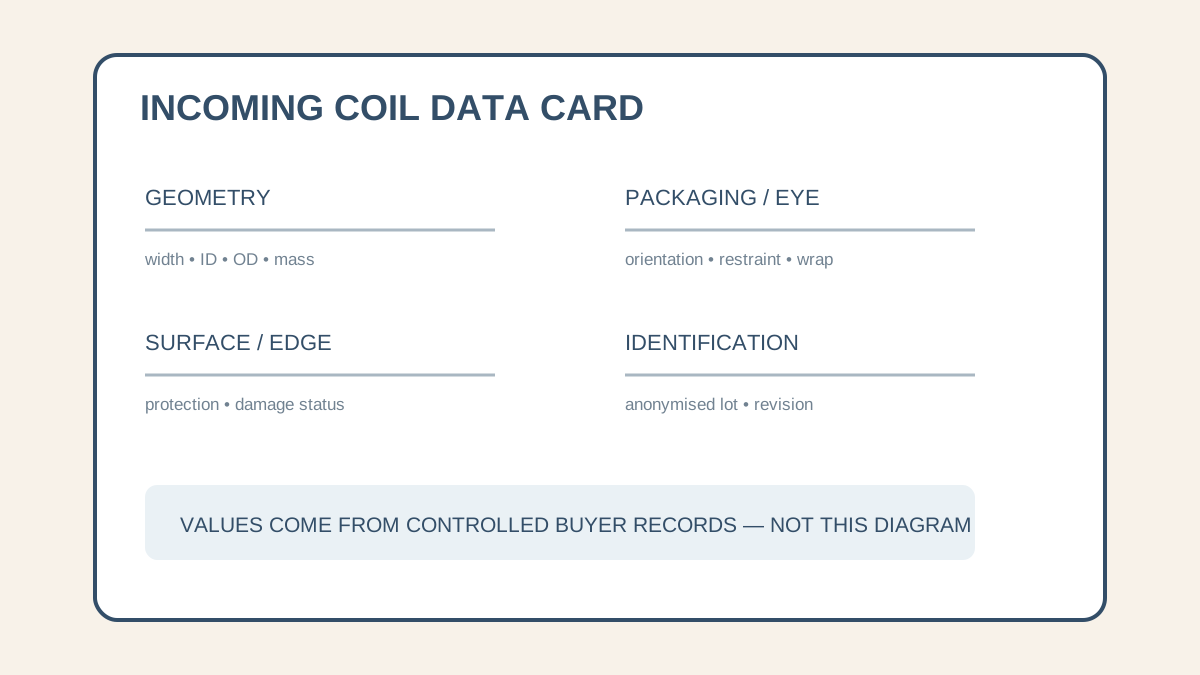
AI-assisted editorial diagram; not evidence of ARCLIFT equipment, configuration, project, capability or result. Planning template only; values come from buyer documentation and the approved handling plan.
Map people, equipment and zones
A review package needs enough information to expose conflicts without pretending to be the final lifting or safeguarding plan. Include:
- Coil geometry, mass, packaging and eye orientation linked to a controlled record.
- Receiving, temporary storage, lifting and feed boundaries with named owners.
- The travel route, turning constraints, overhead clearance and access-control points.
- Floor condition, level changes and the party responsible for structural or ground review.
- Lifting attachment and handling-equipment status, with selection reserved to the competent owner.
- Operator positions, visibility, communication and exclusion zone assumptions.
- Available power and line-isolation interface status where it affects the route.
- Destination rules, risk-review inputs and required documentation language.
- Changeover sequence status and the signed document that will define actual actions.
Lifting interface
Identify the approved lifting points or attachment method only from controlled documentation. Show where the lifting equipment approaches, where the coil is picked, how orientation changes and where the load is released. If the method is not yet selected, state that it is open and name the evidence needed.
The route package should never convert a visual icon into a rigging instruction. Equipment selection, inspection, attachment, exclusion and operation remain with the competent parties under the applicable destination rules and project risk process.
Operator positions
Map where people are expected during receiving, storage, lifting, unwrapping and feed entry. Note visibility, communication, access restriction and possible conflict with moving material or equipment. These are review prompts; the project risk assessment must define final positions and safeguards.
Separate routine operation from fault recovery. A position that is acceptable for observing a normal handoff may be inappropriate when a coil is jammed, a restraint is damaged or identification is uncertain. The approved procedure should state who stops the task and how the zone is made safe before intervention.
Changeover responsibilities
List who releases the previous coil, controls residual material, prepares the new coil, confirms identity and hands the feed state to the line operator. Where several organisations share the site, contractual names should replace vague labels such as “operator” or “supplier.”
Changeover details may depend on the final feeder and guarding arrangement, which are still unknown at this stage. Mark those steps as reserved for the approved equipment and risk documents. The package can define interfaces without inventing an operating sequence.
The central trade-off is between layout simplicity and operational truth. A single arrow is easy to read, but it can hide temporary storage, orientation changes, people, packaging and exception handling. Add only the detail supported by project evidence, and leave equipment choice open until the route, coil and responsibility records can be reviewed together.
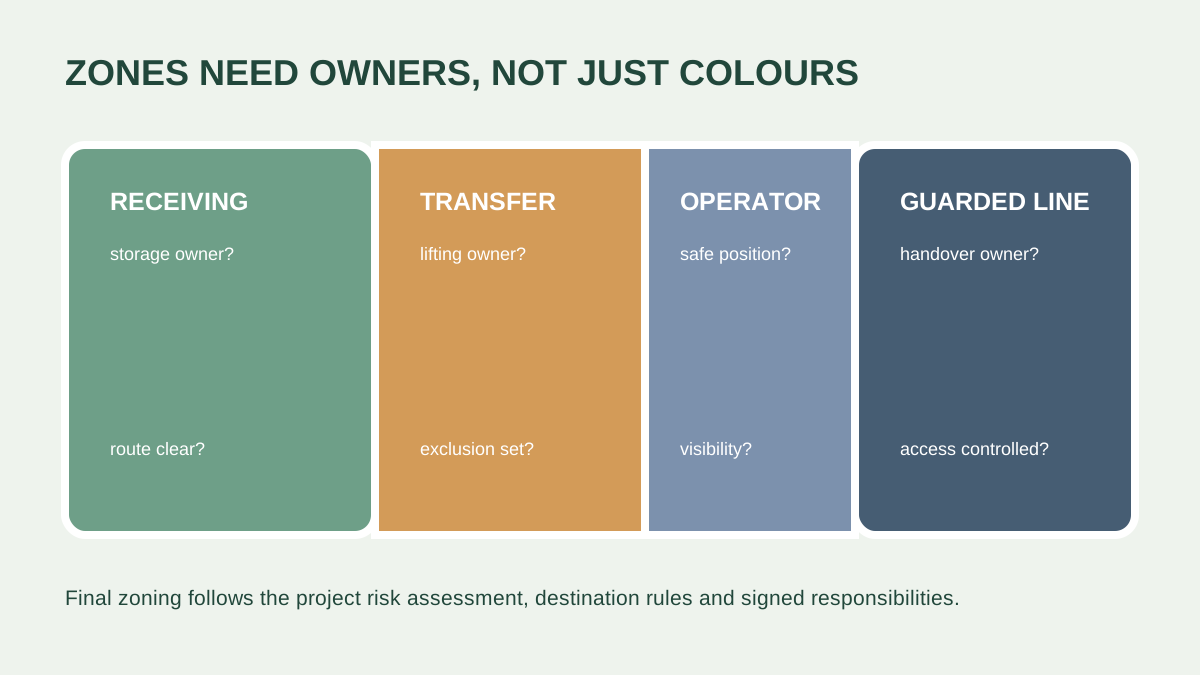
AI-assisted editorial diagram; not evidence of ARCLIFT equipment, configuration, project, capability or result. Conceptual map; contracts, risk assessment and destination rules govern the arrangement.
Issue the review package
Treat the coil-route review package as a coordination map, not an operating instruction. Lift authorisation, storage-load decisions, threading instructions and universal safety declarations sit outside its scope and are not fit uses of the package. What it does control is the route, its inputs, owners and unresolved decisions.
Route and floor constraints
Show doorways, aisles, turns, level changes, overhead restrictions, drainage features and protected areas that affect movement. Record the floor or ground information available and the owner of any structural review. Do not publish dimensions or load conclusions from an unapproved site drawing.
Plan both the normal route and the exception route. A rejected coil, damaged package or blocked aisle may need a safe holding location. If the package cannot show how the route remains controlled under those conditions, keep the arrangement preliminary.
Hazard-review ownership
The ISO 12100:2010 official standard record locates a framework for hazard identification and risk reduction. It is a scope record, not an accessible project procedure and not evidence that a particular arrangement has been reviewed.
Name the party that leads the project risk process, the parties that supply interface information and the document that closes actions. Local rules, equipment instructions and competent review remain necessary. ARCLIFT appears here only as a technical selection and supply partner.
Secure drawing transfer
Send route drawings through a secure project channel. Remove customer names, site addresses, access-control details, contacts, security boundaries, unrelated equipment identifiers and revision histories that are not required for the task. Anonymised zone labels are normally enough for preliminary discussion.
Restrict access to the minimum review group and record which revision was issued. Do not paste a project plan into a public inquiry form or reuse it as a marketing image. Any wider use requires written, scope-specific approval.
Send only the coil-route review package through a secure project channel to ARCLIFT as a technical selection and supply partner. Include coil geometry, controlled route and floor information, operator and exclusion-zone assumptions, available site power where relevant, destination documentation and the signed owner for each handoff. Keep roof height, transport access and any project-specific lifting decision in their proper review streams. This request does not promise suitability, fit, approval, quotation, configuration, availability, result or response time. The editorial visuals show planning fields only and cannot replace the final handling plan or signed risk documents.
FAQ
Which coil data is needed first?
Start with width, inside diameter, outside diameter, mass, eye orientation, packaging, surface condition and identification method. Tie each field to a controlled source and label preliminary values.
Who owns the lifting plan?
The project must name the competent party under its contracts and destination rules. A roll-forming equipment discussion or route diagram does not assign that responsibility automatically.
Does the route include temporary staging?
Yes, if the coil can pause between receipt and feed entry. Record restraint, support, identification, protection, access and the owner of the area rather than treating staging as unused floor space.
Can a generic feeder arrangement be assumed?
No. Feeder, loading, threading and safeguarding decisions remain open until coil data, route constraints, interfaces and project-specific risk documents are reviewed.