
The coil question in an elevated roll-forming purchase starts with two possible situations. You may already have a fixed material supply that the proposed equipment must assess, or you may still be free to order coils around an agreed equipment input requirement. Say which applies before comparing the lift, forming machine and feed package.
The lifting system carries a compatible roof-panel roll former. Its description alone does not say where the coil is supported, what uncoiling equipment is included or how the material-entry interface is supplied. This article connects those purchase items. The ground-side coil route guide covers receipt, staging and returned material; the profile guide explains the panel and material definition. Here the desired result is a specific support-and-feed scope question for one proposed roof/former arrangement.
Contents
- Identify the coil support and feed concept
- Separate material identity from equipment readiness
- Compare the unresolved handovers
- Prepare a coil and lift interface enquiry
- FAQ
- Ask the supplier to connect coil data to the offered package
Identify the coil support and feed concept
Name the actual objects in the proposal
Separate the material coil, packaging or transport support, uncoiling equipment, any feed equipment and the roll former. Then identify which items are included in the offer, which are already owned and which would be sourced locally. A phrase such as coil loading can otherwise conceal several separately supplied objects and services.
Use the truck-mounted forming-lift family or crawler family to identify the lifting architecture under discussion. Some source configurations show a coil-handling arrangement, but the actual quotation must state whether any such equipment is proposed for this purchase. A handling option and the equipment that supports material during forming answer different questions.
Start with fixed coil supply when the material is already chosen
If the project already has a coil order or a nominated supply, send its actual material and package data to the providers of the forming and support/feed equipment. Ask them to assess that identified input against their proposed arrangement. Distinguish records for material on hand from estimates or future order requirements; an order description and a delivered coil may need different follow-up evidence.
The useful response names the input assessed, the equipment proposed and any unresolved interface. If the provider’s offer assumes a different coil width, package dimension or material basis, the difference belongs in the comparison. Do not silently substitute it for the existing supply. The buyer can then decide whether the material order or equipment proposal needs further discussion with the responsible parties.
Request accepted input information when coil supply is flexible
If coils have not been ordered, request the configuration-specific input description for the proposed forming and support/feed package before fixing that order. Ask which material information and coil dimensions the provider needs to define that description, and which items remain subject to the final machine selection. This connects material purchasing to the actual equipment being proposed.
A flexible order is not permission to assume that any convenient coil will work. The forming requirement, support equipment and material-entry relationship still need to agree. Both buying paths therefore end at the same question: which identified coil input does the proposed package cover, and what is included to connect it to the elevated former? Neither path establishes that a ground-side or elevated feed concept is supported.
Compare the inlet relationship, not just the nearby space
A concept drawing should identify the proposed material-entry side of the roll former and the orientation of the separate coil-support or feed equipment. Link the winding and material-face information supplied for review to those references. A coil symbol beside a machine says where an object is proposed; it does not tell the reviewer which side of the machine receives material or how the two items relate in section.
For a hypothetical comparison, imagine two concept drawings for the same roof receiver and the same machine-outlet reference. One places the coil-support and feed equipment on one side of the proposed machine; the other places them on the opposite side, without defining the inlet relationship in section. Ask each provider to identify the material-entry reference and show how its proposed support position relates to the supplied winding and material-face information. The buyer can then see whether the drawings describe different feed concepts or merely leave the same relationship undefined. The diagram is a request for assessment, not a material path design.
The response can help decide whether both concepts are ready for a common supply comparison or whether one still needs a defined feed proposal. Do not assume that reversing a sketch, turning a coil or changing a winding description resolves the interface. This guide proposes none of those actions; the actual material and equipment relationship needs its own technical answer.
Identify where the proposed equipment is supported
Ask the proposal to distinguish equipment at ground level from anything included in the elevated assembly. A ground-side concept needs an assessed relationship to the elevated material inlet; a line between two symbols is not a feed design. If a provider proposes a coil or uncoiling component within the elevated assembly, its exact identity and location must also appear in the mass, mounting and configuration information.
Keep coil mass, machine mass and accessory mass separate until the responsible reviewers assess the actual assembly. The payload review explains that broader configuration question. This article does not add those figures into a capacity or select either arrangement.

Reference photograph showing a suspended blue machine module beside a red lifting structure. The module is distinct from a coil; the image does not identify an uncoiler or confirm the supplied feed scope.
Separate material identity from equipment readiness
Link each coil to the forming requirement
The material specification describes what the strip is: its designation, ordered condition, thickness basis, coating or finish, and the records linking it to the intended panel. Coil package data describe the physical input presented to supporting and feed equipment: width, inner and outer dimensions, mass information and the relevant winding or face orientation. One set of data cannot replace the other.
For a fixed supply, attach the available order and material records alongside the package information. For flexible supply, ask for those same categories in the proposed accepted-input description. This avoids a material order that matches a familiar profile name while leaving the support equipment’s physical input undefined.
Keep material acceptance separate from equipment inclusion
A provider’s assessment of the material for forming does not identify who supplies an uncoiler or local handling service. Conversely, an equipment list that includes an uncoiler does not establish that the project’s intended material has been assessed. Ask the quotation to answer both questions using the same coil and machine references.
Receipt and custody remain relevant, but belong with the project’s ground-side material plan. A delivery receipt cannot resolve a missing feed interface. If a coil is already on site, name its current location and identity in the enquiry without treating proximity to the machine as evidence of readiness.
Keep a replacement coil visible in the comparison
In a hypothetical purchase, the material grade and thickness remain the same while a proposed supplier changes the coil package dimensions. The tooling discussion may appear unchanged, but the support/feed provider still needs the revised physical data. In another purchase, the package dimensions stay the same while the material basis changes; that calls for the relevant forming review as well.
Describe the actual change to the responsible providers instead of deciding in advance that a new coil is equivalent. The commercial reply should show whether the offered equipment, input description or exclusions change. No generic rule about returned or partly used coils can answer that configuration-specific question.

Reference photograph showing coils at ground level beside raised equipment and building steelwork. It does not establish a continuous feed path or prove that any proposed material arrangement is permitted.
Compare the unresolved handovers
Keep the lifting task distinct from the forming purchase
Where a separate material-handling activity is proposed, identify who plans it and who provides the required equipment information. A roll-forming lift quotation does not automatically include every activity needed to place coils or machine components. Commercial scope should say which supporting services are included and which require a separate project arrangement.
For Great Britain context, HSE guidance on lifting-operation planning relates planning detail and competent involvement to the operation and its risks. It does not approve a coil transfer, identify suitable lifting equipment or provide a method for this project. Actual arrangements require their own responsible planning.
Compare the physical supply boundary
Use one roof receiver, one former arrangement and the same coil data when requesting two offers. The following comparison reveals scope differences that a single lift price can hide.
| Purchase item | If included by the provider | If supplied locally or unresolved |
|---|---|---|
| Coil support and uncoiling equipment | Request identity and the input description covered | Identify the local equipment and the party assessing its interface |
| Feed components | Ask where their supply starts and ends | Name the physical gap that still needs a proposal |
| Relationship to the former inlet | Request the arrangement reference and orientation basis | Provide machine and material references for assessment |
| Material-handling equipment or service | Identify exactly which item or service is priced | Show the boundary with the appointed local provider |
| Mounting, mass and power information | Ask which supplied assembly the documents describe | Identify missing data from separately supplied items |
| Destination assembly and coordination | State included activities and deliverables | Identify the integration work the buyer must arrange |
Compare two offers without assuming the same scope
Consider a hypothetical buyer with fixed coil supply. One offer includes an identified uncoiling assembly assessed against that coil data. Another expects local uncoiling equipment but has not identified it. The second offer still has an equipment-selection and interface question. The comparison should show that outstanding work beside the quoted price, without assuming that local procurement is unsuitable.
Now consider flexible coil supply. Two providers may propose different accepted input descriptions for their packages. Ask both to state the material and package assumptions before the coil order is settled. If one proposal requires a change to the roof’s material requirement, that is a separate decision for the responsible project party; it cannot be accepted as a purchasing convenience alone.
In either case, compare the supplied objects, local services and physical interfaces. An included assembly still needs its stated configuration assessed for the project. A buyer-supplied assembly still needs an integration scope. The objective is an offer that describes what connects to what, so the buyer can price the remaining work.
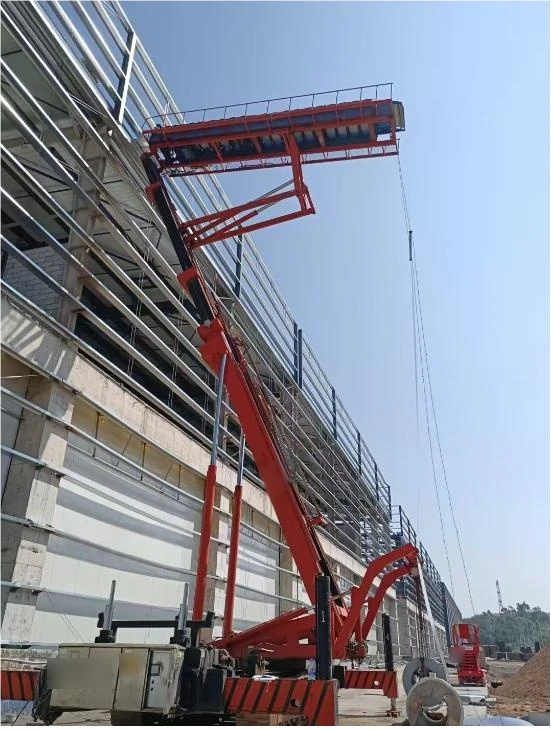
Reference photograph showing equipment and supports beside a building. It does not confirm a coil-support position, a transfer method or the suitability of the surrounding ground.
Prepare a coil and lift interface enquiry
Send a layout with explicit unknowns
Use a concept layout to show the requested relationship among material receipt, coil support, feed equipment, forming machine and roof receiver. It should identify areas and equipment without inventing a transfer path or operating sequence. A blank interface marked for technical review is more useful than a confident arrow unsupported by equipment information.
- Identify the panel profile and material records governing the proposed coil supply.
- List the coil data requested by the reviewers, including mass and dimensional evidence status.
- Name the proposed coil-support, uncoiling and feed equipment and who supplies each item.
- Mark the forming outlet height reference and roof receiving zone on the concept drawing.
- Describe the delivery and access route boundaries relevant to material and supporting equipment.
- Provide ground or floor information for proposed staging and equipment locations to the responsible reviewer.
- Identify site wind and weather responsibilities for exposed material and interrupted work.
- State available power information for separately supplied feed components without choosing connections.
- Record transport and destination assembly boundaries for coils, machines and accessories separately.
- List missing documentation, handling-service exclusions and the parties needed to close each interface.
Ask for one consistent equipment reply
Request a reply naming the coil data assessed, proposed support and feed equipment, its relationship to the former inlet, included coordination work and local exclusions. Ask whether mounting, mass and electrical information describe that same arrangement. If the proposal is preliminary, the outstanding input should be specific enough for the buyer to obtain it.
For an already ordered coil, the next decision may be whether the proposed package can advance for further technical review. For a flexible order, it may be which input description should inform material procurement. Keeping that decision explicit prevents a general compatible statement from being used to settle several different purchases.
Recognize a loading concept that is incomplete
The concept may not fit a procurement commitment if the coil location, supporting equipment, transfer responsibility or feed boundary is unresolved. This guide does not choose a lifting method, calculate capacity, permit an elevated coil or authorize material to remain during movement. A photograph of coils and machinery together cannot answer those configuration-specific questions.
FAQ
Does a roll-forming lift always carry the coil?
No such assumption should be made. The actual proposal must identify where the coil and uncoiling equipment are supported and which assembly they belong to, with configuration-specific evidence.
Is an uncoiler automatically included?
Its inclusion must be stated in the supply scope. Ask for the equipment identity, interface responsibilities and any items to be provided by the buyer or another supplier.
Can a delivery receipt establish feeding readiness?
No. Receipt records material arrival and custody. Material acceptance, equipment readiness and the authorized feed arrangement are separate decisions with their own owners.
Can a photograph establish a loading method?
No. It can show visible equipment and material in a particular scene, but it cannot establish capacities, permitted states, transfer instructions or the suitability of that arrangement for another project.
Ask the supplier to connect coil data to the offered package
Request advice on the truck-mounted forming-lift feed scope and state whether your coil supply is fixed or flexible. Attach the actual or proposed material and package data, identify the former and roof receiver, and ask which coil-support/feed equipment, interfaces and local services the offer covers. Name a crawler preference if that is the architecture under consideration. This gives ARCLIFT a defined supply question to coordinate with the relevant equipment parties.
Add the outlet height, site layout and destination so the reply addresses the same physical arrangement. The editorial comparison identifies purchasing gaps; final compatibility and material-handling decisions require the actual configuration and project review.