A profile drawing can look complete while leaving material condition, sample status and approval ownership unresolved. Put those gaps beside the controlled geometry before a tooling discussion advances. The resulting tooling-review input record answers one preliminary question: are the profile, coil, sample and responsibility inputs mature enough for a project-specific proposal to begin? It stops there. Line selection, feed and electrical design, roof-system approval, panel performance and acceptance results remain outside this record.
Contents
- Define the finished-panel decision
- Build the profile and coil input record
- Request a tooling-review package
- Set the release boundary
- FAQ
Define the finished-panel decision
The buyer is not asking a generic machine to “make this shape.” The buyer is asking whether a controlled set of inputs is mature enough to enter a tooling proposal. That distinction keeps a profile review separate from the broader roll-forming line specification and from the site decision described in the roof-level long-panel guide.
Separate roof-system approval from line review
A roof system has interfaces that extend beyond the roll-formed shape: supporting construction, clips or fasteners, laps, end conditions, penetrations, drainage, installation method and the destination’s approval path. A tooling review can consider whether a documented profile and material can be taken into a project proposal. It cannot transfer responsibility for the roof assembly to the line discussion.
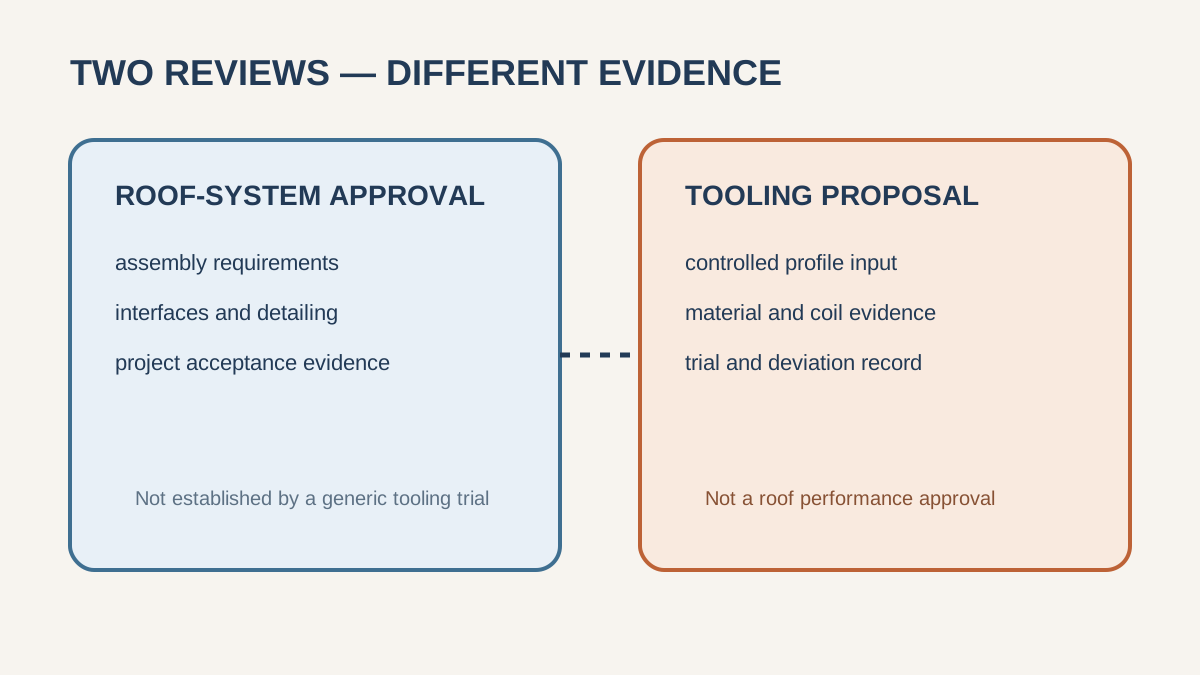
Keep two approval tracks on the record. One track owns the roof-system requirements and the evidence demanded by the project. The other owns the tooling proposal, trial conditions and deviations. If those tracks use the same word—such as “tolerance” or “approved”—identify which document and which party give that word meaning.
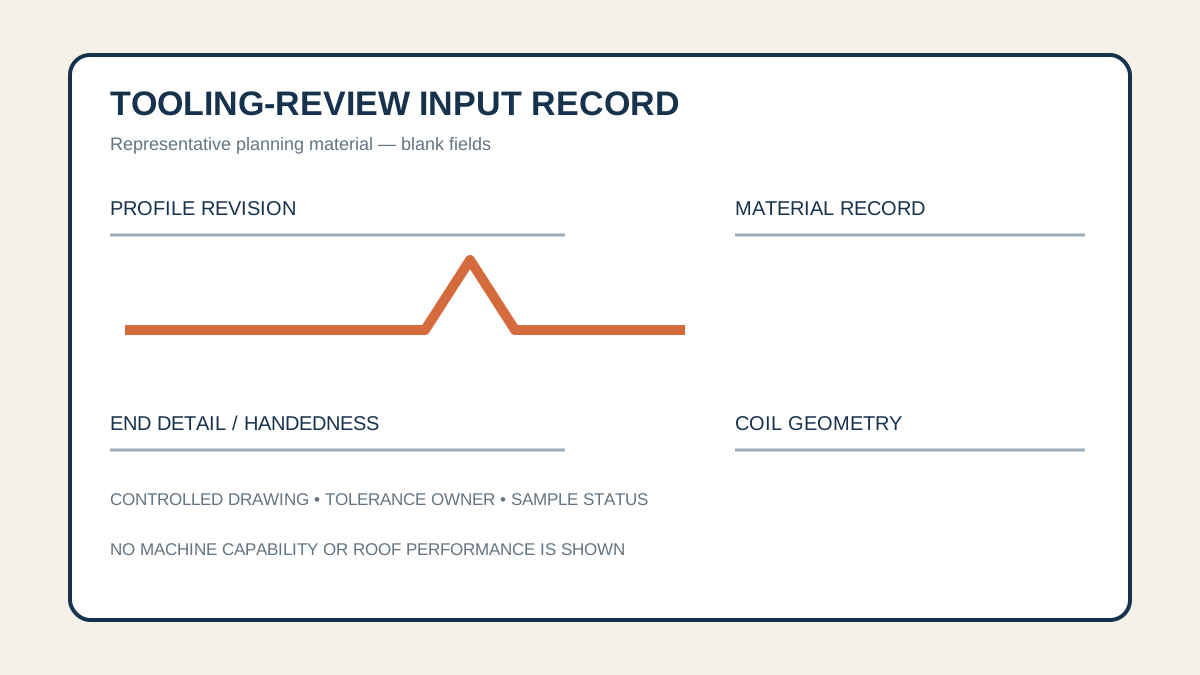
Identify the controlled profile revision
Give the profile drawing a revision, date, units and document owner. Mark the nominal cover width, overall developed geometry, rib and return features, stiffeners, hems, seams and any region that must mate with another component. A dimension without its datum or interpretation rule can create competing readings even when the number itself is clear.
Do not replace a controlled drawing with a marketing image, sample photograph or unversioned CAD export. A photo can help a reviewer understand intent, but perspective and lens distortion make it a poor measurement record. If the profile is derived from a roof-system document, state which revision controls the tooling request and which later changes require a new review.
Record handedness and end-detail intent
Some profile features are symmetric; others are not. Record the viewing direction, panel handedness and how the drawing relates to the feed direction. Describe whether the cut end is square, shaped, notched, punched or left for another process, but do not assume that a downstream operation is part of the roll-forming scope.
End details also affect sample planning. A short sample intended only to inspect a cross-section is different from a sample intended to review cut-end condition or an assembly interface. Name the intended observation instead of asking for a sample that is expected to prove every downstream result.
AI-assisted editorial diagram; not evidence of ARCLIFT equipment, configuration, project, capability or result. Illustrative input sheet; not an approved ARCLIFT profile, tooling drawing or performance commitment.
Build the profile and coil input record
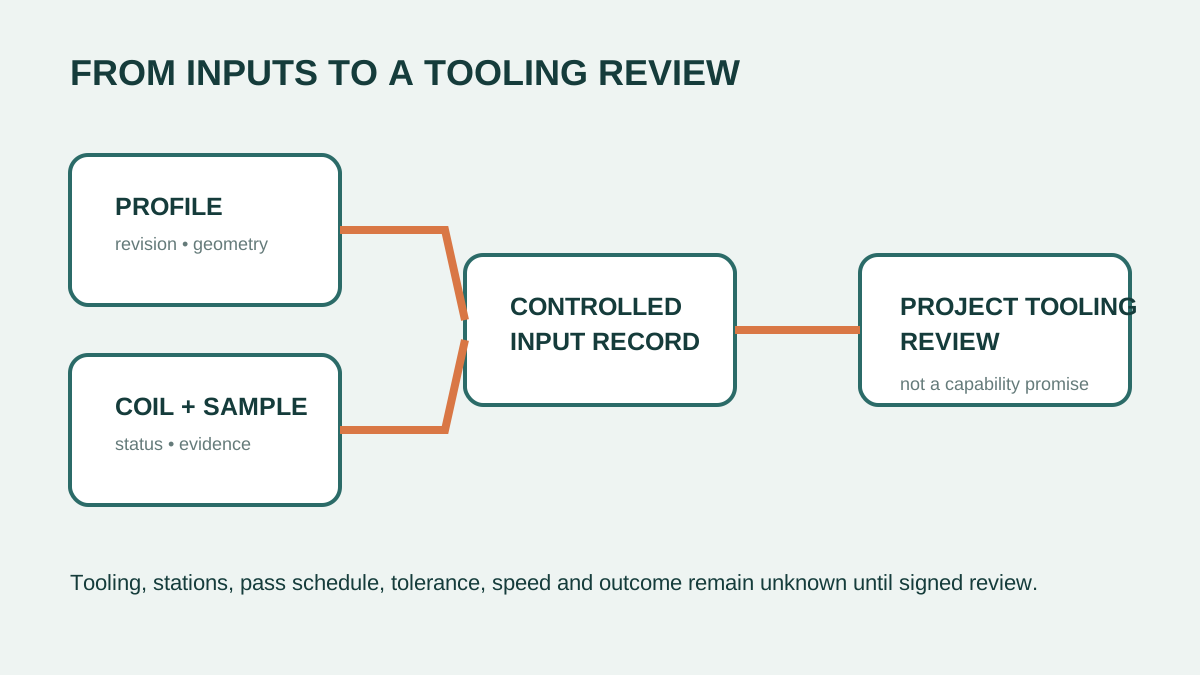
The record should connect the finished-panel definition to the actual material proposed for review. A nominal profile on one page and an unrelated coil label on another leave the reviewer to infer the link. Put the controlled identifiers, stated conditions and unresolved questions together.
Cover width, thickness and tolerance fields
Separate nominal values from acceptance conditions. Record the drawing’s cover width and the material thickness basis used by the project, then identify where tolerance requirements originate. Do not invent a universal tolerance because a similar profile appears elsewhere. State whether coating is included in a quoted thickness and whether the value comes from a purchase specification, mill record, roof-system document or preliminary assumption.
Add fields for cross-section measurement method, straightness, camber, twist, surface marking, burr and cut-end observations only when the project needs them. Every field should have an owner, units and a planned evidence source. An empty field marked “project team to confirm” is safer than a convenient number without provenance.
Grade, yield-data and coating evidence
Material designation is more than a familiar standard number. Where ASTM A792/A792M is called up, its official record distinguishes grades or designations, mechanical properties, coating mass and bend testing. The current project still needs to identify which designation and ordered condition apply. The ASTM A792/A792M-25a official standard record is useful for locating scope; it is not the buyer’s material certificate and not an ARCLIFT compliance claim.
Direction can matter in rolled sheet. The NIST material-performance page describes research around direction-dependent material behaviour. Use that as a reason to request project material data, not as a basis for prescribing a test or predicting forming behaviour.
Capture the ordered grade or designation, available yield and tensile information, elongation basis, coating description, surface condition and certificate status. If any value is provisional, label it provisional. Do not claim equivalence between ASTM, EN or another system unless project documentation and a competent reviewer establish the comparison.
Coil width, ID, OD and mass fields
The coil record should provide width, inside diameter, outside diameter and mass as controlled project inputs, plus the evidence source and variation expected across deliveries. Those fields inform later handling and feed reviews; they do not by themselves choose a decoiler, loading device or line.
Also record edge condition, telescoping or packaging restrictions, eye orientation, identification method and surface-protection needs. Keep lifting and storage decisions in their own controlled package. The companion coil-route planning article addresses that boundary without turning this tooling record into a lifting plan.
AI-assisted editorial diagram; not evidence of ARCLIFT equipment, configuration, project, capability or result. Project-review workflow; final suitability requires signed project documentation.
Request a tooling-review package
Before issuing the record, check that it is useful to each reviewer and does not smuggle assumptions into the proposal. A concise release checklist can include:
- Controlled profile geometry, material thickness and drawing revision with named owners.
- Roof assembly requirements that affect the panel, clearly separated from tooling responsibility.
- Coil width, ID, OD, mass, edge and feed orientation with evidence status.
- Sample panel and sample coil status, including the observation each sample is intended to support.
- Cut length, end-detail intent and downstream process boundaries.
- Available site power or electrical-interface status, explicitly reserved for a separate review.
- Material transport, storage and protected route conditions where they affect sample integrity.
- Destination documentation requirements, units, language and applicable project approval path.
- Secure access rules for drawings and a redacted public identifier rather than customer or site identity.
Sample-panel and sample-coil status
State what physically exists. A reference panel may be available, unavailable, damaged, coated differently or taken from an earlier revision. A sample coil may match the intended purchase condition, represent only a trial material or not yet be ordered. Tie each sample to its record; never imply that visual similarity proves chemical, mechanical or coating identity.
If a trial is proposed, define what material will be used, who supplies it, how it is identified and what observations will be recorded. A trial on substitute material can still answer a limited setup question, but only if the record says what it cannot answer.
Unknowns reserved for signed tooling
Roller material, number of stations, pass schedule, drive arrangement, cut concept, line speed, profile tolerance and the likely outcome remain unknown until project-specific review. Do not fill those blanks from another machine page or from the ARC-RF8 product context. A product page can orient the discussion; it is not a signed tooling schedule.
Reserve these decisions in an “open items” table with owner, needed evidence and closure document. This prevents preliminary discussion from being quoted later as a fixed configuration. It also shows which unknown blocks a proposal and which can remain open until a later gate.
Drawing and document ownership
Record who may issue, revise and approve each input. The profile owner may not be the roof-system approver; the material purchaser may not own the tooling trial; the equipment supplier may not own destination approval. A document matrix should make those separations visible.
Define the permitted distribution, file format, units, revision convention and retention expectation. Use anonymised document identifiers during preliminary review. Customer names, project locations, contacts and traceable drawing identifiers should not appear in public forms, analytics or editorial material.
The evidence trade-off is deliberate: a compact input record speeds review only when it preserves provenance and uncertainty. Adding unverified detail makes the package look complete while weakening it. Leaving a controlled blank, naming the owner and stating the closure evidence creates a clearer interface than copying a value from an unrelated line.
AI-assisted editorial diagram; not evidence of ARCLIFT equipment, configuration, project, capability or result. Conceptual responsibility split; contracts define final responsibilities.
Set the release boundary
This preliminary record may not fit any decision that authorises production, purchases coil, approves a roof system or releases a machine. Its useful boundary is earlier: it shows where evidence exists, where a conditional inference is reasonable and where the project must stop.
Trial evidence versus roof performance
A tooling trial can record observations under defined material, configuration, method and measurement conditions. Those observations do not establish watertightness, wind resistance, fire behaviour, corrosion performance or installation quality for a roof. Those outcomes depend on the complete roof system, project conditions and the applicable approval process.
Write the trial objective narrowly. “Record cross-section measurements against the signed profile drawing using the agreed sample” is bounded. “Prove the roof panel works” is not. If an observation is outside the trial method, mark it outside scope rather than converting it into a favourable conclusion.
Approval gates and deviations
Name the gate that allows the proposal to advance: complete input record, controlled material evidence, drawing ownership, trial protocol or another signed condition. A deviation should identify the affected revision, observation, decision owner and permitted next step. Silence is not closure.
Changes to profile geometry, material condition, coating, thickness basis, sample source or acceptance method should trigger a documented review. Whether a change requires new tooling work or a new trial is project-specific; the article cannot decide it in advance.
Secure and redacted data transfer
Use a secure project channel and send only the minimum material needed for the tooling-review input record. Redact customer and project identity, commercial details, contacts, site security information and unrelated drawing layers. Use controlled permissions rather than public upload links.
Keep the public discussion generic. A fictional diagram may illustrate field names, but it must not reproduce a project profile, certificate number or drawing identifier. Written, scope-specific approval is required before any project data is reused beyond its controlled purpose.
Send only the tooling-review input record through a secure project channel to ARCLIFT as a technical selection and supply partner. Include the controlled profile, material and coil evidence, roof geometry boundary, sample status, destination documentation and the signed owner of each open item. If height, site access, floor or route conditions later affect transport or a roof-level work zone, place them in their own project-specific review rather than this record. This request does not promise suitability, fit, approval, quotation, configuration, availability, result or response time. Every editorial visual on this page is explanatory and cannot replace final signed documents.
FAQ
What belongs in a tooling-review input record?
Include the controlled profile revision, material and coating evidence, coil geometry, handedness, end-detail intent, sample status, acceptance sources, document owners and open items. Label assumptions and unknowns rather than converting them into fixed values.
Does a profile drawing prove line capability?
No. A drawing defines an intended geometry only when its revision, dimensions and interpretation are controlled. Line configuration and outcome remain subject to project-specific tooling review, material evidence and any agreed trial.
Why is coil data needed with the profile?
Material condition and coil geometry connect the finished shape to a real project input. They also reveal questions that belong in separate handling and feed reviews. The data does not, by itself, select equipment.
Who approves roof-system performance?
The signed project documents must identify that authority. A tooling supplier’s trial record and an equipment supply discussion do not replace the roof-system designer, relevant specialists, project owner or destination approval process.