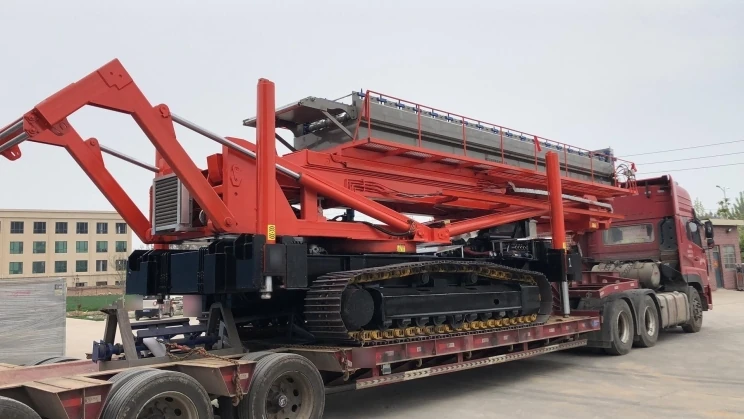
Choosing a roll-forming lift for several roofing projects means testing one proposed asset against several real tasks. Do not create a typical project by combining the easiest route, lowest roof and largest standing area from different sites. Keep each project’s panel requirement, former, receiver and logistics together, then identify the constraint that most strongly affects a common purchase.
The lift positions a compatible roof-panel roll former near the receiving level. Suitability remains configuration- and project-specific. This guide creates a must-fit, optional and unknown project matrix; it does not promise one versatile model for all future work. The relocation guide follows positions within a site, which is a different decision from buying for independent projects.
Contents
- Separate committed projects from possible uses
- Build a project-by-project fit matrix
- Test one asset against conflicting requirements
- Request a shortlist around the strongest constraints
- FAQ
Separate committed projects from possible uses
Name the actual panel task at each destination
For every known project, identify the panel profile and material basis, forming machine owned or needed, roof zones and receiving relationship. Similar building height does not make two tasks equivalent. A project can differ in outlet direction, material supply, available ground position or line arrangement even when the roof elevations appear similar.
Keep those facts in one project row with its drawings and source dates. This allows the equipment provider to respond to an actual site rather than a collection of disconnected maxima. Where the roof receiver remains undecided, label the missing relationship instead of treating the nearest edge as the intended destination.
Classify must-fit, optional and unknown uses
A must-fit project is one the buyer decides the purchase must address; that label is a commercial requirement, not a technical finding. An optional project can remain an alternative opportunity. Unknown means the task or evidence is not sufficiently defined to compare. These categories help decide which unanswered questions control the purchase.
Do not promote an optional future job into assured utilisation because it makes ownership look attractive. Equally, an unknown future site should not automatically exclude a useful asset from the current task. The buy-or-rent discussion helps organize the separate question of equipment access and ownership obligations.
Keep independent projects independent
Different destinations can involve different carriers, local vehicle arrangements, site providers and support constraints. A permitted state or reviewed position at one site does not become permission at another. The buying comparison needs the information necessary for each project’s review, without presuming that earlier conclusions transfer unchanged.
Project timing also matters. One asset cannot be assumed available to two simultaneous tasks. State actual known periods and uncertainties so the proposed supply route can be assessed honestly. This article gives no changeover durations or number of jobs that a machine can serve.
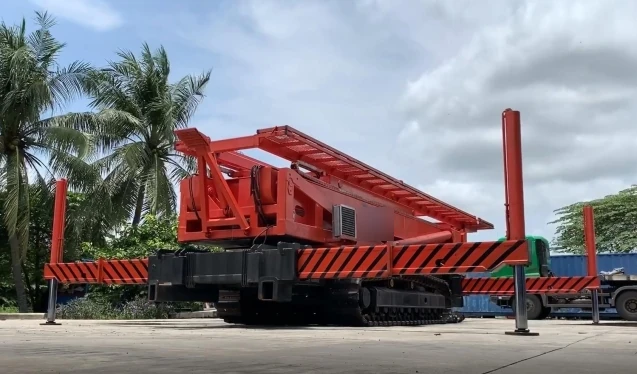
Reference photograph of folded crawler equipment with supports deployed. It does not verify a travel-ready state, condition assessment or suitability for another project.
Build a project-by-project fit matrix
Use the same questions without erasing differences
The matrix below is a blank purchasing aid. Fill each project cell with the actual requirement and the equipment provider’s response reference. Keep must-fit, optional and unknown classifications visible. A shared requirement should mean the same physical question in each row, not merely the same label.
| Comparison subject | Project A: must-fit inputs | Project B: must-fit inputs | Project C: optional or unknown inputs |
|---|---|---|---|
| Panel and former | Actual profile/material and identified line | Actual profile/material and identified line | State what is known and missing |
| Outlet and receiver | Coordinated height and direction references | Coordinated height and direction references | Receiver decision still needed |
| Access and base | Actual route and carrier or vehicle boundary | Actual route and carrier or vehicle boundary | Unmeasured route remains unknown |
| Working position | Support area and relevant ground information | Support area and relevant ground information | Future site cannot be assumed equivalent |
| Feed and services | Material supply space and power boundary | Material supply space and power boundary | Proposed options require separate scope |
| Project availability | Known need and transfer assumptions | Known need and transfer assumptions | Possible period, not assured utilisation |
| Local support | Identified provider scope and information needs | Identified provider scope and information needs | Unconfirmed attendance or resources |
Compare height references correctly
The roof receiving level, former outlet and equipment platform are different points. Record the actual reference used for every project and ask the supplier to answer that same relationship. Choosing the highest number from several drawings without reconciling their datums can create a requirement that does not describe any real task.
The roof-zone survey guide develops the detailed measurement input. In a fleet purchase, its output should remain attached to the relevant project. A model suffix cannot substitute for those relationships, and a capability response for one configuration should not be applied to another former without review.
Keep the largest constraint tied to its own site
The narrowest entrance may belong to a site with generous working space; the most restricted standing area may belong to a site with easy carrier access. Keep both descriptions intact. Ask whether one actual candidate can address each complete set of conditions rather than combining them into an imaginary site and asking for a general-purpose model.
The HSE workplace-route guidance offers Great Britain context for routes, obstructions and vehicle interactions. It does not establish machine clearance or approval at these destinations. Each route still needs its actual equipment and responsible assessment.
Test one asset against conflicting requirements
Hypothetical projects with different priorities
Imagine a contractor has two defined projects. Project A has a known carrier handover and space beside its receiver, using the contractor’s existing former. Project B needs a different panel task and has a constrained approach whose final survey is available, but its intended former remains undecided. A possible Project C has only a preliminary roof drawing. These are hypothetical buying conditions, not ARCLIFT project cases.
For A, request a candidate response around the existing former and site geometry. For B, identify the line decision still needed and ask how it affects the common-equipment enquiry. For C, preserve the missing task inputs without treating its rough drawing as a capability requirement. The comparison should reveal which project can be answered now and which needs another input.
Choose the strongest common-constraint shortlist
List the constraints that a candidate must address for every must-fit project. The common shortlist might require an identifiable former interface, a reviewable transport route and support position, and a response to each site’s outlet relationship. These are screening subjects, not numerical limits supplied by this article.
If no candidate response addresses all must-fit tasks, identify the precise conflict. The buyer can then compare a different asset scope, another production route for one project or separately sourced equipment. It should not relax a real requirement silently simply to retain the preferred machine. The useful output is the unresolved task and an explicit alternative to investigate.

Reference photograph showing a suspended blue machine module. It does not verify its identity, compatibility, attachment points or an approved lifting method.
Compare a common asset with project-specific alternatives
The trade-off is between a common equipment arrangement and the separate logistics, integration and scope required for different tasks. Keeping one asset may simplify some ownership information, while project-specific alternatives may address different requirements. Neither statement establishes a financial advantage, availability or reduced workload without actual proposals.
For a crawler candidate, include separate carrier and transfer questions in every project’s row. For a truck-mounted candidate, include actual vehicle and destination integration questions. The crawler-versus-truck guide explains the architecture choice; the multi-project matrix tests whichever actual candidate is proposed across the required jobs.
Keep options from becoming unconfirmed versatility
A proposed alternative former, feed item or work deck needs its own identified configuration and scope. An optional ceiling-work deck in archival equipment descriptions does not establish that every forming lift can be converted for personnel use. If the buyer also needs installation access, state it as a separate product and review question.
Likewise, a future panel profile may require a different line arrangement. Do not describe it as covered because the lift still carries a forming machine in principle. Identify which equipment changes, what current information exists and which confirmation remains necessary. The configuration-change guide develops that follow-up.
Request a shortlist around the strongest constraints
Ask for a response per project
Send the matrix with the project drawings and classify each task clearly. Ask the provider to identify the proposed configuration for each response, shared assumptions and differences. The reply should say which tasks the present information supports investigating and which missing input prevents a conclusion. A single suitable-for-all sentence is less useful than an intelligible per-project response.
The crawler forming-lift family is an orientation point for tracked equipment. A family page does not establish multi-project compatibility. The final shortlist should be attached to actual configurations and the known task set rather than to a preferred catalogue image.
Assemble a focused fleet-purchase brief
- List each project as must-fit, optional or unknown, with its actual destination.
- Identify the panel profile, material and former arrangement for every defined task.
- Attach the outlet height and roof receiving geometry for each work zone.
- Describe site access and separately relevant ground or floor support information.
- Identify transport handovers, chassis candidates or carrier resources by project.
- State power and feed-equipment boundaries and their local providers.
- Separate known equipment periods from possible future work and conflicting dates.
- Ask which configuration documentation and follow-up input control the common shortlist.
Preserve the exception in the buying decision
A candidate that addresses A and B but leaves optional C unknown has a different scope from one that answers all three. State that difference accurately. If B is mandatory and remains unresolved, keep its missing former decision visible in the purchase review. The number of rows marked discussed should never replace the actual project questions.
Recognize when one asset is not yet a complete answer
The common-asset proposal may not fit when must-fit projects require unresolved machine combinations, unavailable routes or competing periods that the actual offer cannot address. This guide establishes no universal model, assurance of future compatibility, utilisation threshold or fleet size. A shortlist is a request for defined project responses, not permission to operate at every destination.

Reference photograph of elevated apparatus, building steelwork and ground-level coils. It does not verify active production, current performance or the complete equipment arrangement being offered.
Request project-by-project supply advice
Send ARCLIFT a multi-project forming-lift enquiry, including the matrix and your must-fit requirements. Attach former information, height and roof-zone references, site routes, destination support inputs and transport assumptions. Ask which common configuration and alternatives merit further investigation. ARCLIFT coordinates technical selection and supply; final conclusions remain project-specific. These editorial photographs show reference scenes and do not establish a versatile model or coverage of future contracts.
FAQ
Should the buyer select the highest model reference?
No capability conclusion follows from a model suffix. Use the actual outlet relationships, machine combinations and site constraints, then request configuration-specific responses.
Can unknown future projects be included?
Include them as unknown or optional opportunities, with missing inputs identified. They should not silently become either assured utilisation or confirmed compatible work.
Does site relocation evidence cover another project?
Not automatically. An independent destination can change transport, former, geometry, support and local responsibilities. Keep its own requirements and review scope visible.
What if no proposal answers every mandatory project?
Identify the controlling conflict and request explicit alternatives. A different production route or separately scoped asset may need investigation; this guide does not choose the commercial or technical solution.