Vehicle integration begins with ownership, not with choosing a truck from a brochure. The chassis, body or attachment, equipment module, road route, site route and work zone each bring a different interface owner. Gather those inputs in a preliminary chassis-interface package so the relevant parties can decide whether integration review can begin. Loads, stability, road use, registration, compliance, final architecture and chassis fit remain undecided.
Contents
- Set the vehicle-use boundary
- Collect controlled chassis inputs
- Map integration interfaces
- Release a review package
- FAQ
Set the vehicle-use boundary
The buyer’s immediate question is not “Which truck should we order?” It is “Which use case, documents, interfaces and responsibility owners must exist before vehicle integration can be reviewed?” This is narrower than the crawler-versus-truck architecture comparison and separate from the modular shipping discussion.
Road, site-only or mixed use
State where the assembled concept is expected to move: public roads, controlled industrial roads, a closed construction site or a mix. Record whether equipment remains attached during movement, changes state for transport, or is transferred to another support arrangement. These are inputs, not legal conclusions.
The route category affects which parties and destination rules enter the review. A site-only assumption should not be made merely because public-road use looks difficult; the actual logistics plan may still require road transport. Likewise, a road-capable base vehicle does not make the completed integration road-authorised.
Decision owner
Name the party that owns the operating concept, the vehicle record, body or attachment design, equipment interface, final integration, destination inspection and work-zone plan. ARCLIFT’s permitted role is limited to integrated equipment supplier or technical selection and supply partner.
Avoid a single “supplier” box when responsibilities are split. The chassis provider may control frame information; an integrator may control attachment and calculations; a local specialist may control registration steps; the project owner may control routes and work zones. The package should make these interfaces explicit.
Destination-rule confirmation
Identify the country, region and intended use classification through a controlled project record. List the authority, appointed specialist or integrator responsible for determining applicable vehicle, machinery, road and site requirements. Do not use an international standards page as a substitute for destination rules.
For preliminary work, the public copy needs only an anonymised destination category. Keep registration documents, vehicle identifiers, addresses and named contacts out of public forms and analytics. Detailed records belong in a secure project channel.
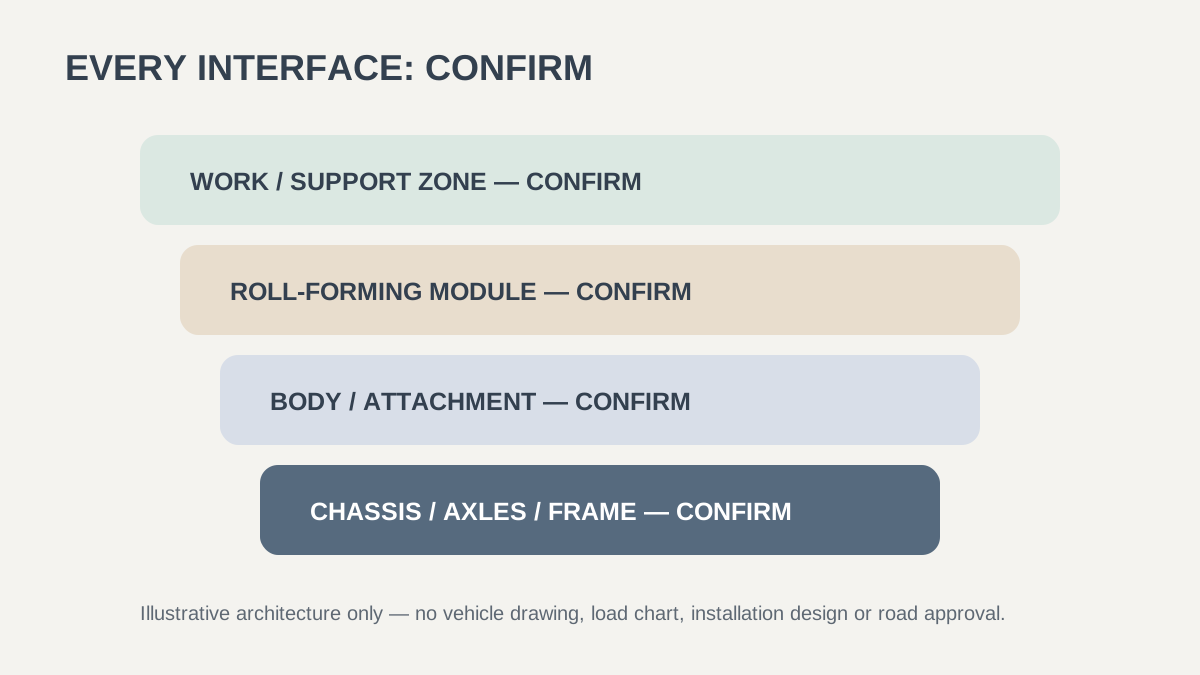
AI-assisted editorial diagram; not evidence of ARCLIFT equipment, configuration, project, capability or result. Illustrative architecture, not an approved vehicle drawing, load chart or installation design.
Collect controlled chassis inputs
Vehicle integration depends on controlled data, not a model nickname. Gather the current build record, frame and axle information, proposed equipment interface and responsibility status. Label every preliminary field.
Build and incomplete-vehicle records
Request the documents appropriate to the destination and the vehicle’s stage of completion. These may identify the base vehicle, build status, permitted modification boundaries, body-builder instructions and certification responsibilities. The designated integrator and local specialists decide which records apply.
A sales brochure or online specification is not a controlled build record. Confirm revision, issuing organisation and relationship to the actual vehicle. If a chassis has already been modified, the package should identify who owns the updated configuration documentation.
Frame and axle data
Collect controlled frame drawings, material or modification restrictions, wheelbase and axle information, suspension and tyre records, available interface points and manufacturer or integrator instructions as relevant. Do not publish those records or derive a permissible equipment arrangement in the article.
Axle reactions, centre of gravity, reinforcement, support reactions and stability remain calculation outputs. Mark the responsible specialist, required inputs and closure document. A preliminary equipment envelope may support discussion, but it cannot replace the vehicle and integration calculations.
Anonymised preliminary identifier
Use an anonymised project and chassis identifier during early review. It should connect documents inside the controlled workspace without exposing the customer, location, registration, VIN or sensitive commercial data. Keep a separate access-controlled mapping if the project needs one.
A VIN should be requested only when genuinely needed through the designated integrator’s controlled documentation process. Limit access and record the purpose. Do not put a VIN, partial VIN or traceable vehicle label into public inquiry fields, diagrams, marketing assets or analytics.
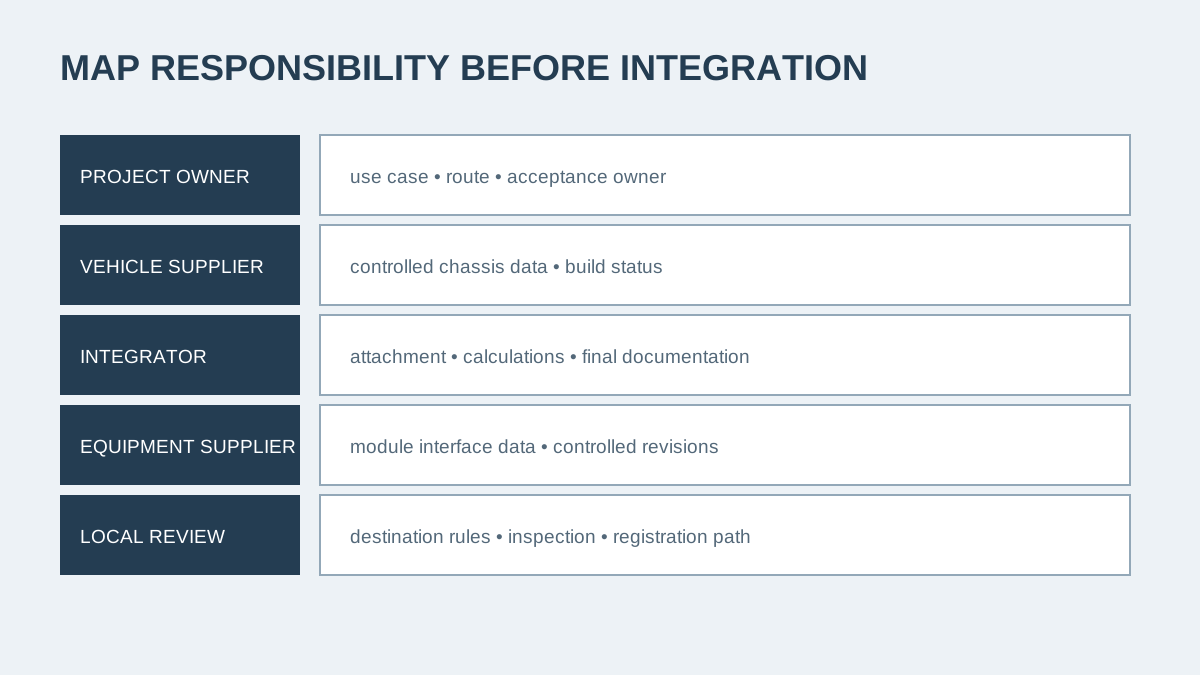
AI-assisted editorial diagram; not evidence of ARCLIFT equipment, configuration, project, capability or result. Example coordination map; contractual and legal responsibilities vary by destination and project.
Map integration interfaces
The preliminary package should show what must connect without calculating the final vehicle. Include:
- Intended road, controlled-site or mixed transport use and the decision owner.
- Controlled chassis, frame and axle documentation with revision status.
- Proposed module envelope and mass evidence, with all reactions and suitability unresolved.
- Body or attachment boundary and the integrator responsible for final design.
- Work/support zone, roof interface and operating geometry assumptions.
- Public-road, gate and internal-site route constraints with local review owner.
- Ground or floor condition and the specialist responsible for support review.
- Equipment power and control interface status where it affects vehicle integration.
- Destination inspection, registration and other documentation requirements.
- Secure identifier process and signed responsibility map for every open interface.
Body and attachment boundary
Define which structure belongs to the chassis, body builder, equipment module and any support system. Identify proposed attachment regions only from controlled documents. Do not show drilling, welding, reinforcement or fastener detail unless the authorised integrator has issued it.
The interface package should state what data each party supplies: envelopes, masses, reactions, prohibited zones, service access and change-control conditions. It should also state who performs the calculations and who releases fabrication information.
Work and support zone
Map the transition from transport state to work state. Show the area that may be needed for positioning, support, material handling, exclusion and operator access. These are planning zones, not equipment dimensions or a site approval.
The work-zone review should connect to roof height, panel route, wind-management responsibility, ground information and adjacent operations where relevant. The roof-level route guide addresses that wider workflow. Do not bury those project constraints in a vehicle drawing.
Route and access constraints
Separate public-road restrictions, site-gate access, internal route and final work-face positioning. Record turning, gradient, overhead, width, surface and traffic-control questions only as project inputs until local owners provide controlled information.
A route that works for a base truck may not work for the completed integration. Conversely, a conceptual module envelope cannot establish the final vehicle dimensions. Keep both records preliminary until the integrator closes the configuration.
The package must balance early coordination with controlled uncertainty. More vehicle detail can improve interface review, but copying unverified brochure values creates false precision. The better trade-off is to name each needed input, its source and owner, then reserve loads, legality, registration and route conclusions for the appointed specialists.
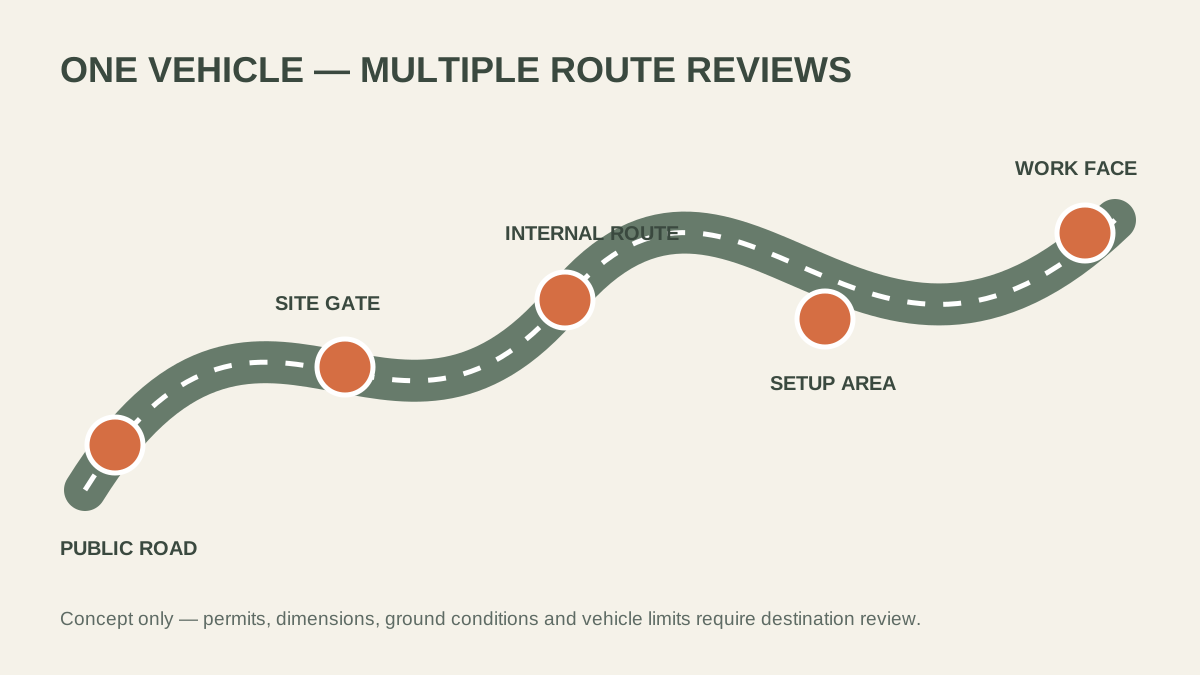
AI-assisted editorial diagram; not evidence of ARCLIFT equipment, configuration, project, capability or result. Concept only; routes, permits, ground conditions and vehicle limits require local verification.
Release a review package
Ordering a chassis, fabricating attachments, issuing a load chart, registering a vehicle, approving a route and authorising operation do not fit within this preliminary package. It coordinates questions rather than deciding them. Final decisions require the actual chassis, equipment and destination evidence.
Integrator responsibilities
The integrator should be identified before detailed configuration begins. The package should state who controls vehicle data, attachment design, calculations, final-stage documentation, machinery interfaces, installation records and change control. Do not imply that the equipment supplier automatically owns those duties.
Keep contractual and statutory roles separate. A party may coordinate commercial supply without being the legal vehicle modifier or engineering authority. Record the exact role and the document through which it is exercised.
Local inspection path
A dated U.S. example, NHTSA interpretation 23064.rbm, discusses how a pre-sale alteration in its specific U.S. context can affect an alterer’s FMVSS certification responsibilities. It is not current transaction advice, not a global rule and not a determination for an ARCLIFT-related chassis.
Use that example only to prompt an early question: who owns destination-specific vehicle review after modification? The answer must come from current local rules, the actual transaction and competent advisers. The ISO 12100:2010 official record can locate a machinery interface-risk methodology, but it does not provide vehicle calculations or approval.
Secure VIN process
Define why a VIN is needed, who requests it, who may access it, where it is stored and when it is removed from working copies. Preliminary review should use anonymised identifiers whenever possible. Drawings should also be stripped of customer, site, contact and unrelated vehicle information.
Share only the minimum necessary fields through the secure project channel. Do not paste vehicle documents into public forms or reuse them for editorial graphics. Written, scope-specific permission is needed for any use outside the controlled project purpose.
Send only the preliminary chassis-interface package through a secure project channel to ARCLIFT as a technical selection and supply partner. Include the anonymised chassis record, proposed module boundary, transport and site route, ground or floor condition, roof-height and work-zone constraints, destination documentation and the final signed responsibility map. Use the controlled VIN process only when the designated integrator genuinely needs it. This request does not promise suitability, fit, approval, quotation, configuration, availability, result or response time. The editorial visuals are fictional coordination aids and cannot replace vehicle calculations, local review or signed integration documents.
FAQ
Which chassis documents are needed?
The designated integrator and destination reviewers should define them. Preliminary inputs usually include controlled build status, frame and axle records, body-builder instructions, proposed module data and the documents that assign modification responsibilities.
When is a VIN needed?
Only when a controlled review genuinely requires identification of the actual vehicle. Request it through the designated integrator, restrict access and keep it out of public forms, diagrams and analytics.
Who owns final-stage integration?
The contracts, transaction stage and destination rules determine that role. Name the responsible integrator or other authorised party explicitly; do not infer it from the equipment-supply relationship.
Does local chassis supply settle compliance?
No. A locally sourced chassis still needs project-specific review of modifications, integration, road or site use, registration path, machinery interfaces and the responsibilities assigned under applicable rules.