Roll Forming Machines
ARC-RF8 roof panel and standing-seam roll forming line
Catalog modelView historical reference
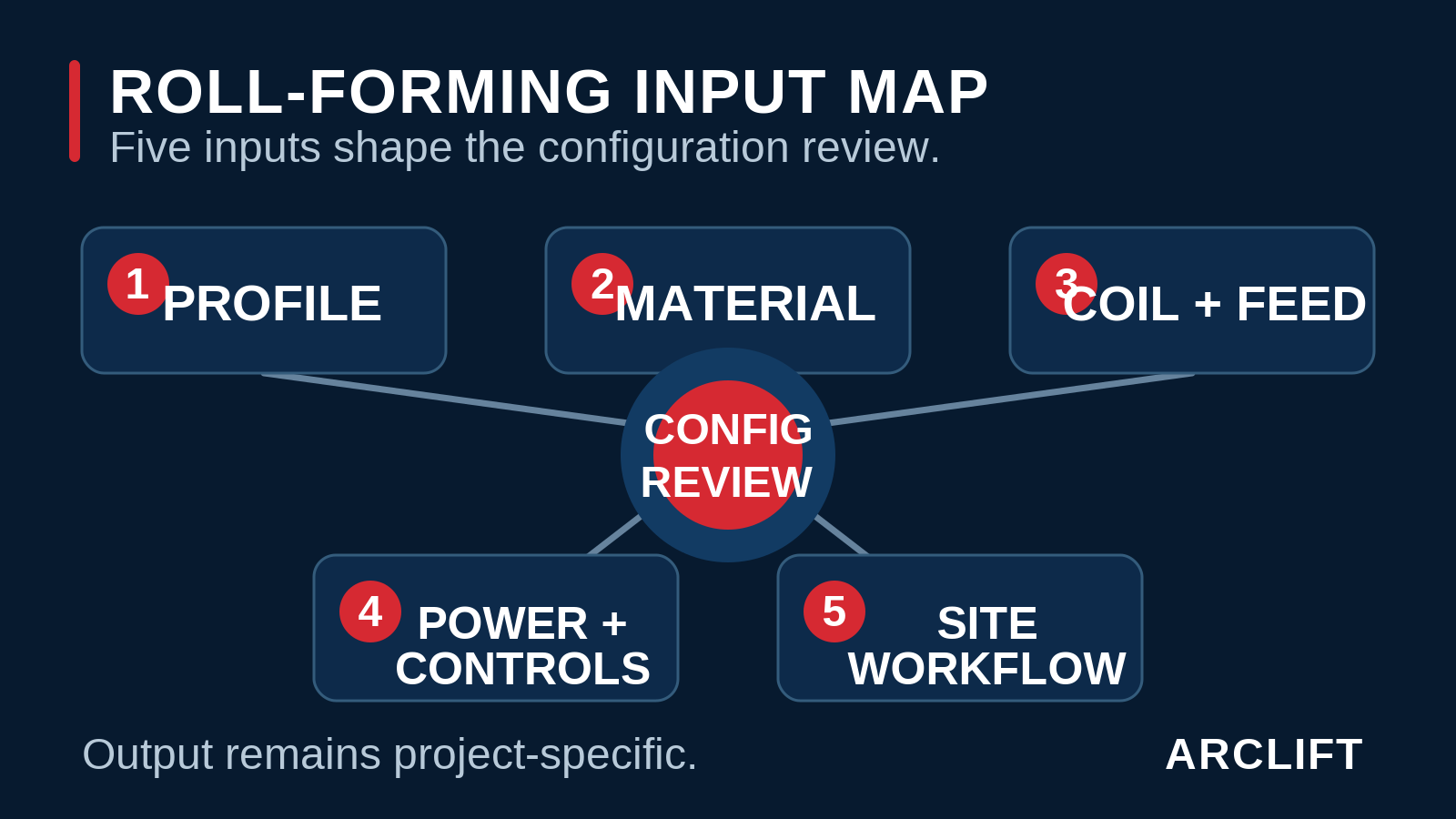
The forming machine defines the panel profile and the interfaces with the lift. Discuss the rollers and tooling, coil material, cutting and output arrangement, machine mass, mounting layout, power and controls as one system.
Request a quote — send the 8 inputs (height, profile, machine mass, coil, access, chassis yes/no, destination, timeline) via the contact form, WhatsApp +86 15515922444, or leelogly120@gmail.com.

- Profile-specific forming tooling
- Material feed and panel output
- Lift mounting and control interfaces
Catalog reference
Catalog reference specifications
This catalog model is a selection reference for RFQ. Platform load, transport size, and chassis inclusion are confirmed on RFQ. Catalog reference — confirm on RFQ. Current height, load, dimensions and options are established by the signed technical schedule, approved drawings and approved load chart.
| Field | Catalog reference | Notes |
|---|---|---|
| Sheet thickness class | 0.3–1.0mm | Catalog reference — feasibility depends on profile, grade, and coating |
| Machine mass / mounting | Confirm on RFQ | Required for the lift load chart and interface |
| Transport size | Confirm on RFQ | Line footprint, run-out, and packing basis |
| Chassis included | N/A — machine module | Lift chassis is covered on the ARC-T and ARC-C models |
| Base type | Roll forming line | Specify with the matching lift platform |
| Reference field | Published orientation |
|---|---|
| Catalog sheet classCatalog reference — confirm on RFQ | Catalog reference — 0.3–1.0mm sheet class; machine mass and transport confirm on RFQ |
Equipment background
ARC-RF8 selection notes
Specify the former with the lift, not as a separate guess
ARC-RF8 is the catalog roll forming line for roof panels and standing-seam profiles that will be discussed with a matching ARCLIFT lift. The published sheet class is 0.3–1.0mm as a catalog reference. Profile, material, and tooling still have to be proven from drawings. Machine mass, mounting, output direction, and destination power are confirmed on RFQ.
Drawing inputs that make a line quote useful
Send an approved profile drawing, material, yield, and coating, the thickness range you expect to process, seam and tooling notes, output direction, run-out length, and the power and lift interface. Name the preferred lift model, the destination, and the quantity.
The configuration may change when the drawing, coating, or panel length does not match the first sheet-class assumption. ARC-RF8 may not fit the job if the profile cannot be tooled from the documents you can release.
The signed technical schedule and approved drawings control the final configuration.
ARCLIFT acts as an integrated equipment supplier. Ask ARCLIFT to review the profile, material, and tooling package together with the lift interface.
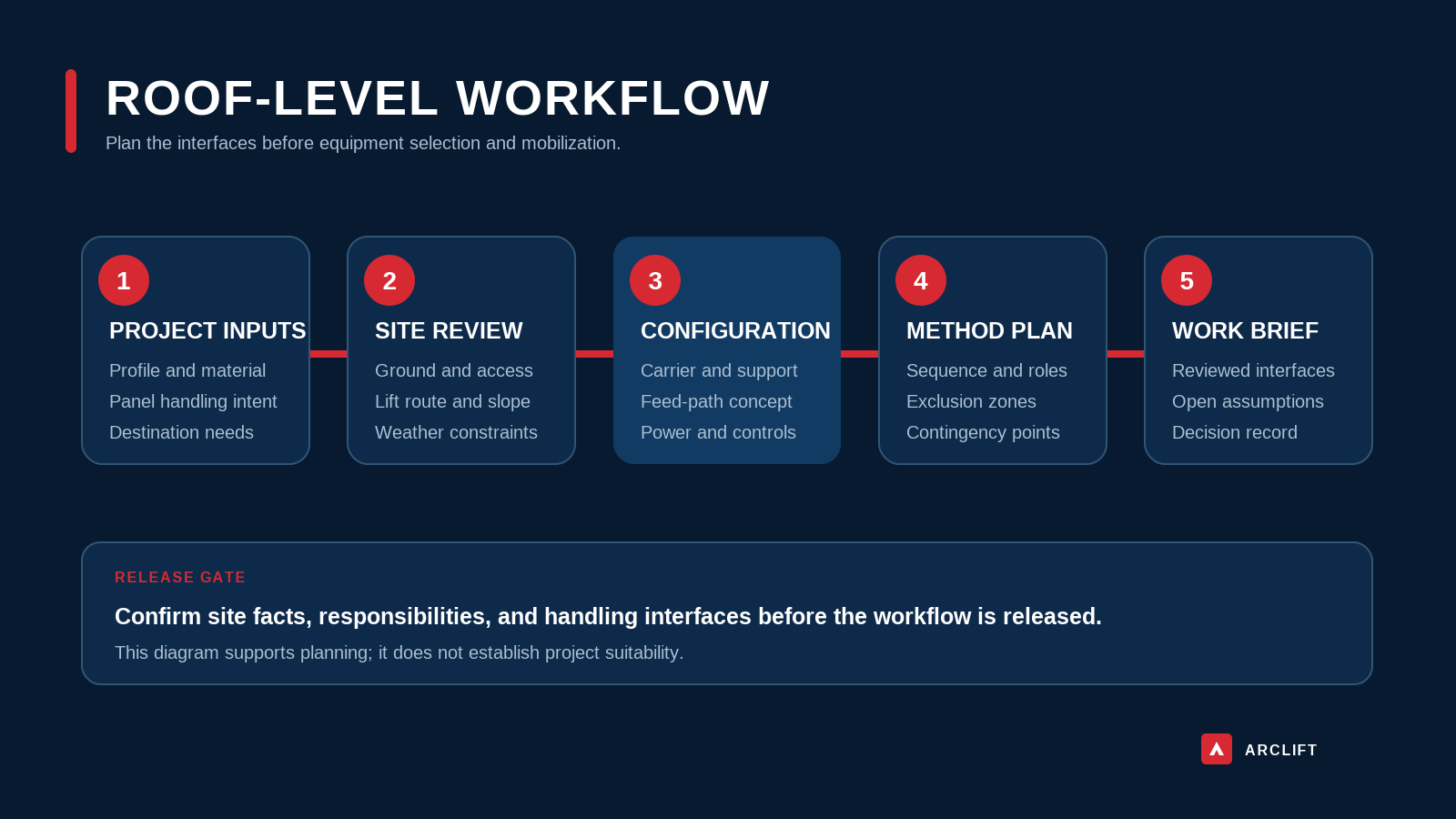
Image disclosure: Representative editorial image — not model-specific evidence. The editorial diagram explains project inputs only and is not model-specific evidence of an ARC-RF8 line.
Spec ARC-RF8 with the lift on the contact form, WhatsApp +86 15515922444, or leelogly120@gmail.com.
Project inputs
Tell us about your application
- Approved panel profile
- Material and tooling requirements
- Selected lift-platform interface
Workflows to assess
Match the system to the site
Material feed and run-out path
Power and controls for the destination
Questions and documents
Questions and specification documents
Does the 0.3–1.0mm range apply to every profile?
It is a catalog sheet class. Feasibility still depends on profile geometry, material grade and yield, coating, width, tolerances, tooling, and acceptance criteria. Confirm those on the RFQ with drawings.
What do you need for a tooling proposal?
A controlled profile drawing, critical dimensions, a material specification, a sample strip when possible, surface requirements, target lengths, the cut method, and the acceptance method.
Can ARC-RF8 be quoted with a lift platform?
Yes. Enquire on a combined scope and name both the former and the ARC-T or ARC-C lift so interfaces and loads are reviewed once. Chassis scope stays on the lift model.
Which documents define the final line?
The technical schedule, approved drawings, tooling proposal, electrical schedule, and acceptance protocol matched to the approved inputs.
Documents to request and validate
- Signed technical schedule
- Approved profile drawings
- Approved interface list
Request the available documents for the proposed configuration.
Technical guides for this equipment family
Practical guidance on the machine, worksite and transport questions.
- Roof-Panel Roll-Forming Lines: Specification for Lifts
Specify a roof-panel roll-forming line for elevated use. Connect panel quality, machine geometry, coil feed and electrical inputs before choosing a lift.
- Panel Profile Data for a Roll-Forming Tooling Review
Connect roof panel profiles, material records and samples to the roll former proposed for a lift, with clear tooling, machine and roof-system review boundaries.
- Coil Route Planning for a Roll-Forming Line Feed System
Prepare a coil-route review package; it does not select lifting equipment, a feeder, or the final safety arrangement for the roll-forming line project.
- Contract-Defined FAT and SAT Evidence for Roll Forming
Define FAT and SAT scope for a roll-forming lift by matching factory and site evidence to the actual machine, material, integration and receiving interfaces.
Optional equipment planning illustrations
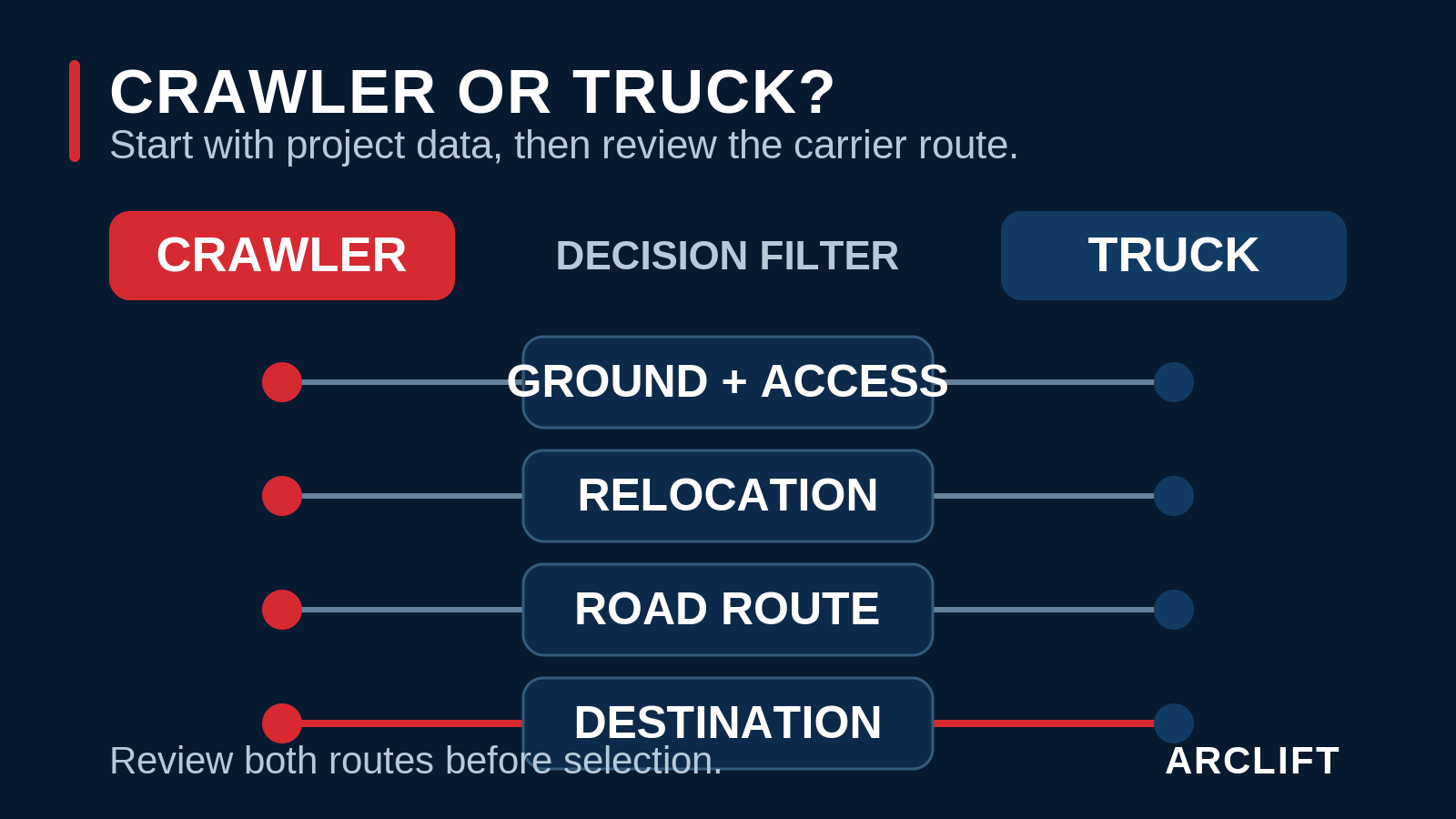
These AI-assisted editorial visuals explain planning relationships and are not model-specific evidence.