Write the test protocol before equipment is staged and witnesses are booked. Otherwise, FAT and SAT are labels searching for a scope. A signed-protocol evidence record fixes the conditions, method, roles, observations and deviation path needed before shipment and handover decisions. It can record evidence against those signed conditions; it cannot set universal limits, certify a roll-forming line or prove site, roof or production performance.
Contents
- Set contractual FAT and SAT scope
- Freeze preconditions
- Record controlled evidence
- Close site readiness
- FAQ
Set contractual FAT and SAT scope
The buyer’s first decision is whether the protocol is defined well enough for evidence collection to begin. A list of machine functions is not enough. The protocol should connect contractual requirements, configuration, sample, method, witness roles, records, deviations and release authority. It complements the line-specification guide and the separate tooling input record without repeating either.
Conditions each record can evidence
A factory record can document observations made under the signed factory configuration, material, method and environmental conditions. A site record can document observations after the project-defined installation and utility conditions are in place. Neither label supplies its own scope; the signed protocol does.
State each condition as an observable requirement or a document check. Name the source clause, method, instrument or record, witness role and permitted result vocabulary. If a function cannot be exercised in the factory condition, mark it for another gate instead of implying that the factory record covers it.
What neither record proves
FAT does not prove future site output, roof-system performance, installation quality or operation under every material and environmental condition. SAT does not erase factory deviations or establish performance beyond its signed configuration and method. Both records are bounded snapshots.
Avoid universal statements such as “FAT proves the machine” or “SAT is only a formality.” The useful statement is narrower: a protocol can record evidence against signed conditions. Contractual release, risk acceptance, statutory review and roof-system approval remain separate decisions unless the signed project documents explicitly connect them.
Witness and release roles
Name who prepares the protocol, supplies evidence, performs each observation, witnesses it, records deviations, authorises retest and controls contractual release. “Buyer” and “supplier” may be too broad when several specialists or integrators share responsibility.
Define whether a witness is present, remote or represented by a controlled record. Also define what happens when a witness is unavailable or declines to sign. A missing signature should have an agreed status, not be quietly treated as positive evidence.
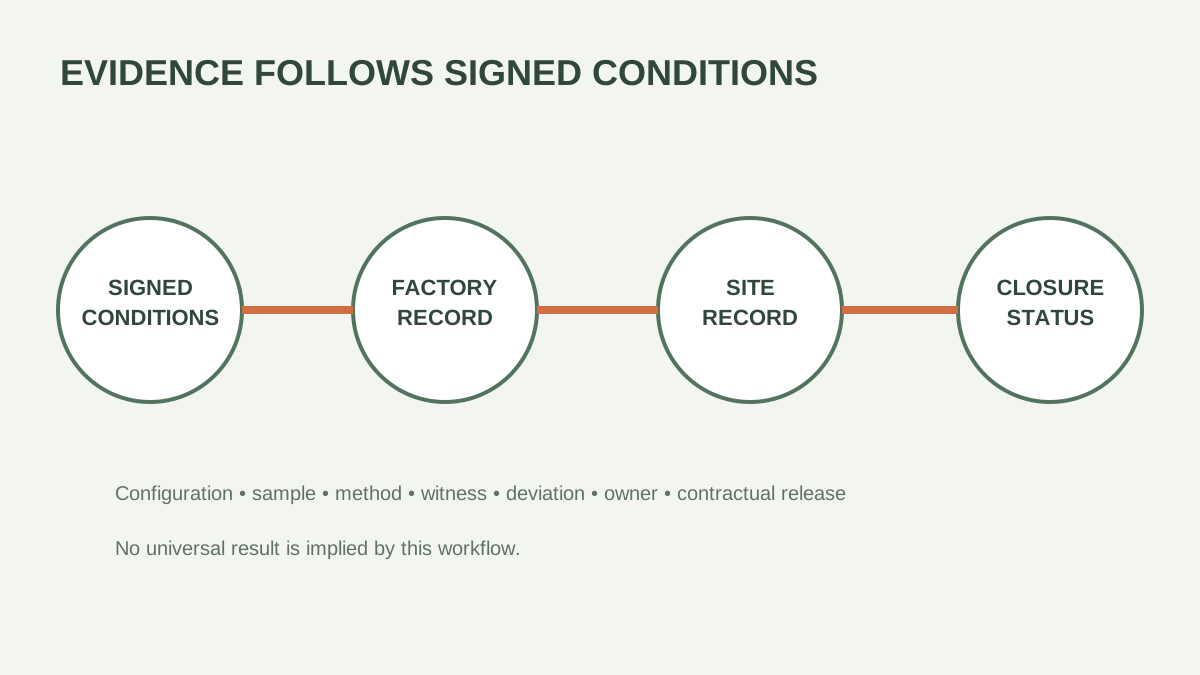
AI-assisted editorial diagram; not evidence of ARCLIFT equipment, configuration, project, capability or result. Illustrative workflow; the signed protocol alone defines conditions, criteria, witnesses and release.
Freeze preconditions
Evidence can be compared only when the tested state is identifiable. Freeze the revision, configuration, sample and method before the activity. If any changes, record the change and decide whether earlier observations remain relevant.
Configuration and revision
List the machine and subsystem boundaries, controlled drawing revisions, software or settings record status, tooling revision, safeguard state and excluded options. Do not publish sensitive configuration detail; keep the complete record in the secure project system.
The configuration field is not a marketing model label. It should identify the exact state addressed by the protocol. If a proposed element is unavailable or outside the witnessed scope, mark it absent or deferred rather than representing it with a similar item.
Test sample and material
Identify the coil, sample material or workpiece through a controlled, anonymised record. Link grade or designation, thickness basis, coating or surface condition, width, sample length and certificate status only when these are relevant to the signed condition. The coil-route package remains a separate handling decision.
State whether the sample represents the intended project purchase condition or only a limited trial. A substitute sample may answer a defined functional question, but it cannot support conclusions that depend on the intended material. Preserve that limitation beside every affected observation.
Measurement method
For each item, identify the method, instrument, calibration or verification status where required, units, sampling location, record format and responsible person. Avoid writing a numerical limit until a controlled contract or project document supplies it.
The protocol should distinguish direct measurement, visual observation, document review and functional demonstration. Those evidence types are not interchangeable. A photograph may record a setup or visible state, but it should not be treated as measurement data unless the method explicitly establishes that use.
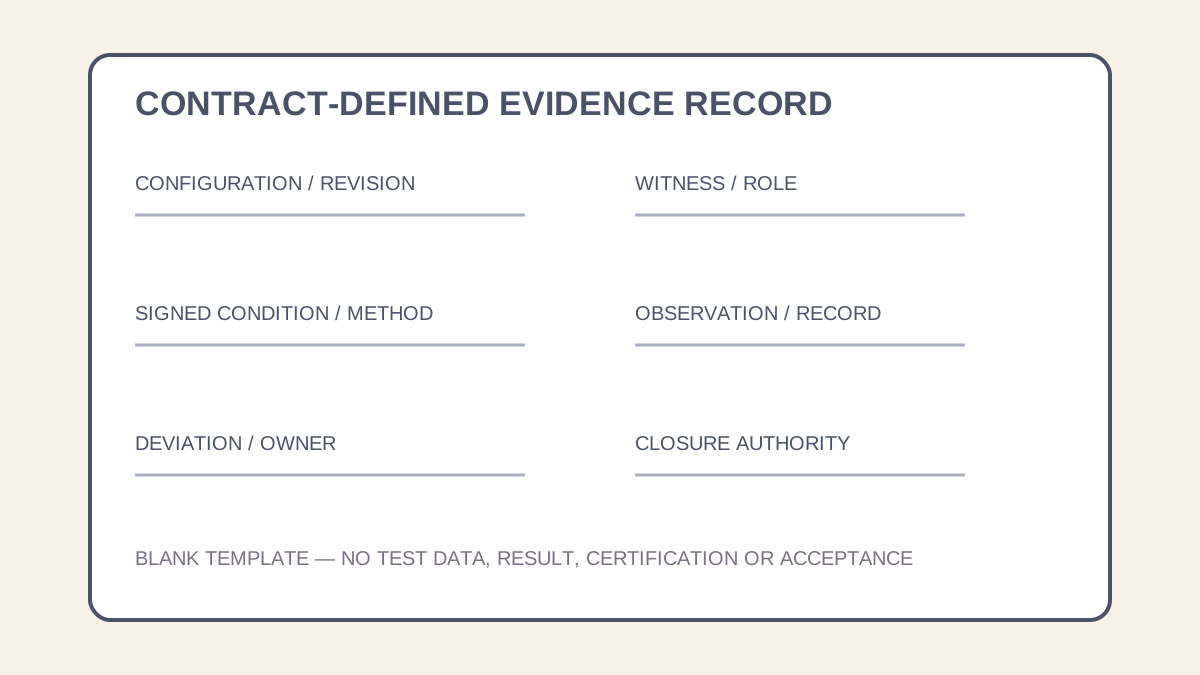
AI-assisted editorial diagram; not evidence of ARCLIFT equipment, configuration, project, capability or result. Template example; it contains no ARCLIFT test data, result, acceptance or certification.
Record controlled evidence
A signed-protocol evidence record should make omissions easy to see. Before the activity, check:
- Controlled machine, tooling and profile revision with the signed protocol version.
- Material designation, thickness, coil or sample length and evidence source.
- Factory or site power and utility conditions relevant to the planned observation.
- Material feed, runout and support boundaries included or excluded from the record.
- Roof, floor or work-area geometry that limits the agreed setup.
- Witness, measurement, record and deviation owners with required documentation language.
- Guarding and access-zone review status under applicable destination requirements.
- Shipment, transport and installation conditions that separate FAT from SAT.
- Site route, floor and service access readiness for the planned SAT condition.
- Open items, retest conditions and final signed contractual closure authority.
Functions and safeguards
List functions and safeguards only to the extent addressed by the signed protocol. For each, define the initial condition, action, expected observable state and record. Do not infer a complete safety concept from a successful functional observation.
In covered U.S. general-industry context, OSHA 29 CFR 1910.212 addresses machine guarding, including point-of-operation concerns. This U.S. jurisdictional source is planning context only; it does not approve a guard arrangement or establish applicability to a project.
Deviations and corrective actions
A deviation entry should name the condition, actual observation, affected revision, immediate disposition, owner, target evidence and contractual effect. Avoid the vague word “resolved” without a linked corrective record and authorised closure.
If a correction changes configuration, material, method or software, decide whether earlier evidence needs to be repeated. Keep the original observation and the later record connected. Editing the first entry to look clean destroys the history needed for a credible decision.
Evidence ownership
Define where records are stored, who can edit them, who receives them and how long they remain controlled. Photographs, videos, measurements, witness notes and software records may contain project identifiers or sensitive details. Use minimum necessary access.
ARCLIFT can receive the signed-protocol evidence record as a technical selection and supply partner. Receipt does not transfer test authority, certification responsibility, project engineering or ownership of another party’s evidence.
The protocol creates a deliberate trade-off between breadth and traceability. A long checklist can appear thorough while mixing unverified conditions, undefined methods and unrelated observations. A narrower signed set can produce more useful evidence because each item has a source, method, witness and closure rule. Add scope only when the project can control those elements.
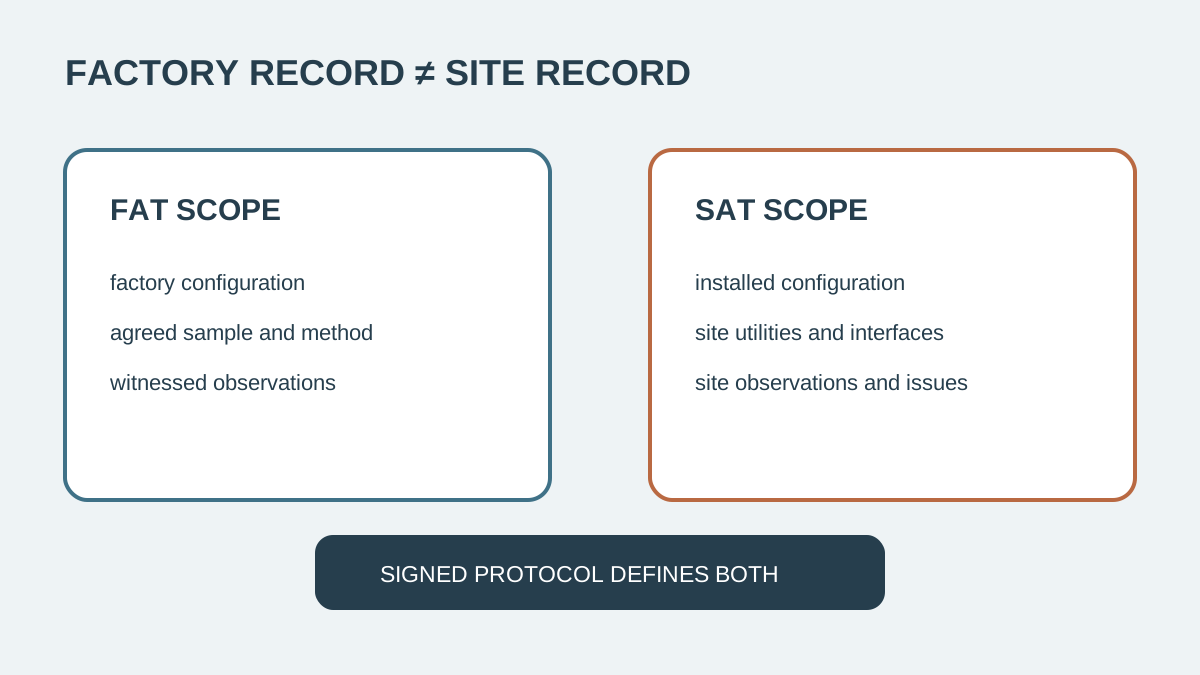
AI-assisted editorial diagram; not evidence of ARCLIFT equipment, configuration, project, capability or result. FAT/SAT can record evidence against signed factory/site conditions; they are defined only by the signed protocol and are not universal performance proof.
Close site readiness
Installation instructions, commissioning plans, machinery risk review, statutory inspection and contractual release language require their own controlled documents; they do not fit within a FAT/SAT checklist. Nor can the checklist establish a result before the activity. Site readiness brings separate evidence and separate owners.
Utilities and installation
Before SAT, record the installed configuration, foundation or support status, electrical and other utility evidence, guarding, access, material path and environmental conditions required by the signed protocol. If an interface is temporary, identify it and limit the observation accordingly.
Do not copy factory conditions into the site record without confirming them. The site may introduce different power quality, cable routing, material support, operator interfaces or downstream systems. Those differences should be visible rather than hidden behind the same test-item name.
Punch-list process
Define how open items are classified, assigned, rechecked and linked to contractual decisions. Separate an observation that blocks the planned activity from one that can remain open under a signed disposition. The protocol should state who has authority for each status.
Do not use a photograph of a repaired item as automatic closure. Link it to the affected condition, revision and competent review. Where a new test is required, record the repeat method and witness arrangement.
Contractual closure status
As of 27 July 2026, the official ISO records list ISO 9001:2015 and Amendment 1:2024 as Published. The edition 6 record is at stage 60.00, under publication with an ISO-listed date of 2026-09, and is expected to replace the 2015 edition. Recheck status at use.
ISO 9001 is a generic quality-management-system requirement; its catalogue records do not supply a universal FAT/SAT script, product result or acceptance value. The project’s signed protocol and contract define the closure vocabulary. A status should identify the authorised signatory, date, scope, revision, deviations and effect.
Send only the signed-protocol evidence record through a secure project channel to ARCLIFT as a technical selection and supply partner. Include the controlled profile and sample, factory or site power conditions, floor and route readiness, transport and installation boundary, destination requirements, witnesses and final signed closure authority. Keep roof performance, work-zone height and wider site acceptance in their own project-specific records. This request does not promise suitability, fit, approval, quotation, configuration, availability, result or response time. Editorial diagrams are blank explanatory concepts and cannot serve as test evidence or replace the signed protocol.
FAQ
Who defines FAT and SAT scope?
The project contract and signed protocol should identify the parties authorised to define each condition, method, witness role, record and release effect. A generic checklist cannot assign those responsibilities.
What evidence belongs in the protocol?
Include only evidence tied to a signed condition: configuration, sample, method, instrument or observation basis, witness, record, deviation and closure owner. Keep unrelated material out.
Does FAT prove site output?
No. Factory observations are bounded by the signed factory conditions. Site installation, utilities, interfaces, material and operation can differ and require their own controlled evidence.
When may a record say accepted?
Only when the signed project protocol defines that status and an authorised party records it against the identified scope, revision, evidence and open deviations. The word should never be inferred from silence or an editorial checklist.