An airport-terminal maintenance request should become an operator-coordination and phasing package before any equipment is considered. The package separates terminal and airside boundaries, assigns permissions and escorts, fixes the work location and operating window, and records the route, floor, overhead, energy and emergency interfaces for each phase. It does not authorise airside or secure-area work, select equipment, establish FAA applicability, or approve the maintenance method.
Contents
- Set the operator-controlled boundary
- Phase terminal work around defined locations and windows
- Capture route, floor, overhead and emergency interfaces
- Protect sensitive records and mark not-fit zones
- Resolve common access-phasing questions
Set the operator-controlled boundary
Separate terminal space from airside assumptions
Name the exact work area and the authority that controls it. “Airport terminal” can include public landside halls, controlled staff areas, baggage interfaces, building-service rooms and boundaries adjoining airside operations. The same access rule cannot be assumed across those spaces.
This guide uses a landside maintenance-planning example only. It does not state that a platform may enter an airside, sterile or security-controlled area. Record whether the work boundary touches any operational aviation interface and route that issue to the airport operator. The ceiling-platform project-data guide covers the wider machine-selection inputs; the artifact here is only the operator coordination and phasing package.
Name the work-package owner
Assign one owner for the maintenance scope, one operator role for the location and time window, and the project roles responsible for method, safety, permits and reinstatement. Record who may open, pause, extend and close a phase. The names can remain in the controlled record; public copy should use anonymised roles.
The work-package owner should define the task position, materials, tools, crew, service isolation and acceptance condition. The airport operator should define access, security, public-flow, tenant, concession, cleaning, baggage, emergency and building-operation constraints. A technical selection review cannot merge these responsibilities into a supplier decision.
Treat permission and escort as dependencies
List credentials, permits, escorts, keys, route approvals, inspection points, delivery controls and authorised hours. A planned route is not usable until its permission state is confirmed. Include contingencies for a denied entry, delayed escort, changed checkpoint or withdrawn work window.
U.S. FAA Advisory Circular AC 150/5370-2G (official PDF) addresses operational safety during airport construction in U.S. airport-construction context. It supports disciplined coordination and phasing as a planning principle; it does not authorise terminal maintenance, decide that the circular applies to this task, or prove any equipment may enter or operate in a zone.
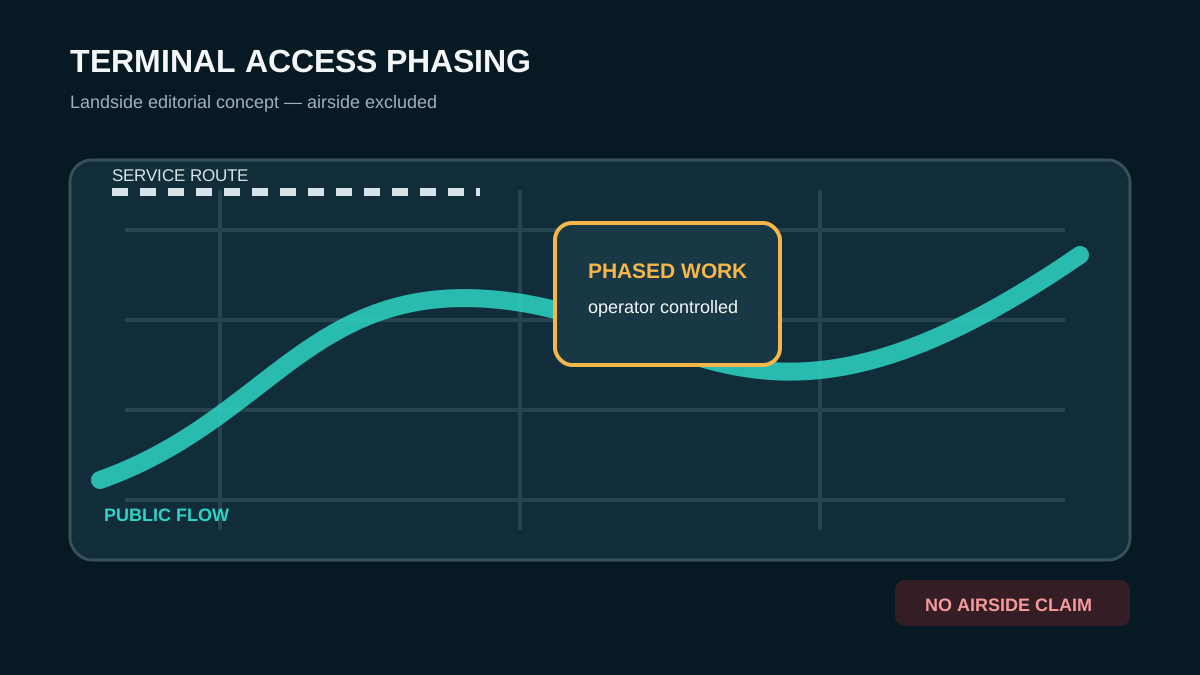
AI-assisted editorial diagram; not evidence of ARCLIFT equipment, configuration, project, capability or result. Tap to open the full-size editorial diagram. This fictional landside map is not an airport survey, security plan, operator permission or customer project.
Phase work by location, window and occupant flow
Fix one controlled location per phase
Break a large terminal into numbered work faces and route segments. A high departure hall, a narrow connection corridor and a service-side ceiling can have different doors, turns, floor structures, public flows and overhead services. Give each phase a defined staging point, entry route, work boundary and exit route.
Do not rely on generic terminal drawings. Confirm current partitions, queue furniture, retail fit-out, signs, screens, temporary works, floor protection and access-control devices. The warehouse ceiling-access planning guide is a useful analogue for mapping gates and traffic, but an airport operator’s rules and current terminal state remain distinct.
Fix the operating window
Record the approved start, finish, setup and restoration periods, including who can vary them. Passenger peaks, flight schedules, cleaning, deliveries and tenant operations may influence the window, but sensitive schedules should remain in the controlled operator system. The technical package needs only the approved work period and its conditions.
Plan for handback. Include removal of barriers, inspection of surfaces, restoration of systems, tool and material accounting, reopening approval and the action if work overruns. A short access window may change the method or make a phase not fit; it must not be converted into a productivity claim.
Define occupant-flow controls
Map passengers, staff, contractors, carts, cleaning equipment and emergency routes around the work zone. Identify where physical separation, route diversion, a temporary closure or a different shift must be decided. Record the operator who approves any public-flow change.
Do not promise zero disruption or work while flights continue. Flight activity is not the decision boundary in this guide, and terminal conditions may change independently. The package should state what is controlled, what remains open and which interface is unresolved.
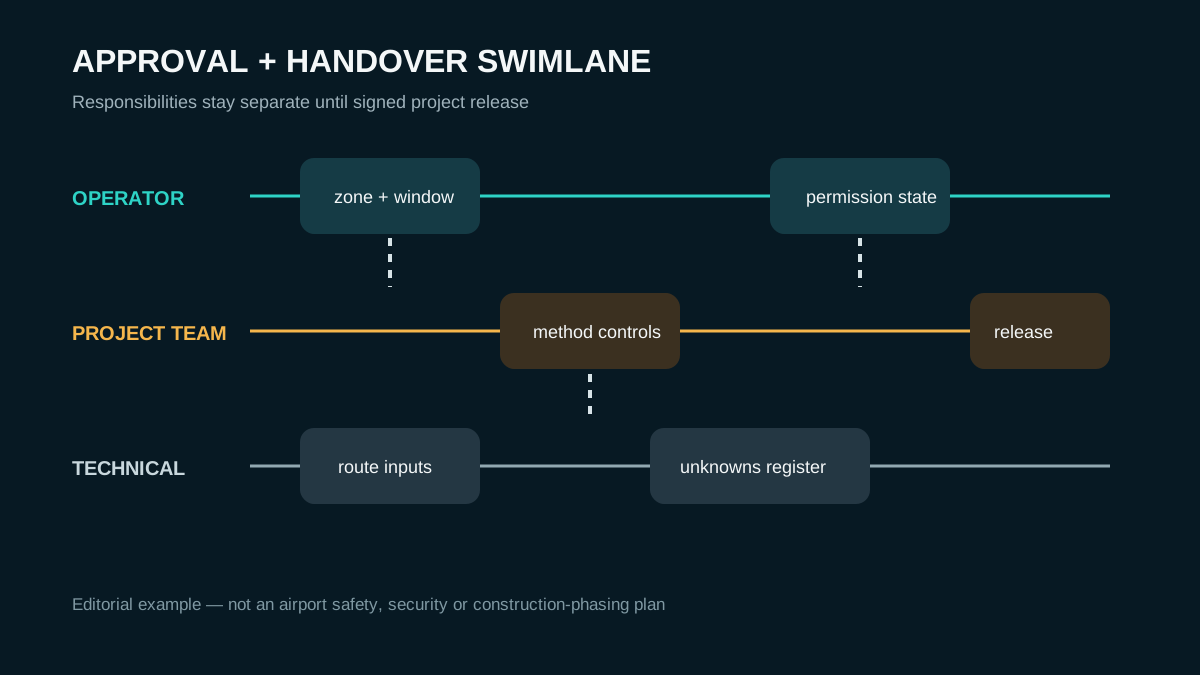
AI-assisted editorial diagram; not evidence of ARCLIFT equipment, configuration, project, capability or result. Tap to open the full-size editorial diagram. This responsibility map is an editorial example, not an airport safety, security or construction-phasing plan.
Capture the technical interfaces for each phase
Survey the route and supporting floor
Record clear opening width and height, turns, gradients, thresholds, joints, floor transitions, covers, edges, suspended areas and temporary obstructions from the approved entry point to the work face. Separate transport, setup, task and withdrawal states. Identify who owns the current floor records and competent review.
The trade-off in phased planning is additional documentation in exchange for fewer hidden interfaces. A route that is acceptable in one phase may conflict with public flow or temporary fit-out in another. Do not infer floor support, machine envelope or fit from a generic plan.
Register overhead services and task inputs
Map ceilings, beams, ducts, sprinklers, lighting, signage, cameras, communications, displays, cables and other installations around the route and work face. Record measured offsets, current state, data source, date and reviewer. Security-sensitive device detail belongs only in the controlled record.
Define worker position, task sequence, tools, materials, protected area and service isolation status. Do not insert an archival ARC-F dimension or assumed operating envelope. A separate overhead clearance register should carry measured multi-state clearance inputs.
Keep energy and emergency interfaces open until confirmed
Record the destination electrical information, permitted energy sources, cable routes, charging or refuelling restrictions, isolation ownership and building-system dependencies. Then identify communications, site responders, rescue access, external emergency interface and the routes that must remain available.
The package must not assume ground controls, emergency descent, auxiliary power, remote rescue or any other function. Exact equipment information and manufacturer instructions need project-specific review. The airport operator, employer and competent person control the site emergency arrangement.
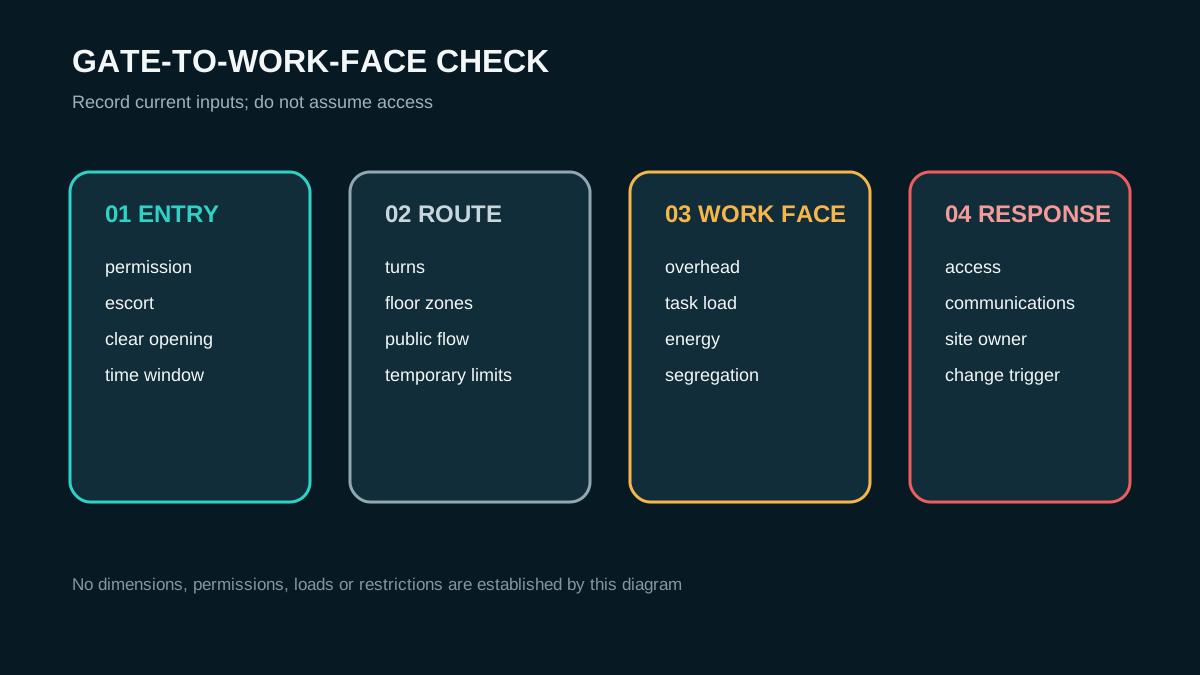
AI-assisted editorial diagram; not evidence of ARCLIFT equipment, configuration, project, capability or result. Tap to open the full-size editorial diagram. This checklist cannot confirm dimensions, loads, permissions, restrictions or suitability for an airport zone.
Protect sensitive records and mark not-fit zones
Redact security and operating information
Do not place security boundaries, access processes, credentials, escort names, contact details, detailed plans, cameras, emergency contacts or sensitive operating schedules in public forms, filenames, captions, analytics or marketing content. Use anonymised zone IDs and simplified route extracts for preliminary review.
Send the minimum information needed through a secure project channel. Maintain a controlled source index with owner, date, revision and permission. Any use of non-public airport information outside that process requires written, scope-specific authority.
Keep separate approvals separate
An operator-released work window does not establish equipment fit. A technical input review does not grant a security permission. A floor review does not approve overhead clearance, and a general source does not establish local legal applicability. Track each approval as its own status and owner.
This separation prevents a convenient but unsafe inference: treating progress in one lane as approval in every lane. It also helps the project team see whether a changed location, window, route or task requires only an updated input or a complete method review.
Declare not-fit locations and change the method
A phase may not fit when permission or escort cannot be secured, public flow cannot be separated, the route or floor support is unresolved, overhead services block the task, energy restrictions conflict with the proposed method, or emergency access cannot be maintained. Mark the location not fit for the current concept and record the reason.
Do not force a single platform concept across all phases. Enabling work, another route, a different time, another access method or a revised task may be needed. This article provides no FAA, TSA or ICAO conformity conclusion and no airside-readiness statement.
Assemble the operator coordination and phasing package
- Site and destination jurisdiction, operator-controlled boundary, work owner and document revision
- Work-zone height, ceiling geometry, outreach relationship, worker position and maintenance task
- Terminal or adjoining boundary status, permission, escort, permit and release owner for each phase
- Approved window, setup time, restoration time, change trigger and operator handback requirement
- Access and transport route, clear openings, turns, gradients, thresholds and temporary restrictions
- Floor record, suspended zones, covers, edges, protection, support path and competent review status
- Overhead services, current survey, isolation ownership, sensitive elements and unresolved clearance
- People, tools, materials, work sequence, protected zone and public or staff flow controls
- Destination power, cable route, site energy restrictions and building-system interfaces
- Communications, emergency access, responsible roles, site response and stop-work trigger
- Redacted drawings, anonymised identifiers, secure transfer owner and publication authority
Submit one bounded phase record
Send only the airport-operator coordination and phasing package through a secure project channel to ARCLIFT as a technical selection and supply partner. Include the site zone, height and overhead inputs, access and transport route, floor review status, approved window, destination context and open responsibilities. This request does not promise suitability, fit, approval, quotation, configuration, availability, result or response time. Final work depends on project-specific signed records and the airport operator, employer and competent reviewers.
This article is editorial planning guidance, not an airport safety plan, security plan, construction phasing plan, airside authorisation, operating instruction or customer case. Its AI-assisted editorial diagrams cannot establish equipment identity, access, clearance, floor support, capability or result.
FAQ
Is the FAA source terminal authorization?
No. The cited FAA material is U.S. airport-construction guidance used only for an adjacent coordination principle. It does not authorise terminal maintenance, decide applicability or approve equipment use.
Who controls access?
The airport operator controls its locations, permissions, escorts and operating windows. The employer and project team control their work method. Technical review begins only within those confirmed boundaries.
What is a phasing package?
It is a controlled record that ties each location to its approved window, route, floor, overhead, task, occupant-flow, energy, emergency and handback inputs. It exposes which decisions remain open.
May airside operation be inferred?
No. Nothing in this guide or its diagrams establishes airside, sterile-area or secure-area access. Any such request requires the airport operator’s controlled process and applicable project review.