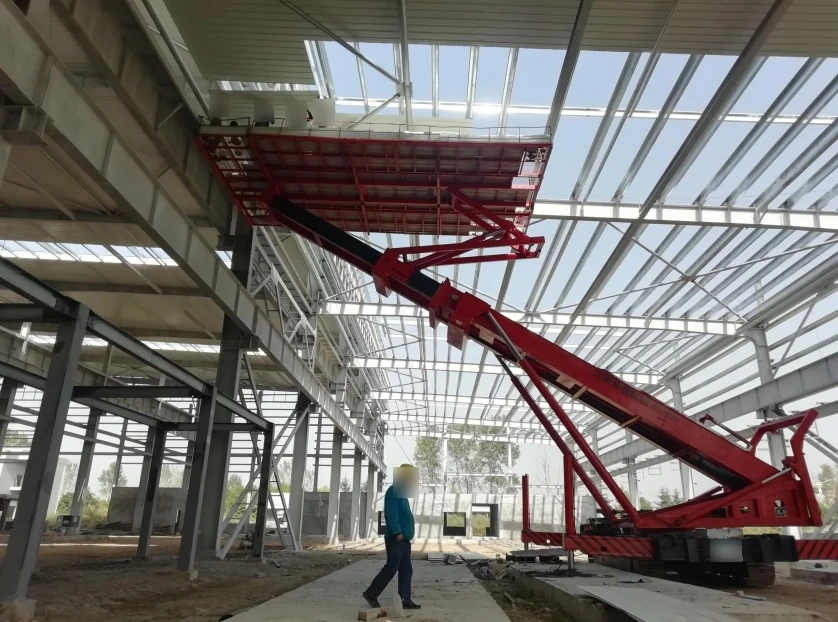
Write the hours the building will actually give you before you shortlist a deck. A 31m catalog class does not buy a night shift, and an empty-hall photo does not mean the airport, mall, or plant will clear the floor at 07:00. Put the clock on the same sketch as the height class. Phasing for a live terminal is discussed in the airport access guide. The deck choice itself stays in the under-ceiling buyers guide.
Contents
- Write the hours before the height class
- What changes between an empty hall and a live one
- Occupied work may not fit
- Hours and access to attach
- FAQ
Write the hours before the height class
Use the building’s clock, not the crew’s hope
Ask the operator of the building which hours a deck may stand on the floor, which hours people may be overhead, and which hours the door is even open. Write those three clocks separately. A contractor’s preferred shift is not the building’s permission. If the answer is “nights only” or “Sundays,” that is the job. Screen ARC-F20, ARC-F25, ARC-F31, or ARC-F35 against that window, not against a wish to work whenever the crew is free.
If the building has not answered, write “hours unknown” and do not pretend the catalog class fills the blank.
Mark who else is in the hall
Name the other activity: passengers, a production line, a shop that stays open, or a clean room that cannot take dust. The deck does not need their names. It needs the rule that activity imposes, such as no travel across the aisle while the line is running. One anonymous plant kept the press running until 22:00 and allowed the deck only in the north aisle after that. The south aisle was never available. A quote that ignored the aisle was a quote for a different building.
Separate entry from working time
The hour the truck may arrive is not the hour the deck may rise. Write both. A dawn delivery that must wait until the public leaves is a storage problem as well as a work-hour problem. Say where the folded machine sits during the wait, and who owns that patch of floor. If you do not know, mark it unknown. Confirm on RFQ is better than a sentence that says “coordinate on site” and then forgets the question.
Keep the soffit next to the clock
Measure the soffit in the bay you are allowed to use, not in the empty bay you wish you had. The catalog class is a screen: 20m, 25m, 31m, or 35m. The hours decide whether that screen is even worth opening. A class that reaches the steel at midnight is useless if you may only work at noon under a lower service run. Write the service run as a site measure.
What changes between an empty hall and a live one
Put the two halls on one table
| Condition you can name | Empty hall | Live building |
|---|---|---|
| Hours the deck may stand | Often the whole shift | Only the window the operator gives |
| Other people | Crew only | Passengers, staff, or a running line |
| Travel across the floor | A route you measure | A route that may close at a bell |
| Noise, dust, or a public edge | A site note | A rule, or unknown until asked |
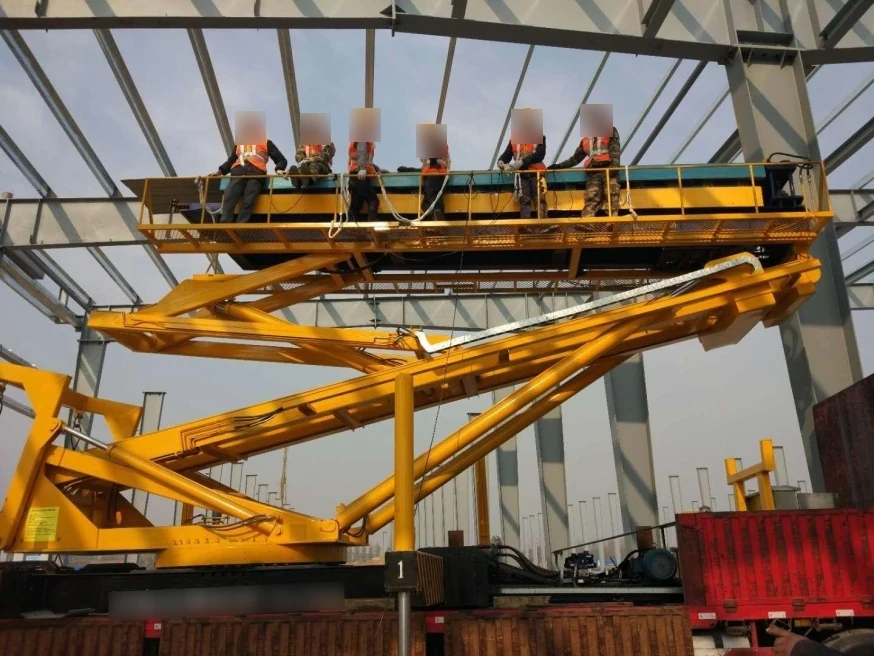
Reference photograph inside the hall. It cannot show whether the building is occupied.
Ask what closes when the public is present
Some rooms allow the deck to stand but not to travel. Some allow travel but not material on the deck. Write the verb that is banned, not a vague “restricted.” If you cannot get the verb, the row stays blank. Do not upgrade the class to look decisive.
Count the moves you lose
An empty hall might allow three bay moves in a shift. A live hall might allow one, because the aisle reopens for a shift change. The same deck then needs more calendar days. That is a planning fact, not a promise about speed. Say it on the RFQ so the supplier does not read your height class as a one-day job.
Leave the carrier out of the hour row
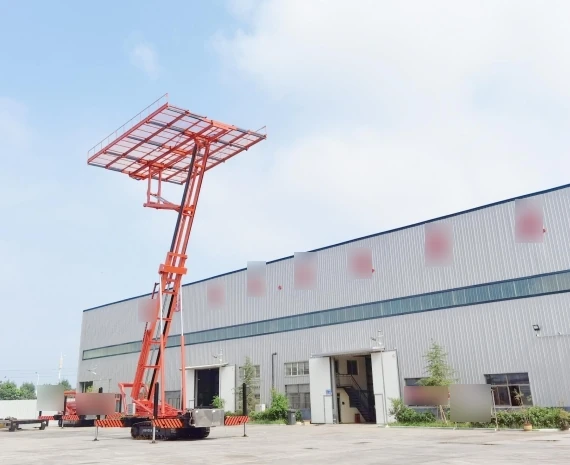
Reference photograph of the approach. It cannot set the hour the door opens.
The road move and the indoor hour are different clocks. A machine that can be hauled at night may still be forbidden to enter until a guard arrives. Write the guard’s hour if you have it. The buyers guide already asks for the door. This page asks for the clock on that door.
The trade-off is calendar time against access. A live building can be the right place for a large deck and still offer a short window. The limitation is that the catalog class says nothing about that window. The constraint is the other activity on the floor. The interface is the sentence from the building operator, attached to the RFQ, that names hours and banned verbs. Without that sentence you are comparing machines for an empty hall you do not have.
An anonymous mall job shows how the clocks split. The deck could enter at 21:30, after the last shop closed, and had to be folded and off the public concourse before 06:00. The crew’s preferred start was 18:00. That start was not available, because the food hall was still serving. The useful note was three lines: door hour 21:30, last rise 04:30, public edge stays open on the south walk. A quotation that said “night work, 31m class” missed the south walk and treated 18:00 as if the operator had agreed.
A second anonymous job was a plant, not a mall. The press ran until 22:00 in the south aisle and the north aisle was free from 16:00. The soffit in the north aisle was the one that matched a 25m screen. The south soffit was higher, and it was also the aisle the buyer wanted. Writing “25m, whole hall, after 16:00” would have sent the deck into a running press. The note that worked named the aisle, the hour that aisle opened, and the hour the press released the other aisle. Height class stayed a screen. The aisle stayed the constraint.
Count the lost moves before you argue about class. If the live window allows one bay change and the empty-hall plan assumed three, the calendar grows even when the machine is unchanged. Say that on the RFQ. Do not ask the supplier to “make up the time” by picking a taller class. A taller class does not open a door, and it does not move a crowd. Confirm on RFQ where the folded machine waits between the door hour and the first rise, because that wait is often longer than the work itself.
Occupied work may not fit
A window shorter than the setup
This shortlist may not fit when the allowed window is shorter than the time to enter, set the tracks, and leave, before any panel goes up. Measure that setup on a similar visit or mark it unknown. Do not hide it inside “night work.” A taller class does not set up faster.
A public edge you cannot close
It may not fit when the deck would stand over a public path the building will not close. The photograph of an empty platform does not move the path. If the path stays open, the workface moves, or the job waits. Write which one the operator chose.
Noise or dust the day shift will not take
It may not fit when the only hours on offer are the hours the shop is selling, and the shop will not take the noise or the dust. Confirm on RFQ is not a way to skip the shop. It is a way to say you do not have the rule yet. Once you have the rule, it can knock out a mode or a whole shift.
Hours invented to match a class
It may not fit when someone writes “24 hours” because 35m looked like the serious machine. Hours come from the building. The class comes from the soffit. Mixing them makes a quote that cannot be used on the day the public stays.
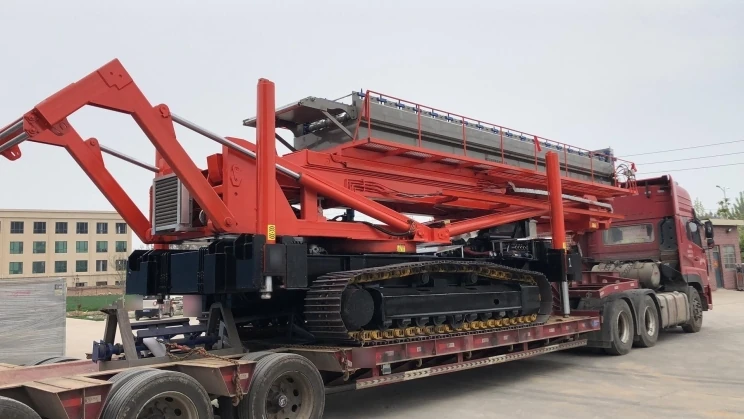
Reference photograph of equipment on a carrier. It cannot show a shift-change crowd.
Hours and access to attach
- Work height in the bay you are allowed to use, plus the catalog class to screen
- Roof or ceiling geometry in that bay, including services that hang lower by day
- Materials on the deck during the allowed hours
- Wind if a public door stays open
- Floor under the tracks, and where the folded machine waits
- Access route and the hour the door opens
- Outrigger or track footprint during public hours
- Destination country and the building operator’s rule
- Transport to the door, separate from indoor hours
- Power mode if the hour is indoors with people present
- Documents the operator wants before the first night
Send the work height, the site hours, the destination, the transport to the door, the work zone, and the floor note. The signed schedule is project-specific. Editorial images do not grant a night shift.
Open ARC-F20, ARC-F25, or ARC-F31. Request a quote, WhatsApp +86 15515922444, or leelogly120@gmail.com. The OSHA fall-protection overview is for destinations where it applies. It does not set your building’s clock.
FAQ
Can the supplier pick the night shift?
No. The building operator owns the clock. The supplier can say whether a named class can be discussed inside that clock.
What if the hours are still in a meeting?
Write unknown. Do not send a class as if the meeting had finished.
Does 20m mean a smaller disturbance?
No. 20m is a catalog height class. Disturbance is a building rule.
Where do the hours go?
On the quote note with the class, the door, and the bay you are actually allowed to enter.