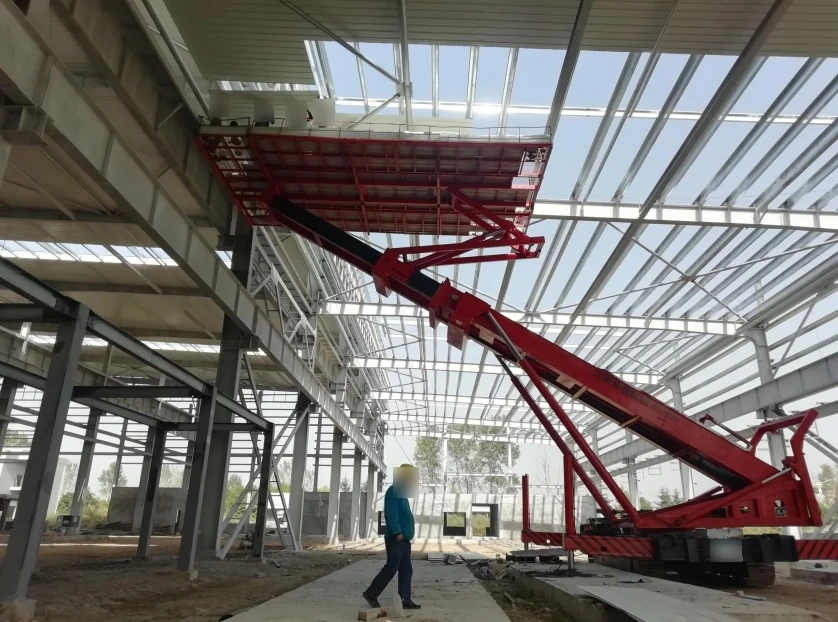
A duct can be an obstruction in one access enquiry and the object being worked on in another. When it is the task object, knowing its lowest point is not enough. The buyer needs to identify which side, underside or other face the appointed trade must reach and which positions a proposed platform actually addresses. The useful output is a task-face map, with hidden or unresolved sides kept visible in the equipment comparison.
The overhead-clearance guide records surrounding geometry. This page asks what the duct-related task itself requires. The crawler ceiling-platform family provides access architecture to discuss; it does not establish duct support, installation or dismantling capability.
Contents
- Identify the duct as the actual task object
- Separate task faces from surrounding obstructions
- Compare one visible face with a multi-face requirement
- Send a task-face access request
- FAQ
Identify the duct as the actual task object
Name the task before drawing a platform
Ask the appointed trade to identify the actual work it wants access for, without reproducing its technical procedure in the enquiry. Distinguish a defined observation from another expressly requested task. A general note saying ductwork can mean access near the duct, access to it or material handling associated with a separate service. The provider should know which question it is being asked to address. Keep the object and task tied to the current project drawing so an access response does not drift toward a different service or equipment scope.
Mark each face requiring access
Use a section or other task view showing the actual faces the trade needs to reach. Give each required face a clear identifier and link it to its task. A mark on a plan can locate a duct while leaving the side of the work undefined. Ask the trade to supply that missing relationship before the equipment provider is asked for a coverage statement. This article provides no body-reach assumption, tool extension or permitted position outside the documented platform arrangement. A required face is a project input, not proof that a candidate can serve it.
Keep concealed faces explicitly unresolved
If one face cannot be observed or its task requirement is not established, mark the specific gap. Do not fill the hidden volume with assumed clear space or infer the opposite-side arrangement from the visible side. The next request may be for task information or current geometry, rather than automatically for another platform. Naming that distinction makes procurement useful: the buyer can identify which party must provide the missing input before a supplier can give a meaningful answer. The enquiry itself authorises no opening, disturbance or investigation of building services.
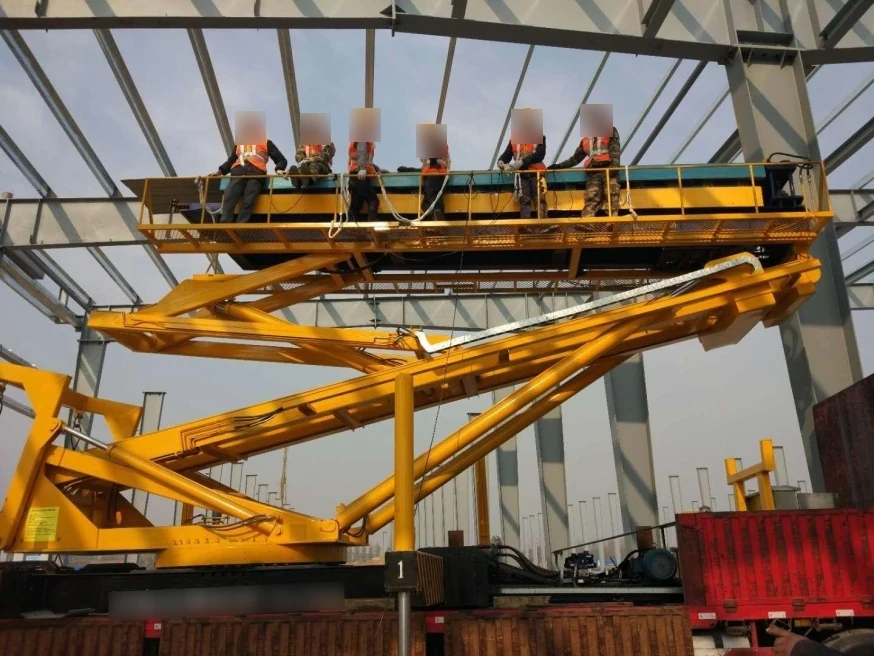
Reference photograph showing a yellow working platform beneath roof framing with vehicle-bed context. It does not verify a truck-platform model, duct support or occupancy.
Separate task faces from surrounding obstructions
Draw the work object and nearby services separately
HSE’s MEWP guidance identifies confined overhead structures as a task-planning concern in Great Britain. That context supports showing nearby services separately from the duct face being reached. It gives no clearance value or coverage result for this task or proposed configuration.
Retain the duct’s actual task geometry and show other structure or services around it as separate objects. The duct being worked on should not disappear into a general obstruction list. Equally, its importance as the task object does not remove the need to identify surrounding conditions. Ask the project survey owner which information is current and which remains unobserved. The clearance guide owns measurement and datum questions; the task-face map should reference those findings and explain which face or position depends on them, rather than duplicate a long generic survey register.
Obtain the required position from the trade
Ask the appointed trade to describe the relationship between its required work position and the named face. Do not let the buyer choose a convenient deck outline and assume it supplies the approach. The access provider should return an actual proposal or identify the input it still needs. A position adequate for viewing one face might not answer a task on another, even where the height is unchanged. This physical difference is the reason for the article: it turns a single duct-height question into a finite set of identifiable task positions for comparison.
Keep duct materials outside an unconfirmed deck function
If the task involves a component, tool assembly or removed item, ask the trade to identify the object and proposed material-service boundary. A personnel platform should not silently inherit a duct-support or lifting duty. The task-load guide develops the actual simultaneous objects and regions. This brief should explain the purpose of each object at the named face and identify any separate handling provider. It supplies no procedure for installing, dismantling, supporting or moving ductwork, and no claim that a fixture or attachment is available.
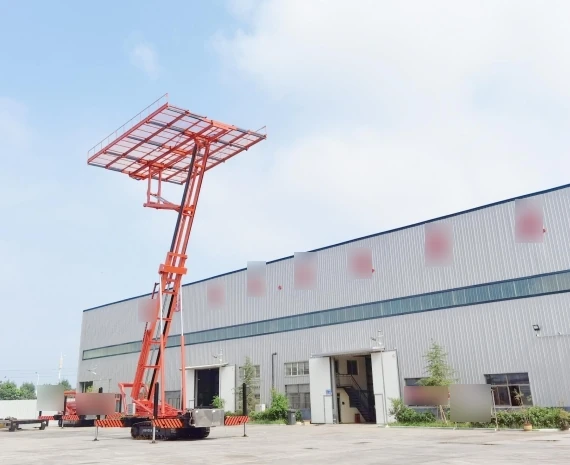
Reference photograph showing an empty platform beside building openings. It does not verify task clearance, measured entrance dimensions or passage permission.
Compare one visible face with a multi-face requirement
Work through a hypothetical scope expansion
Imagine the first enquiry asks for access to a visible underside. The trade later states that another side also belongs to its defined task, behind a neighbouring service. This hypothetical change can leave the original height unchanged while changing the required access relationship. Ask the platform provider to mark which faces its proposal addresses and ask the project owner for the missing geometry. Do not assume that the same deck covers the hidden side or that another machine is necessarily required. The useful response identifies the actual remaining question rather than hiding it inside a general statement of sufficient height.
Compare task-face coverage in a small matrix
| Task requirement | Visible-face proposal | Multi-face proposal |
|---|---|---|
| Object identity | Identified duct and task reference | Same object with each additional task named |
| Required faces | Marked visible face | Every required face separately identified |
| Position basis | Trade’s stated approach relationship | Revised position information for each face |
| Surrounding geometry | Current relevant section | Additional hidden-side information or explicit gap |
| Material function | Actual separate task boundary | Any changed object or handling dependency |
| Provider response | Covered position and limits | Covered faces, exceptions and information needed |
The trade-off is coverage and retained uncertainty. A proposal that openly excludes a hidden face can be compared and supplemented. A blanket statement about duct access leaves procurement unable to identify what remains to be purchased or assessed.
Keep alternative access concepts tied to the same faces
If another configuration is proposed, compare it against the same task-face schedule. A smaller outline or a wider deck does not demonstrate access to a particular side. Ask each provider for its actual arrangement and assumptions, then keep the project and specialist decisions distinct. The large-deck versus basket guide provides the broader equipment comparison. This page contributes the stable physical question that lets those alternatives be compared without letting a change of equipment quietly reduce the task being requested.
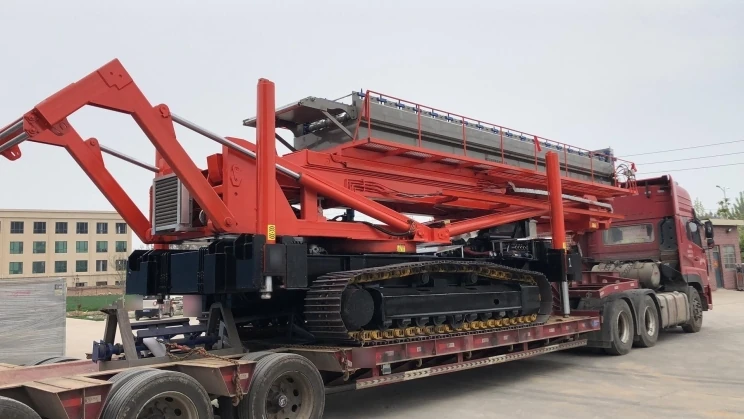
Reference photograph showing folded crawler equipment carried on a separate low-bed trailer. It does not verify a ductwork-platform delivery or approved carrier arrangement.
Send a task-face access request
Collect six duct-specific inputs
- Identify the actual duct object and the appointed trade’s defined task, without reproducing a technical procedure.
- Mark every required face and its task reference on the current section or other suitable project view.
- Obtain the trade’s required work-position relationship and name any side still unobserved or undefined.
- Show surrounding services separately and reference the current geometry information needed by the access reviewer.
- Include task height, site floor information, equipment access route and separate material-service boundaries.
- State destination documentation, transport, power and environmental context relevant to the proposed work zone.
Ask the supplier to mark its response by face. A useful qualification should identify the exact side, position or missing record rather than simply saying that more site information is needed.
Reconcile the task and survey replies
When the trade clarifies a face and the survey owner provides its geometry, give both to the access provider together. Do not send a new task requirement while leaving the old section in circulation as the only physical reference. Conversely, a survey change does not necessarily alter the trade’s task; identify which relationship changed. Keeping those inputs connected allows the buyer to obtain a configuration-specific reply without asking the equipment supplier to become the service designer or the survey owner. The final comparison should state what each actual proposal addresses and what remains outside it.
Recognise a face-specific proposal that may not fit
A proposal may not fit when it covers the visible underside but excludes another required face, relies on unknown hidden geometry or assumes a material-support function not established for the equipment. This guide gives no duct installation, dismantling, access movement or support instructions. It sets no clearance, reach, load or permitted tool position. The actual task, equipment and site need their responsible assessment; a reference photo beneath roof framing cannot verify a particular duct arrangement or access outcome.
Discuss the named duct-task faces
Send the task-face map to ARCLIFT with the trade’s required positions, current sections and explicit hidden-side gaps. Include task height, site floor/access information, destination and transport assumptions. Ask for a project-specific response identifying which faces the actual proposal addresses before final selection. ARCLIFT supports technical selection and supply coordination. These editorial photographs show reference equipment scenes and establish neither duct support nor an approved task position.
FAQ
Is a duct always only an overhead obstruction?
No. It can be the object of the task. In that case the buyer needs to identify the faces and work positions required, while retaining other nearby services as separate geometry inputs for the actual review.
Does underside access establish access to both sides?
No conclusion follows without the actual task and configuration. Mark each required face and ask the provider to identify coverage and exceptions. Do not transfer a response to one position onto an unreviewed side.
What if the required face is hidden?
Identify the missing information and the responsible project owner. A photograph of another face cannot supply it. This article does not authorise opening, disturbance or a survey access method to resolve the gap.
Can the platform be assumed to support duct components?
No. Identify any material function as a separate question for the actual equipment and task providers. Personnel access, component support and handling are different scopes and need attributable configuration-specific answers.