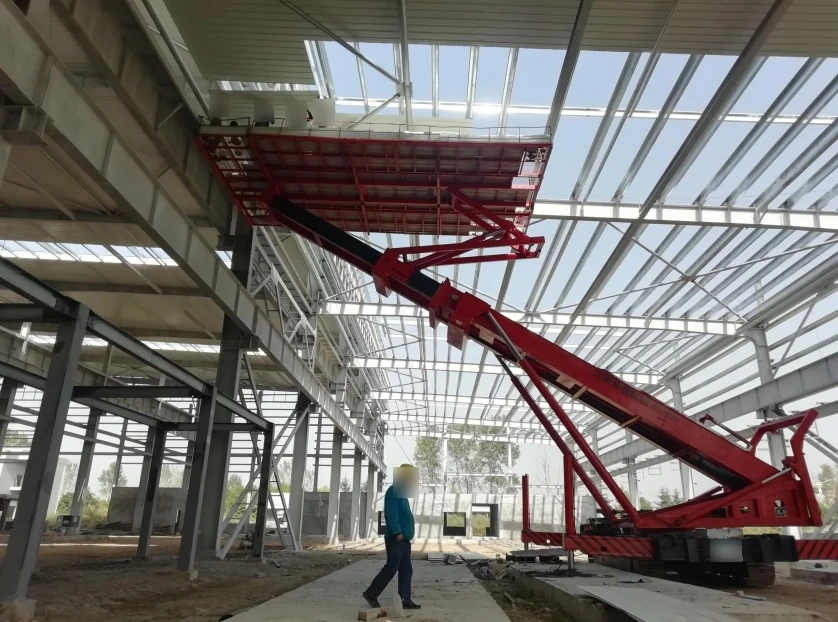
A main deck, an extension region and a detachable task deck are different descriptions in a platform purchase. Before comparing quoted area, ask which physical arrangement each offer includes and which part of the ceiling or wall task it is intended to serve. A larger outline is not a statement of usable access, load or host compatibility.
This guide compares deck options as purchase items. The task-load schedule records the people and objects proposed together; it does not choose the deck. Here the useful output is an option comparison identifying the actual supplied configuration, task coverage and equipment information still needed.
Contents
- Name the deck arrangement being purchased
- Connect the option to the workface and host
- Compare deck offers without adding their labels
- Request an option-specific proposal
- FAQ
Name the deck arrangement being purchased
Separate a main deck from an extension
Ask the provider to identify the main platform and any extension regions in the proposed drawing. Request the configuration name and the boundaries used by its documentation. Do not substitute a general platform-area figure for a description of the actual regions.
An extension label can leave its inclusion unclear: it might be proposed, optional or absent from the quoted package. Ask which applies. The buyer needs an equipment list and drawing that agree about what is supplied, rather than an illustration of a broader arrangement beside a narrower price.
Treat a detachable deck as an identified combination
A detachable task deck needs an exact host-and-deck proposal. Source descriptions support the existence of task-specific deck configurations, but do not establish that every forming lift or work platform accepts them. The combination must be identified by the appropriate provider.
Ask which host, connection information, associated equipment and documentation belong to the proposed package. This is a purchase enquiry, not a method for fitting or removing a deck. Do not infer that two similarly coloured structures are compatible or that an archive option remains available unchanged.
Read commercial options beside the equipment list
A brochure can show several arrangements while a quotation includes only one. Ask whether the price covers the main deck alone, a named extension arrangement or a specified detachable package. Identify any connecting or supporting items supplied separately.
Use the crawler ceiling-platform family to identify the broad equipment route. If the proposal concerns a vehicle-based host, name the truck work-platform route separately. A family label cannot fill in a deck option or define its present conditions.
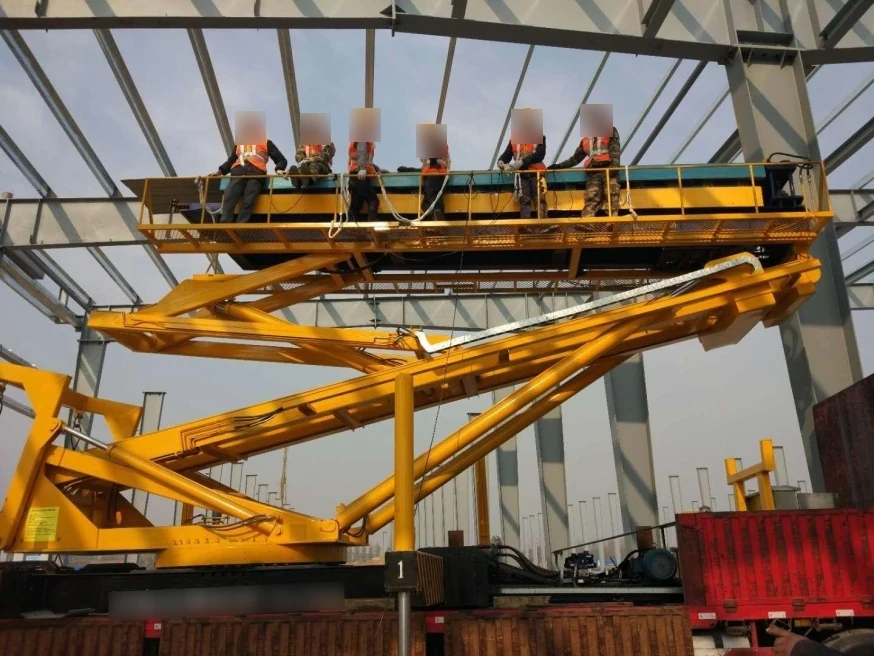
Reference photograph of a working platform beneath roof framing. It does not verify a truck-platform SKU, allowed occupancy, load limits or an approved work method.
Connect the option to the workface and host
Describe the task position the option is meant to serve
Mark the actual fixing, inspection or installation positions on the workface. Explain what part of that task is not addressed by the alternative deck proposal. This gives the provider a practical question to answer about the proposed arrangement.
For example, an explicitly hypothetical ceiling brief may contain a continuous band interrupted by a structural projection. An extension might be suggested in one offer, while another proposes a different position or access concept. Ask each provider which task locations it addresses; do not assume the extension resolves the projection.
Compare the whole occupied arrangement
The deck outline is only part of the equipment. Request the base, lifting structure and support information needed to understand the proposed work position. An option that changes the deck description may also change which configuration records the site reviewers need.
The overhead-clearance guide and work-zone layout guide identify the building inputs. Link to them rather than reproducing a complete survey. This article’s question is whether the option is defined well enough to be compared against that workface.
Keep a shared host available in the programme
If the proposed task deck depends on a host also wanted for another task, identify that resource dependency. One host should not be represented as two simultaneously available machines. Ask what equipment and services each proposed task package requires.
A detachable-deck description establishes no changeover time, procedure or permission. Where the purchase depends on using one host for forming and ceiling work, request a specific supplier response about the proposed combinations and services. The buyer can compare that scope with separately supplied assets without assuming conversion is feasible.
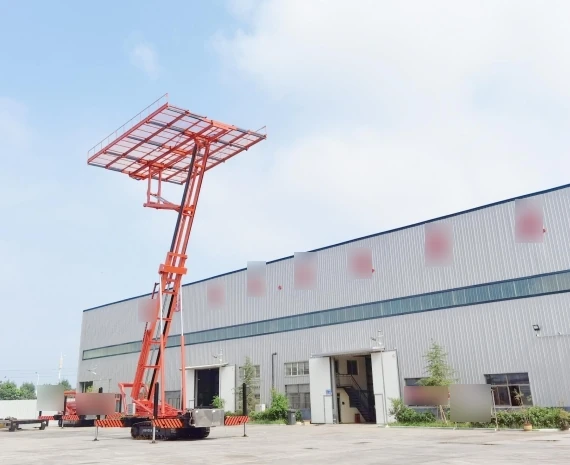
Reference photograph of a platform beside building openings. It does not verify doorway measurements, an entry configuration, clearances or permission to pass.
Compare deck offers without adding their labels
Compare workface coverage rather than gross area
Consider two explicitly hypothetical offers for the same ceiling band. Offer A names a main deck and an extension region; Offer B proposes a different complete deck arrangement. Their area labels alone do not show which fixing positions are served or what conditions apply.
The trade-off is between the task coverage each provider can document and the space, host and site resources that arrangement needs. Ask for the same marked workface to be addressed by both. If one area remains outside the proposal, record it as an exception requiring another answer rather than expanding the offer in the buyer’s interpretation.
| Option question | Evidence to request | Purchase consequence if missing |
|---|---|---|
| Is the main deck identified? | Exact arrangement and matching equipment list | The basic supplied item remains unclear |
| Is an extension included? | Named region and configuration-specific description | A brochure feature may not be in the price |
| Is a detachable deck proposed? | Identified host/deck combination and supplied connections | Compatibility and remaining supply are unresolved |
| Which task points are addressed? | Same marked workface for every candidate | Gross area cannot establish usable coverage |
| What region conditions apply? | Applicable information for the proposed arrangement | Separate labels cannot be combined into an allowance |
| What work remains local? | Included services and exclusions for the option | A deck price may omit required completion scope |
Request region information without calculating a load
Ask which applicable equipment documents define the main deck, extension or combined arrangement. The task-load guide can then connect simultaneous people and materials to those regions. Do not add separate published region labels or assume that spare-looking area is available for any purpose.
This is deliberately a different purchase step from preparing the task-load schedule. The option comparison establishes what physical configuration is offered. The load schedule describes the intended task within it. Both are needed, but neither creates the other’s missing answer.
Keep task and material questions connected
Great Britain’s HSE personnel-platform guidance includes overhead conflicts and material dimensions, weight and distribution in task planning. It supports asking how the real task relates to the proposed arrangement. It does not provide a deck size, extension capacity or compatibility result for this purchase.
A broad empty deck photograph cannot establish where long materials, tools or people may be positioned. Ask the task owner to describe the requirement and the equipment provider to identify the relevant configuration information. Preserve the boundary between those responsibilities instead of choosing an option from visible space.
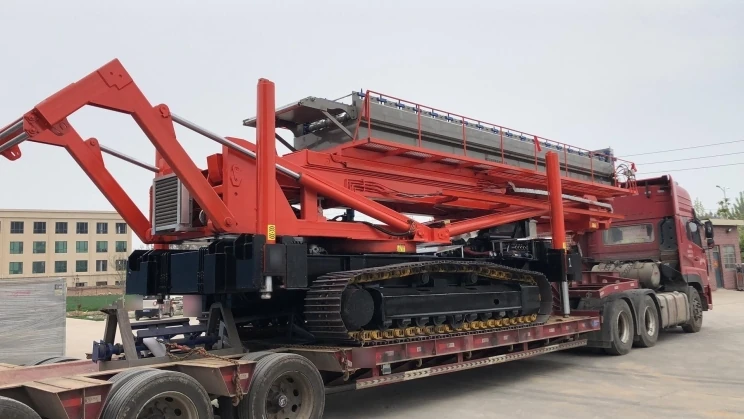
Reference photograph of crawler equipment on a separate carrier. It does not verify the carrier quotation, load security, transported dimensions or road permission.
Request an option-specific proposal
Ask what changes between the quoted alternatives
Request a concise comparison from the provider: supplied deck elements, host combination, associated equipment, documentation and excluded services. Ask which differences matter for the marked workface. An option comparison should do more than list a larger dimension or an extra price.
For a hypothetical buyer, the preferred option changes after the provider identifies that the initial quotation excludes a connecting item needed for its described combination. That is a commercial scope difference, not a conclusion that the option is unsuitable. The next request is a complete proposal for the same task and host.
Keep entry and transport information option-specific
A deck shown in its working arrangement does not establish the condition that reaches the site or building. Ask which documented entry and transport arrangement the proposal includes, and which services its completion boundary assumes. Do not invent removable sections to make an entrance appear possible.
The building-entry survey handles connected geometry. If an option changes the described entry arrangement, supply its actual information to that review. A previous assessment for the main deck alone should not silently cover an unidentified extension or detachable package.
Assemble the option enquiry
- Identify the ceiling/wall task, required height relationship and marked workface.
- Name the main deck, extension or detachable arrangement described in each offer.
- Identify material dimensions and task objects for the separate load-schedule review.
- Provide destination, transport handoff and intended building-entry route.
- Connect floor/ground information to the exact candidate arrangement.
- Request host-specific support or outrigger information where applicable.
- State power/control equipment and documentation included with the option.
- Identify shared-host tasks and the site periods in which each is proposed.
- Ask for local completion services and excluded connecting equipment explicitly.
Preserve meaningful alternatives
A useful response might propose the main deck for one task scope, a named option for another or a different access concept for a local exception. Keep those alternatives tied to their actual workface coverage. Do not compare them as though all offer the same result.
The truck-versus-crawler purchase guide addresses host supply choices. This page should remain an option comparison within an identified route. Separating those questions helps the buyer see whether the next decision concerns the base architecture, the deck package or a task position no proposal yet addresses.
Recognise an option description that is insufficient
The proposal may not fit when its host/deck combination is unconfirmed, the option is visible only in a brochure, or no provider can identify the task points and region information it covers. An attractive area label cannot resolve that uncertainty. This guide supplies no deck dimensions, load aggregation, fitting procedure, changeover time or permission to alter equipment.
Request a defined deck package
Discuss ceiling-platform deck options with ARCLIFT. Send the host preference, marked task geometry and height relationship, materials, site entry, floor information, destination and transport boundary. Highlight which option is proposed and what the main deck alone leaves unanswered. ARCLIFT can coordinate selection and supplied-scope questions; final project-specific equipment and task conclusions require the appointed reviewers. These editorial photographs do not verify option inclusion, dimensions, host compatibility or permissible occupancy.
FAQ
Does an extension automatically increase usable task coverage?
No such result follows from the label. Ask the provider which actual positions its documented arrangement addresses and what site constraints remain. Gross outline and useful access to the task are separate questions.
Can separate deck-region load labels be added?
They cannot establish a combined allowance by themselves. Request the applicable document explaining the proposed arrangement and simultaneous conditions. The task-load schedule should then reference the defined regions without deriving capacity.
Is a detachable deck available for every forming lift?
Universal compatibility or availability is not established. Identify the exact host/deck combination proposed by the provider. An archive description or similar appearance cannot support a fitting decision.
What should the quotation show beyond the option price?
It should identify the supplied arrangement, host, connecting items, documentation, included services and exclusions relevant to the actual task. Request the comparison against the same workface and completion boundary so a price difference has an understandable meaning.