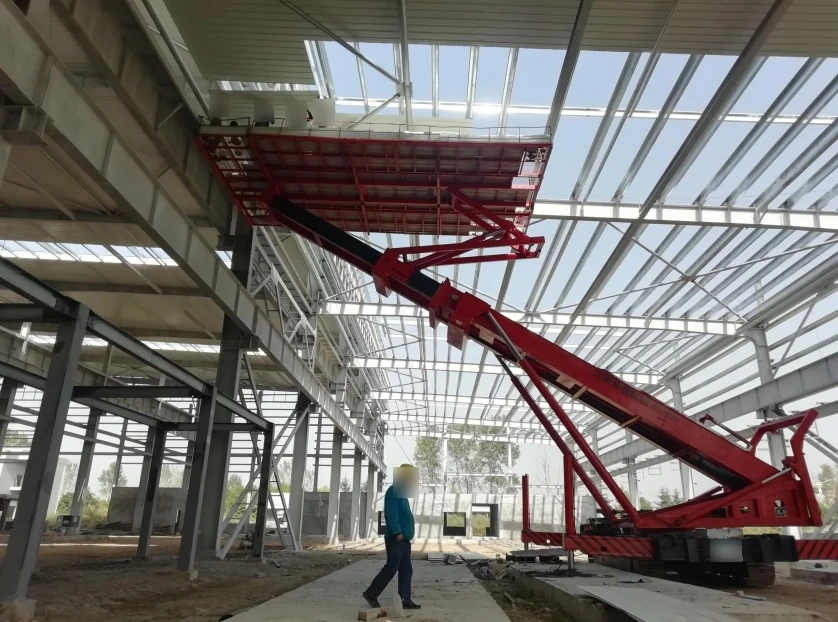
A ceiling-platform proposal can address personnel access while leaving the arrival of installation materials unresolved. Before choosing a broad deck, ask how the purchase describes material provision: what is supplied to the task, who provides the separate handling or delivery service, and where each party’s responsibility ends. The visible space on a platform does not answer those questions.
This guide defines replenishment scope for purchasing and coordination. The work-zone layout guide maps occupied space; the task-load schedule records people and objects together. Here the outcome is a complete supply question about recurring material needs, without prescribing a lifting or transfer method.
Contents
- Separate platform access from material provision
- Describe the demand at the task boundary
- Compare complete replenishment proposals
- Send a material-service enquiry
- FAQ
Separate platform access from material provision
Name what the installation task consumes
Describe the actual panels, components, fixings, consumables and containers the task owner expects. Record the information available about their physical form rather than substituting a general label such as ceiling material. Long components, small packaged items and removed material present different supply questions.
Ask the responsible trade which items must be available at the task and which remain elsewhere. That is a proposed task requirement, not permission to place material on the platform. It gives the equipment and material-service providers an identifiable purchase boundary to address.
Ask what the access quote includes
A platform price may cover equipment, identified options and specified support services while excluding material delivery or handling. Ask the provider to state those exclusions. Do not assume a large deck supplies a separate lifting function or that a delivery vehicle includes site handling.
The crawler ceiling-platform route describes personnel-access equipment to investigate. Any additional material provision must be identified for the actual proposal. If the supplier offers a combined package, request the same functional breakdown you would request from separate providers.
Distinguish replenishment from initial equipment delivery
Transporting the platform to the site and supplying materials during the installation period are different services. A single machine-delivery allowance cannot establish recurring material provision. Name the repeated need in the enquiry and ask which provider is addressing it.
Likewise, a platform handover does not establish the transfer arrangement for installation components. Keep the equipment receiving boundary separate from the material task boundary. The buyer should know which missing service could interrupt the intended task even after the platform itself is present.
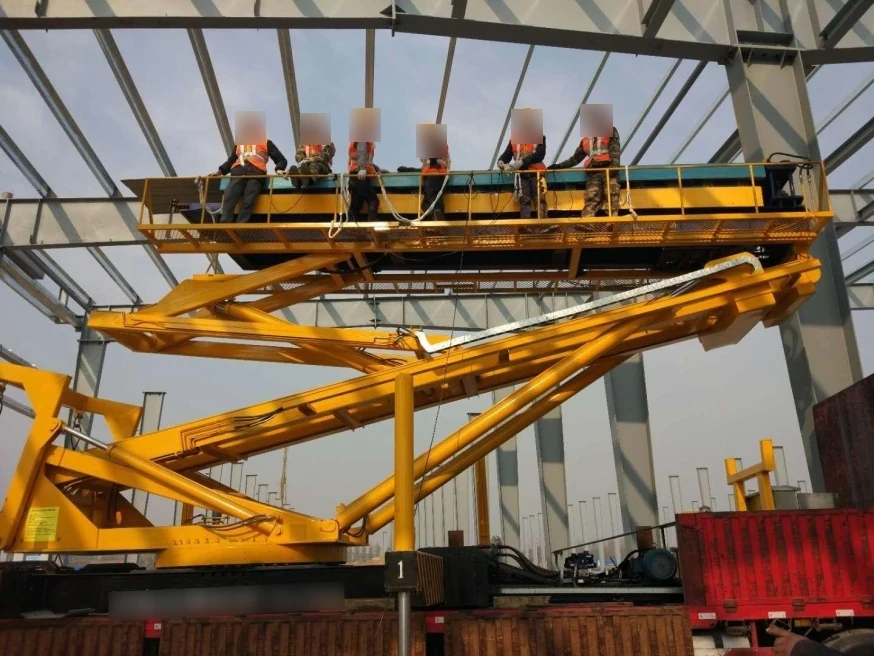
Reference photograph of a working platform beneath roof framing. It does not verify a truck-platform SKU, allowed occupancy, load limits or an approved work method.
Describe the demand at the task boundary
Separate total consumption from simultaneous presence
A project material order describes more than what is proposed at the workface at one time. Tell the material provider the overall task demand, while the task owner describes the intended simultaneous requirement for equipment review. Neither should be inferred from the other.
The load-schedule guide handles the actual simultaneous state. This replenishment enquiry asks how material supply responds to that requirement and what resources it assumes. It should not turn the shift’s total consumption into a platform load or assume that repeated supply removes all task-load questions.
Include packaging and removed items in the supply discussion
Material can arrive in packaging that remains relevant at the receiving boundary. Replacement work can also produce removed components that need a separately defined destination. Ask the task owner what remains, what leaves and who supplies the associated service.
For a hypothetical ceiling replacement, an offer describes new components reaching a nominated holding location but says nothing about packaging or removed material. That leaves a service question. It does not justify assuming that those items can share the platform or a handling device; the actual task and equipment parties must address their interfaces.
Identify when the service needs the surrounding area
Replenishment can depend on an approach, holding area or access point also used by another activity. Ask the service provider which spaces and work periods its proposal assumes. The layout team can then compare them with the building’s actual commitments.
A recurring supply need should remain visible even when the installation position itself is available. If material can arrive only during restricted windows, state that condition in the enquiry. The providers can explain whether their proposed service covers it without the article predicting a work rate or designing a sequence.
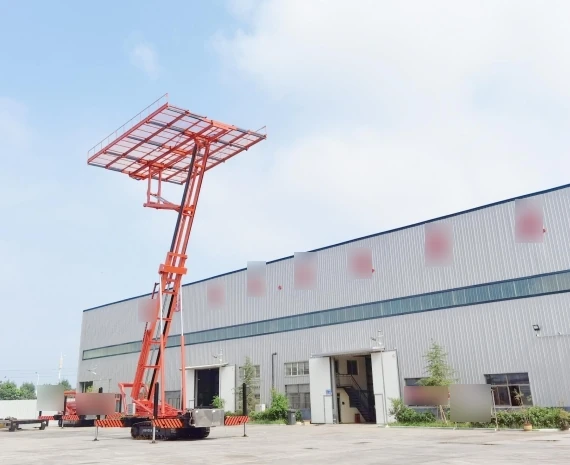
Reference photograph of a platform beside building openings. It does not verify doorway measurements, an entry configuration, clearances or permission to pass.
Compare complete replenishment proposals
Compare materials accompanying the task with separate provision
Consider two explicitly hypothetical offers for the same ceiling installation. Offer A assumes an identified material quantity is present within the proposed task arrangement. Offer B assumes separate provision during the work period. Both must describe the actual material and access boundaries they cover.
The trade-off is between material presence within the proposed work arrangement and the separately procured resources that replenish it. Neither automatically improves productivity or reduces load. Ask how each proposal connects the material service to the task requirement and which equipment information is still needed.
| Supply interface | Question for the proposed service | Separate question for equipment/task review |
|---|---|---|
| Material arrival | What is delivered and where does delivery end? | Does that boundary correspond to the project’s receiving arrangement? |
| Holding area | Which storage or staging provision is assumed? | Is the proposed location assessed and available for that period? |
| Task-side provision | What exact service is included? | Which equipment and task documents define the interface? |
| Packaging | Who retains or removes the identified packaging? | What remains present in each proposed task state? |
| Removed components | What destination and service are proposed? | Which task-specific information and arrangements are needed? |
| Repeated supply | Which work periods and access resources are assumed? | Can the project make those resources available as proposed? |
Ask a combined supplier to expose its boundaries
One quotation can cover access and material provision while still depending on other project resources. Ask which equipment and services the provider includes and which parties supply the remaining information. A single commercial contact does not automatically own every technical or site decision.
If several providers are involved, identify the question that must pass between them. For example, the access provider may need material dimensions and the task provider may need the exact deck-region description. A clearly named interface request is more useful than copying every provider into a vague statement that coordination is required.
Use external guidance to distinguish the duties
Great Britain’s HSE guidance for MEWPs includes material dimensions, weight and distribution in selection and notes that separate material-lifting equipment may be needed. That is relevant personnel-platform context for keeping material provision explicit. It does not select a handling device or approve a transfer for this project.
No illustration here authorises suspended lifting from the deck or transfer between devices. The commercial comparison should ask the appointed providers to define their actual arrangements. A useful enquiry clarifies what remains to be assessed instead of presenting a convenient arrow as a handling design.
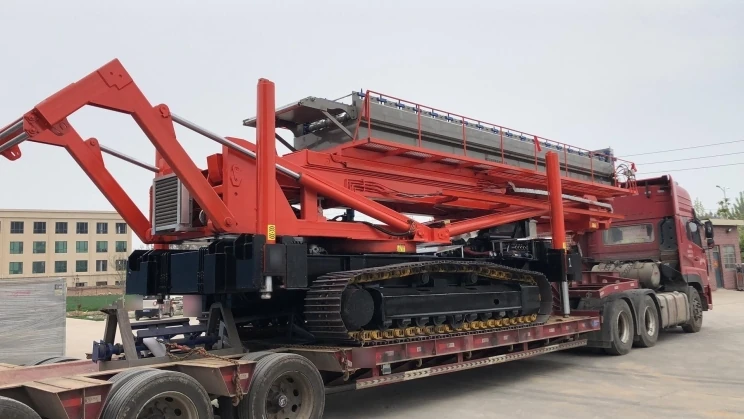
Reference photograph of crawler equipment on a separate carrier. It does not verify the carrier quotation, load security, transported dimensions or road permission.
Send a material-service enquiry
Keep the requested output specific
Ask the reply to identify the supplied material service, its start and finish, the equipment it assumes and the site resources needed. Where the service is preliminary, request the missing input that prevents a firmer proposal. Avoid asking the supplier to approve an undefined material route.
For a second hypothetical purchase, the material specification stays constant while the package dimensions change. The installation outcome may sound identical, but the service provider still needs the changed physical description. Ask what that change means for its stated supply scope rather than assuming the previous proposal applies.
Compare ongoing supply with the work period
A service can address initial material arrival without covering later replenishment. Ask whether the quote concerns one visit, a defined period or another provider-specific boundary. Request that answer without inserting a standard attendance duration or promising a production rate.
If the project cannot yet define its work periods, explain that and ask for the assumptions underlying the offer. Keep preliminary scope visible beside the equipment proposal. The objective is an answerable purchasing question, not a false impression that an incomplete programme is already a reservation.
Assemble the shared material brief
- Identify task materials, package information and the responsible installation trade.
- Mark the ceiling or wall task, required height relationship and workface geometry.
- State the proposed simultaneous task requirement for the separate load review.
- Identify access routes and proposed material receiving/holding boundaries.
- Provide floor or ground information for provider-specific equipment and staging review.
- Request any outrigger/support-space data needed for separately proposed equipment.
- State destination and transport boundaries for access equipment and materials separately.
- Identify power/control interfaces and documentation needed across the proposed services.
- Name wind/environmental questions for exposed delivery or work areas.
- Ask which packaging, removed-material and recurring-attendance services remain excluded.
Use the reply to close one physical gap
Compare each response with the same task and material description. If a provider’s service ends before the boundary the project needs, ask for the missing provision rather than treating it as an implied inclusion. A local contractor’s availability should be confirmed through its own proposal.
Use the platform support comparison to keep attendance and supply commitments attributable. If the real issue is deck choice, use the deck-options guide. The replenishment page should remain focused on the service connecting the material requirement with the purchase.
Recognise an uncovered replenishment boundary
The proposal may not fit when platform access is defined but material provision has no provider, the service assumes unavailable space, or packaging and removed items disappear from the scope. A broad deck cannot resolve those omissions by appearance. This guide gives no handling method, suspended-load permission, capacity, transfer sequence or materials-storage design.
Ask which material provision is included
Discuss the ceiling-platform material boundary with ARCLIFT. Send the material description, task height and geometry, intended work period, site access, floor information, destination and transport boundary. State which replenishment function needs a provider and which services are already proposed. ARCLIFT can coordinate equipment and supplied-scope questions as a technical selection partner. Final project-specific equipment, material handling and task decisions require the appointed parties. Editorial photographs do not establish a permitted material-transfer arrangement.
FAQ
Does a large deck include material lifting?
That is not established by deck size or a family description. Ask the actual proposal to identify any material function and its equipment information. Personnel access and separate material provision need explicit boundaries.
Should the full material order be treated as platform load?
No. The task owner must describe the actual proposed simultaneous state for equipment review. The total order informs the supply requirement but cannot define what is present on the platform at one time.
Can delivery and replenishment be one commercial package?
They can be proposed together, but the quotation must define each service and its assumptions. One package heading does not establish a receiving method, permitted transfer or complete material support arrangement.
What if material arrives at a different boundary from the platform?
Identify both receiving locations and the service still needed between the material supply and the task requirement. Ask the appropriate providers to address that gap. Do not assign it to the access machine merely because the machine is on site.