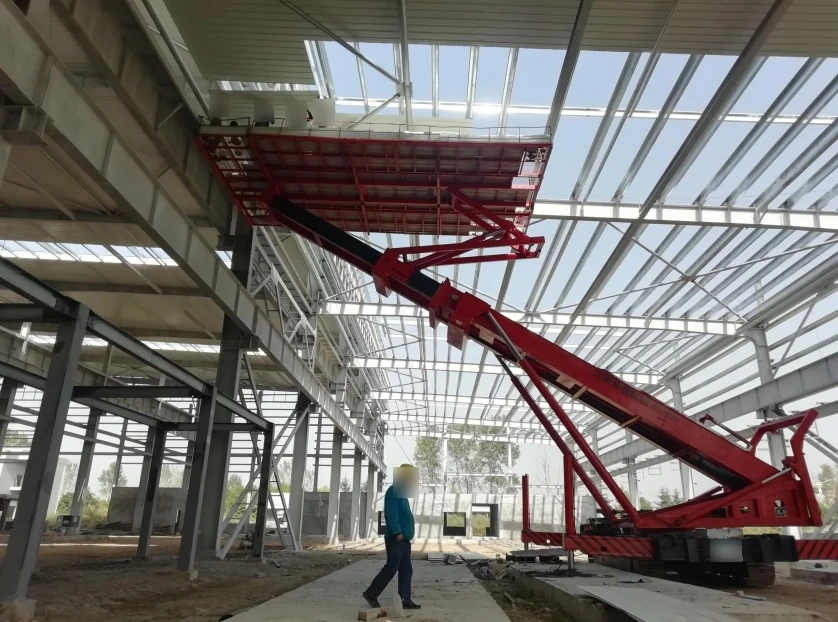
“Local support” can mean a contact who receives questions, a separately appointed technician, help identifying parts or a defined attendance service. Those commitments have different value and different dependencies. Before ordering a ceiling platform, ask the quotation to describe which provider performs which service for the actual equipment and destination.
This guide compares proposed support before purchase. The maintenance and spares handover guide organises information for delivered equipment; it does not establish a service promise in a new offer. Here the buyer’s outcome is a support-scope comparison that separates advice, attendance and component supply without inventing a service network, response time or warranty.
Contents
- Translate the support label into purchased services
- Match the commitment to the destination and equipment
- Compare two support proposals without assumptions
- Request an attributable support scope
- FAQ
Translate the support label into purchased services
Distinguish an information contact from attendance
A named contact route can help send an equipment question to the right party. It does not by itself establish that a competent person will attend the site. Ask whether the proposal concerns receiving information, providing advisory replies, arranging an external provider or supplying a defined attendance service.
The distinction should remain visible beside the equipment price. A buyer who expects attendance needs an actual service response, rather than a telephone number labelled support. Equally, an advisory scope can be useful when clearly described; it should not be dismissed merely because it is narrower than the project expected.
Separate component supply from installation
Help identifying an item, quoting a component, shipping it and fitting it are separate activities. Ask which are proposed and which are excluded. A parts contact does not establish inventory, replacement applicability or installation attendance.
For a crawler ceiling-platform purchase, request the proposed equipment and option identities that support information will cover. If a provider discusses future components, ask how applicability would be confirmed for that configuration. No component list in a general article can define the actual maintenance requirement.
Distinguish commercial warranty terms from other support
Ask the provider for its actual proposed terms instead of assuming a standard period, coverage or remedy. A warranty heading and an ongoing support service concern different commitments, even when discussed in the same quotation.
The buyer should know which questions require the equipment seller, another service provider or its own appointed specialists. Record the proposed scope rather than rewriting it into a broader promise. This guide does not interpret a contract or establish a purchaser’s rights in any jurisdiction.
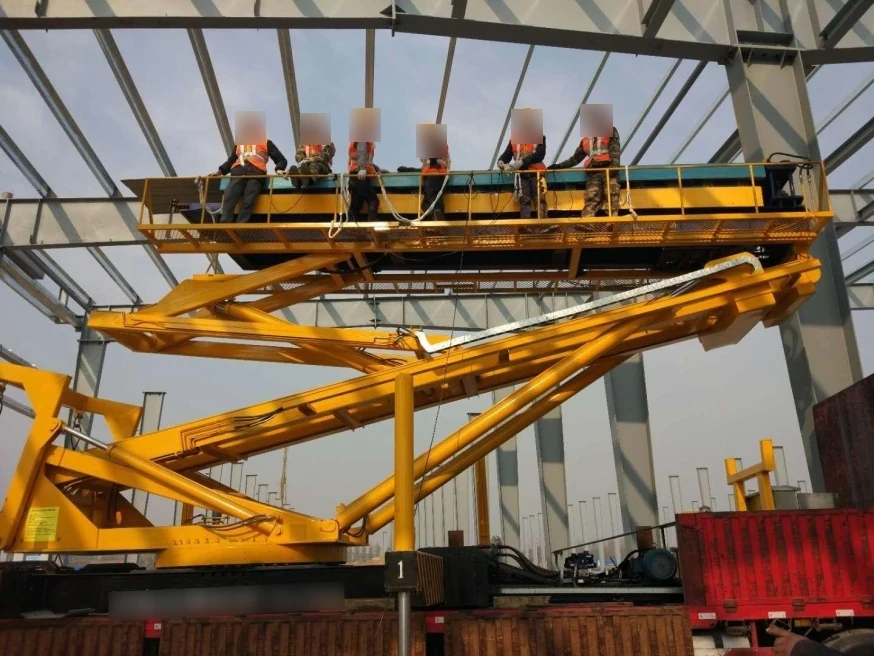
Reference photograph of a working platform beneath roof framing. It does not verify a truck-platform SKU, allowed occupancy, load limits or an approved work method.
Match the commitment to the destination and equipment
Name the party behind a local service
Ask who the proposed provider is, what role it accepts and which equipment its service concerns. If the seller expects the buyer to appoint someone locally, show that as a buyer responsibility. Do not turn a suggestion that local resources may exist into an established service network.
Where a third party is proposed, request its own attributable scope or confirmation through the appropriate commercial channel. The equipment seller can coordinate information without automatically supervising every local activity. The buyer needs to understand how the parties connect and what remains outside each proposal.
Ask what the provider needs from the site
A local service can depend on equipment identity, applicable documentation, access, facilities and a location suitable for its stated work. Ask the provider to describe those prerequisites. Do not infer that a machine fitting its ceiling position establishes a suitable service location.
The building-entry guide and floor-information guide identify separate site questions. A support enquiry should reference the relevant information without becoming a repair plan. The provider must define what its offered service requires.
Separate a response target from a completion promise
Ask the provider what any stated response means: receiving a request, reviewing the submitted information, proposing a visit or another defined action. Completion can depend on different facts and resources. A broad phrase such as prompt support does not identify those boundaries.
This article supplies no numerical response commitment. Request the actual provider’s wording and conditions, including the information needed before it can answer. If the offer says only that a request can be forwarded, do not represent that as a confirmed site visit or restored equipment availability.
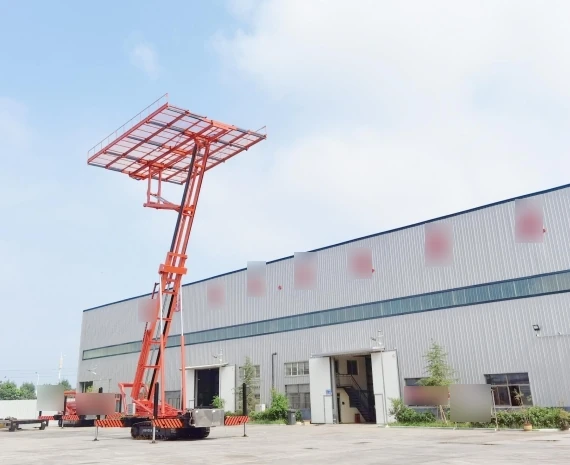
Reference photograph of a platform beside building openings. It does not verify doorway measurements, an entry configuration, clearances or permission to pass.
Compare two support proposals without assumptions
Compare remote advice with named local attendance
Consider two explicitly hypothetical offers for the same platform configuration and destination. Offer A provides a defined information contact and advisory scope. Offer B includes an identified local attendance proposal, subject to its stated site and service conditions. They are different purchases.
The trade-off is between the scope and resources each provider actually commits and the local responsibilities left to the buyer. B is not automatically a complete support solution; its attendance could exclude component supply or particular activities. A is not automatically inadequate; the buyer may have independently appointed local resources. Compare the complete arrangement required by the owner.
| Support description | Clarification to request | Assumption the buyer should avoid |
|---|---|---|
| Technical contact | What questions are received and how they are routed | A contact number establishes local attendance |
| Advisory reply | Applicable equipment scope and information prerequisites | Advice constitutes diagnosis or permission to restart |
| Site attendance | Actual provider, stated activities and site conditions | A visit includes every repair or component |
| Component supply | Identification, applicability and quotation boundary | An item is available or suitable because it looks similar |
| External specialist | Appointment and commercial responsibility | A referral establishes an accepted service engagement |
| Documentation updates | Equipment scope and how information reaches the owner | A revised file proves a physical change was completed |
Ask for evidence proportionate to the commitment
For an information route, the buyer needs an identifiable contact and stated scope. For attendance, the buyer needs an attributable provider response and the service conditions it accepts. For component supply, it needs the relevant identification and commercial boundary. More marketing material does not replace the specific missing commitment.
A seller’s proposal can remain preliminary while identifying what still needs confirmation. Keep that uncertainty beside the price. Do not present a future intention as an existing provider arrangement, and do not publish private service contacts or equipment identifiers in public-facing content.
Keep inspection and maintenance decisions separate
Great Britain’s HSE equipment-inspection guidance relates inspection requirements and extent to equipment, circumstances and competent assessment. It helps distinguish an applicable inspection decision from a commercial support contact. It does not establish an ARCLIFT provider’s competence, inspection interval or authority to return equipment to service.
The owner’s competent arrangements and applicable instructions remain essential. Buying an attendance service does not itself define the work method or satisfy every inspection requirement. Ask which documents or observations the provider supplies within its scope, and leave the project’s separate decisions with the appointed parties.
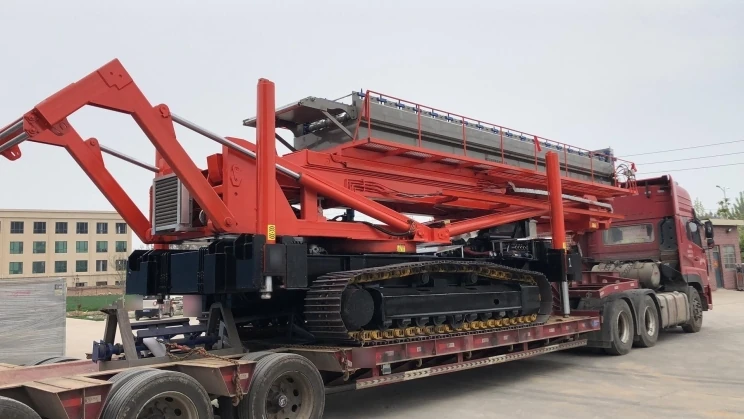
Reference photograph of crawler equipment on a separate carrier. It does not verify the carrier quotation, load security, transported dimensions or road permission.
Request an attributable support scope
Describe the owner’s actual support need
Explain whether the purchase needs an information route, local attendance, component procurement assistance or several separately defined services. Identify existing owner resources rather than assuming the equipment seller must supply everything or that the owner can fill every gap.
For a hypothetical buyer with its own appointed maintenance organisation, the immediate need might be configuration-specific information and a parts-identification route. Another buyer may still need to procure local services. The same equipment quote can therefore leave different work unresolved. Ask the provider to answer the actual situation.
Follow a changed destination or equipment option
A service response for one location or configuration should not silently cover another. Tell the provider about a changed destination, power/control option, deck arrangement or service location and ask which part of its scope needs revision. Preserve the earlier response as relating to its original conditions.
An unchanged platform family name is insufficient to establish identical support information. The deck-options guide helps identify the supplied combination. A truck-based work-platform proposal can also involve vehicle and upper-equipment providers whose commitments need to be distinguished.
Prepare the support comparison sheet
- Identify the proposed platform, deck options and power/control configuration.
- State the ceiling task, required height relationship and site-use context.
- Name the destination, intended service location and owner’s available resources.
- Provide relevant access, transport and floor or ground constraints.
- Identify material/task differences that may change the described equipment use.
- Request support/outrigger and other location information relevant to the provider’s stated scope.
- Ask which advisory, attendance, component and documentation services are included.
- Identify the actual provider and any separate local appointment the buyer must arrange.
- Request the meaning and conditions of any proposed response commitment.
- Keep inspection, competence and project documentation decisions with their responsible owners.
Turn the reply into a comparable commercial boundary
Ask each offer to state included services, exclusions, prerequisites and the party responsible for the next response. Where a provider is still to be appointed, show that visibly. The buyer can then compare equipment-plus-support scope instead of assuming that all support labels mean the same thing.
The platform hire enquiry uses a similar distinction for time-bounded hire services, but the actual terms remain provider-specific. This purchase guide establishes no rental availability or standard warranty. It asks what support the equipment owner can actually rely on from the proposed offer.
Plan how the commitment reaches the receiving team
The person negotiating the order may not coordinate support after delivery. Ask how the agreed scope, contact route and equipment references will reach the receiving owner. A clearly described service loses practical value if later staff can find only a general brochure.
This is different from constructing the full maintenance history. The handover guide develops that later record. Before purchase, the useful outcome is an intelligible commitment that the owner can recognise, together with the work it still needs to arrange locally.
Recognise an unconfirmed support promise
A proposal may not fit the owner’s needs when local attendance is assumed but unnamed, a referral is treated as an appointment, or component availability and task authority are inferred from an advisory contact. Seek the actual provider’s response. This guide supplies no repair procedure, service network, stock commitment, response duration, warranty term or restart permission.
Ask which support boundary can be offered
Discuss the platform support scope with ARCLIFT. Send the proposed equipment/options, task height and site use, destination, floor/access information and transport or service-location constraints. State whether you need information coordination, a component-supply enquiry or clarification of local attendance responsibility. ARCLIFT acts as a technical selection and supply partner; final project-specific service, inspection and equipment decisions require the appointed parties. Editorial photographs cannot verify a local support provider, spare-part availability or an authorised maintenance activity.
FAQ
Does a support contact mean local technicians are available?
No such conclusion follows from the contact alone. Ask what service is proposed, who provides it and whether local attendance is actually included. Keep an unconfirmed appointment separate from an existing commitment.
Does shipping a replacement component include fitting it?
Only the actual offer can establish the service boundary. Identification, confirmed applicability, supply and installation are separate questions. The owner’s competent arrangements and equipment-specific information remain necessary.
Can a general support promise settle inspection requirements?
No. Applicable inspection decisions require the relevant equipment information and competent assessment. A commercial contact or visit does not supply a universal interval, examination scope or return-to-service decision.
What should I compare before accepting a support package?
Compare the actual provider, included activities, exclusions, destination/configuration scope, site prerequisites and meaning of any response commitment. Ask who closes an unresolved local-service question rather than assuming it is covered by the equipment price.