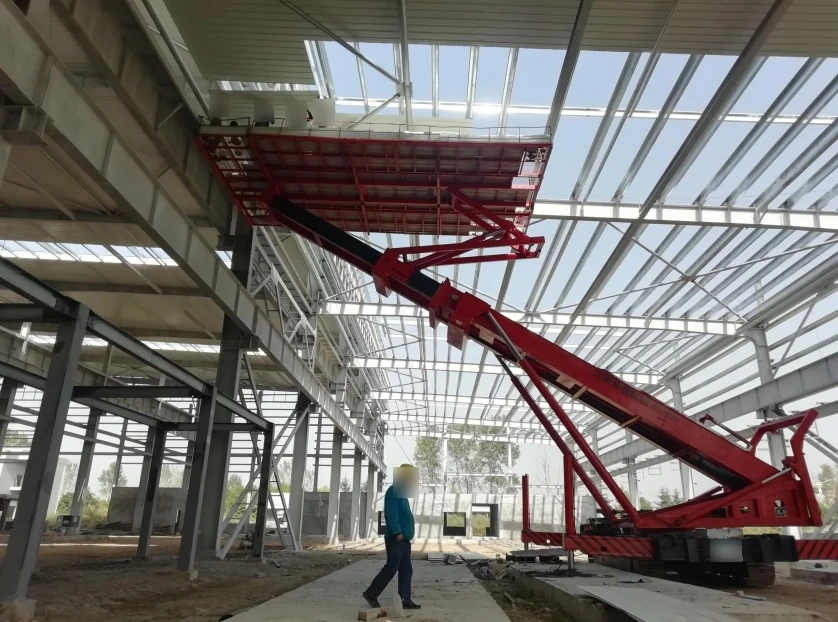
A truck-mounted working deck and a crawler ceiling platform are different supply routes to investigate for an installation task. The useful comparison begins with what arrives, what vehicle or carrier is included, and what work remains before the proposed equipment can be assessed at the site. A truck label does not mean an identified complete vehicle is supplied, and tracks do not establish that a crawler suits the building.
Both routes concern personnel access with a task-specific deck. They are separate from equipment that raises a roof-panel roll former. This guide compares the truck-mounted work-platform route with the crawler ceiling-platform route, without asserting a current truck-platform model, rating or interchangeable deck.
Contents
- Give both supply routes the same ceiling task
- Identify the delivered equipment and local work
- Compare the complete route into the building
- Request comparable platform proposals
- FAQ
Give both supply routes the same ceiling task
Describe the required workface
Identify the ceiling or wall work and where the people, tools and installation materials need to be relative to it. A continuous installation band differs from scattered inspection points. Give both providers the same marked task positions rather than asking each for a generic platform recommendation.
State the material function separately. An access deck does not automatically supply the means of delivering material to the workface. The material-replenishment guide helps define that purchase boundary. It should remain consistent across both architecture enquiries so an excluded service does not disappear from the comparison.
Compare identified proposals rather than class averages
For a truck route, request the actual vehicle/lift/deck arrangement being considered and whether its vehicle is supplied or still to be selected. For a crawler route, request the tracked base, lifting structure and proposed deck configuration. Each needs its own support, entrance and task information.
The architectural route is supported by source descriptions of vehicle-based lifting and optional task decks. Those descriptions do not establish a current truck-platform SKU or universal conversion from a forming lift. Ask the provider what exact combination it proposes for this task instead of inferring one from archive wording.
Keep alternative access methods visible
If neither route addresses a particular task point, the buyer can request a separate access proposal for that exception. Do not stretch the architecture comparison by assuming extra reach, a removable obstruction or a modified deck. The task remains fixed while the candidate changes.
Use the crawler, spider-lift and scaffold comparison for that broader method choice. This article’s narrower question is what a vehicle-based or tracked-deck purchase includes. No category is assigned a generic speed, cost or safety advantage.
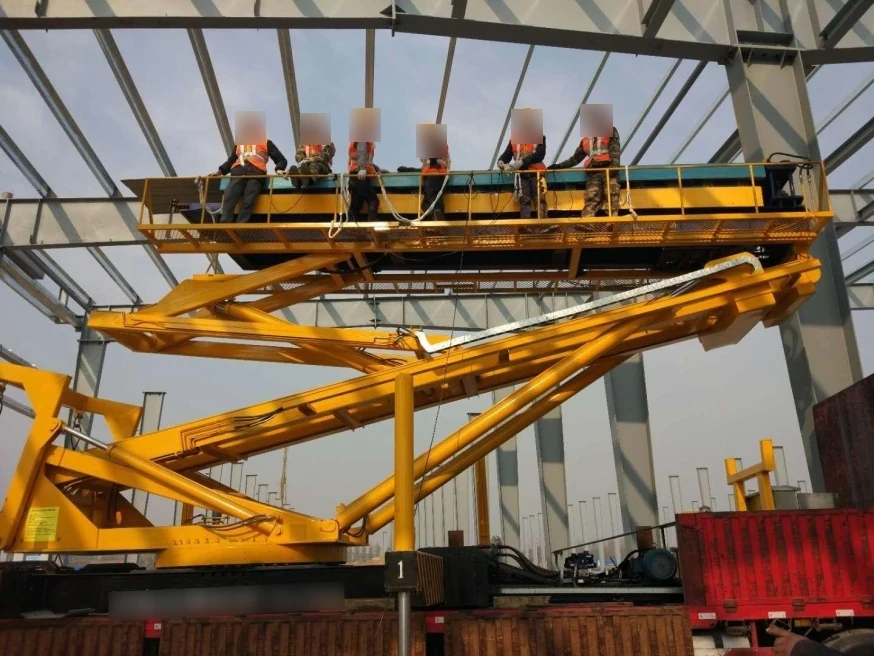
Reference photograph of a working platform beneath roof framing. It does not verify a truck-platform SKU, allowed occupancy, load limits or an approved work method.
Identify the delivered equipment and local work
Ask whether the truck proposal includes its vehicle
A truck-platform concept can leave vehicle sourcing and integration outside the equipment quotation. Ask whether an identified chassis is included, supplied locally or already owned. Request the stated completion boundary for connecting the vehicle, lift and work deck.
If a vehicle is excluded, the buyer needs to know what remains to procure and which parties answer integration questions. If a vehicle is included, the actual installed arrangement and destination requirements still need review. Neither route follows automatically from a reference photo with vehicle-bed context.
Ask how the crawler reaches the receiving boundary
A crawler machine may arrive on a separate carrier. Ask whether the quote includes carriage, which prepared equipment arrangement it assumes and where transport responsibility ends. Do not equate an equipment price with a completed delivery service.
The platform transport-data guide describes the equipment information needed for that discussion. Request a separate scope for arrival services and local work where applicable. This comparison does not select a carrier, approve a loading arrangement or describe internal movement.
Identify deck and support information for each route
A vehicle outline and a tracked outline do not show the complete occupied work arrangement. Ask each provider for the relevant deck, lifting structure, base and support information for its actual proposal. Main deck and extensions must retain their own stated conditions.
The deck-options guide helps clarify what is included in the purchased deck. Keep that question separate from the host route: a similarly shaped deck in two illustrations does not establish interchangeability, common ratings or an identical work envelope.
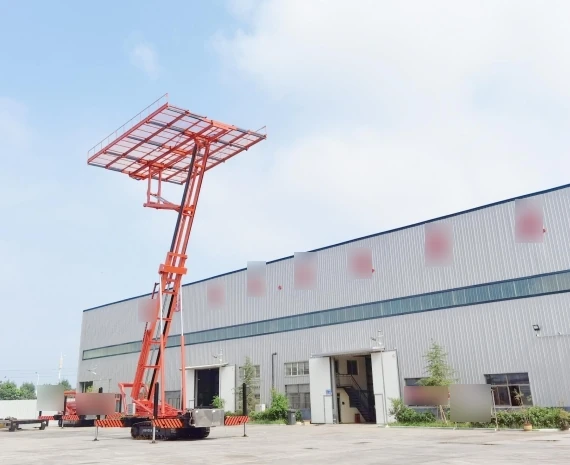
Reference photograph of a platform beside building openings. It does not verify doorway measurements, an entry configuration, clearances or permission to pass.
Compare the complete route into the building
Test one destination with different completion boundaries
Consider an explicitly hypothetical ceiling installation in an industrial hall. Offer A concerns a truck-based lift/deck assembly for a locally provided vehicle. Offer B concerns a crawler platform delivered to an agreed external receiving point. Both still need the building and task review, but their unpurchased work differs.
For A, vehicle selection and integration remain central questions. For B, the scope between carrier handoff and the building task area needs definition. The trade-off is between different supply and completion responsibilities, rather than a claim that one architecture is inherently easier. Ask what each offer would need to reach the same agreed purchase boundary.
| Common purchase question | Truck working-deck proposal | Crawler working-deck proposal |
|---|---|---|
| What equipment is included? | Vehicle, lift and task deck, with exclusions identified | Base, lifting structure and task deck, with exclusions identified |
| How does it reach the destination? | Actual vehicle or separately carried assembly route | Actual carrier proposal for the prepared machine |
| What local work remains? | Vehicle sourcing/integration and other stated exclusions | Receiving and other stated local completion exclusions |
| What enters the building? | Documented entry arrangement for that candidate | Documented entry arrangement for that candidate |
| What occupies the working position? | Candidate-specific vehicle/base and support information | Candidate-specific tracked/base and support information |
| Who supports the delivered package? | Named scope across vehicle and upper equipment | Named scope across platform and supplied options |
Give entry and floor questions their own answer
The connected approach, entrance, turn and working area must be assessed using the candidate’s actual data. A truck may have a different route question from a crawler, but neither is resolved by saying the doorway appears large. Include the intended removal boundary as well as initial arrival.
The building-entry guide and floor-review guide identify the separate inputs. Their methods of organising questions do not establish suitability for either architecture. Each provider must describe the relevant states and contact/support cases for the project reviewers.
Check the surrounding task resources
Power, controls, material provision, local support and emergency planning can change the resources needed for either proposal. Ask which equipment and services the quote includes and which the building or employer must provide. A shared task does not mean the host arrangements share those assumptions.
Great Britain’s HSE personnel-platform guidance discusses task/site selection, overhead conflicts and material considerations. It supports reviewing the actual work and site together. It does not classify either ARCLIFT route, approve an occupied configuration or establish a model-specific limit.
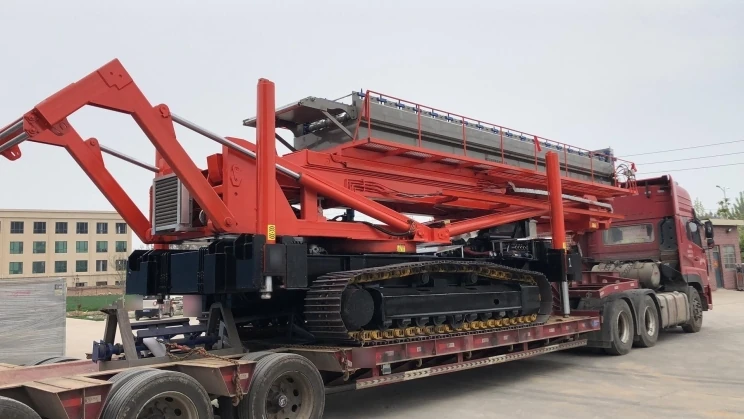
Reference photograph of crawler equipment on a separate carrier. It does not verify the carrier quotation, load security, transported dimensions or road permission.
Request comparable platform proposals
Expose the unfinished part of each offer
A buyer can compare proposals at a preliminary stage if their unfinished scope remains explicit. Ask for the equipment arrangement proposed now, the information needed next and the work excluded from the price. An unresolved chassis candidate and an unresolved internal route are different questions.
Keep them beside the relevant proposal rather than converting both into a generic “subject to site review” note. The next purchase decision may be whether to investigate a vehicle candidate or commission the missing route/floor information. The supplier should be able to identify that next question without claiming that the equipment is already selected.
Test a repeated-work scenario without promising mobility
In a second hypothetical brief, the purchaser wants the same asset considered for several buildings. Ask each route to address the known destinations, task differences and transport/completion boundaries. A vehicle-based route does not establish universal road readiness; a tracked route does not establish universal indoor access.
The buyer can then see which projects remain outside the proposed scope and whether another asset or service is needed. Do not turn a broad use list into a claim that one platform covers every location. Any return visit after the building changes needs its relevant inputs kept current.
Send the shared brief and route-specific questions
- Mark the ceiling/wall task, required height relationship and exceptional positions.
- Identify the material provision and simultaneous work requirements separately from the host route.
- Provide destination, site stage and the proposed work period.
- Include entrance/access geometry and the requested transport handoff.
- Provide floor or ground records for the candidate-specific support review.
- Request the outrigger or other support-space information appropriate to each proposal.
- State power/control inputs and any building restrictions affecting them.
- Ask what vehicle, carrier, local completion and documentation each price includes.
- Identify the party expected to close missing vehicle or building information.
Compare support across the complete asset
A truck route can involve vehicle-related and upper-equipment information from different providers. A crawler proposal can also involve separate power/control or accessory suppliers. Ask how the buyer obtains applicable support information across the actual package.
The local-support purchase guide helps distinguish advice, attendance and parts supply. A broad promise of support cannot establish a local technician, service network or agreed response. Keep those commitments attributable and limited to what the provider actually offers.
Recognise an architecture that remains unresolved
A proposal may not fit when its actual host/deck combination is unidentified, required local completion has no provider, or the building cannot be assessed using the candidate’s information. Another host or divided access scope needs a separate proposal. This comparison supplies no truck-platform rating, road permission, deck-conversion procedure or authorisation for occupied work.
Ask for two routes against one task
Discuss the truck work-platform supply route with ARCLIFT, identifying whether a crawler alternative should also be considered. Send the task height and geometry, site entry, floor information, material needs, destination and transport boundary. Ask which vehicle, deck, integration and local services the proposal includes. ARCLIFT coordinates technical selection and supply questions; final project-specific equipment and site conclusions remain with the appointed parties. Editorial photographs show reference contexts, including different apparatus, and do not verify a current truck-platform model.
FAQ
Does the truck-platform route identify a current model?
The route describes an architectural supply discussion. An actual offer must identify the proposed vehicle/lift/deck combination and its available information. This article provides no current SKU, numerical specification or universal host compatibility.
Is a crawler carried on a truck a truck-mounted platform?
A carried crawler is separate cargo unless the actual equipment documentation establishes a different relationship. Identify the machine and its carrier separately. A transport photograph does not define the operating architecture.
Can the same deck be used with both hosts?
Do not infer that from similar photographs or an optional-deck description. The exact combination needs attributable configuration information. A proposed change is an equipment question, not permission to exchange components.
Which route is better for indoor work?
There is no universal answer. Compare identified candidates against the same connected route, floor information, task geometry and building resources. Vehicle inclusion, carrier services and local completion also need equivalent commercial boundaries before comparing prices.