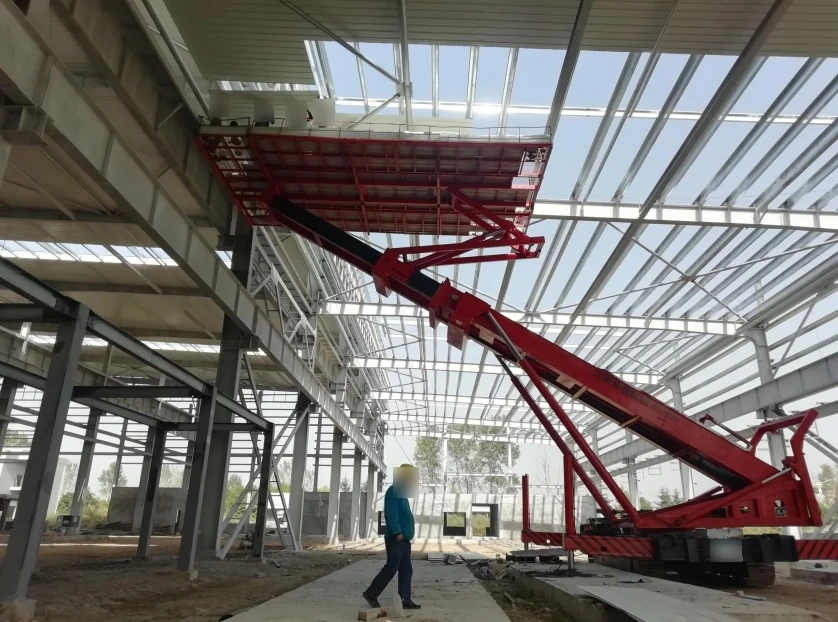
A ceiling contractor can buy an equipment asset or investigate a separately offered service for a defined access task. Those are different purchases, even when both proposals show a large platform. The buyer needs a common endpoint comparison: what task is addressed, what the project must still provide, who owns the equipment and what happens when the ceiling work ends.
The platform hire-enquiry guide covers time-bounded equipment hire. This article instead compares equipment ownership with an actual proposed access-service deliverable. It does not assume an operator, complete work-at-height service or rental offering exists, and establishes no such service from ARCLIFT.
Contents
- Define the two purchases before comparing amounts
- Match the task and project-resource boundaries
- Reconcile a hypothetical asset and service offer
- Request comparable endpoints from actual providers
- FAQ
Define the two purchases before comparing amounts
Describe the purchased asset
An equipment purchase should identify the actual platform, included assemblies, options and delivery boundary. The buyer also needs the attributable information relevant to that configuration. Owning the asset is not the same as having the floor, work method, personnel arrangements or material interface established for the intended ceiling task. The crawler ceiling-platform family provides architecture context, while an actual offer must say which equipment and information are supplied. A family illustration cannot define what the buyer would own or the site work included in the order.
Describe the proposed service deliverable
An access-service enquiry should ask the actual provider what outcome it offers and where that scope begins and ends. It might address an identified access activity while excluding material installation, floor assessment or other project work. Do not use a broad phrase such as full service without the provider’s actual description. This article does not establish that a provider supplies equipment operation, personnel, transport or task management. Those are questions to be answered by an actual offer, rather than benefits assumed from the service label.
Keep equipment hire as a separate middle case
Hiring a machine for a period is not automatically the same as buying a defined access service. A hire offer can leave significant task planning and project resources with the customer. If that is the actual alternative, use the hire-enquiry guide and keep its equipment, period and return scope explicit. Do not compare an asset purchase with a service total while describing the latter as hire merely because equipment is present. The buyer needs the real purchase boundary, not an interchangeable commercial label.
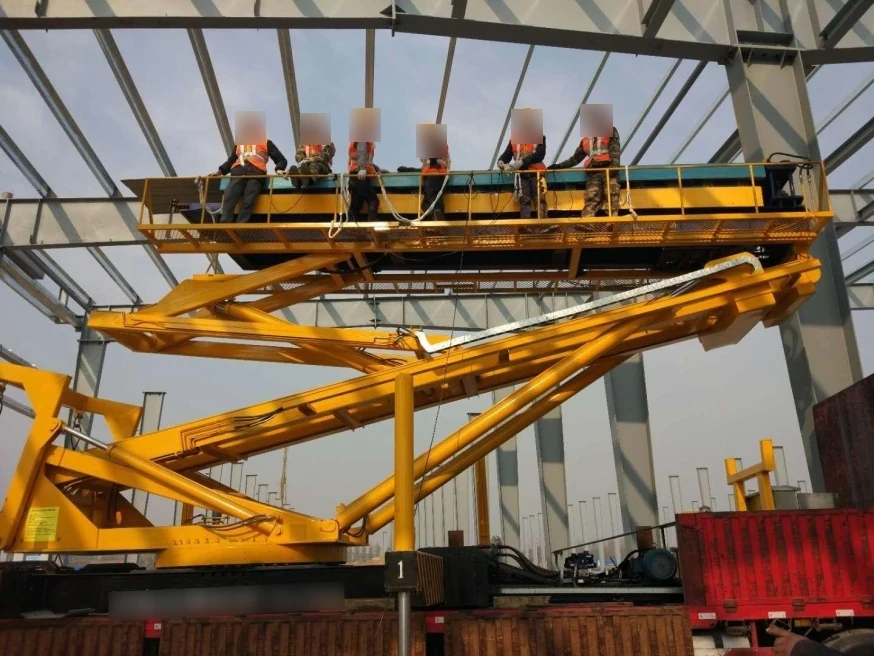
Reference photograph showing a yellow working deck beneath roof framing with vehicle-bed context. It does not verify a permitted crew, service deliverable or approved task arrangement.
Match the task and project-resource boundaries
Give both providers the same ceiling assignment
Identify the actual ceiling faces, task-height references, component requirement and exceptional positions. State what completion the project needs, without assuming the equipment seller or service provider supplies it all. A service addressing only the main ceiling strip differs from one also responding to an obstructed bay. Likewise, an asset proposal may address an identified configuration while leaving a particular task unresolved. The work-zone layout guide develops the spatial inputs that keep those coverage statements comparable.
Identify what the project still supplies
Ask each offer to name the site resources and outside activities it assumes: floor and access information, material presentation, facilities or other actual dependencies. Do not invent a universal list of included services. A provider can offer a coherent but limited package if its boundary is clear. The buyer should see whether another local purchase or project decision is needed to reach the intended endpoint. An equipment asset and a service can both leave the same missing task function, despite having very different commercial descriptions.
Separate commercial scope from responsible site decisions
An actual service agreement does not by itself establish every decision about the building, task or equipment. Great Britain’s HSE personnel-platform guidance frames selection around the job and site. This provides general context for identifying project inputs even where another provider is involved. It does not decide the legal allocation of responsibilities in this transaction, classify the actual candidate or establish that a service provider takes over all work-at-height management at another destination.
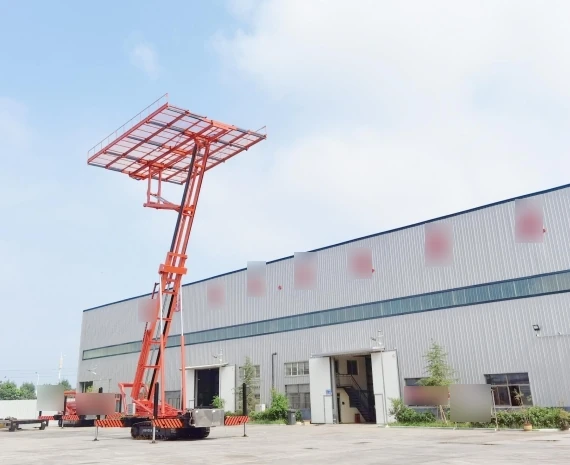
Reference photograph showing an empty raised platform beside building openings. It does not verify an accepted building route or the scope of a provider’s attendance.
Reconcile a hypothetical asset and service offer
Keep the common endpoint explicit
Consider a hypothetical contractor with a named ceiling installation strip and one obstructed inspection point. Offer A supplies an identified platform asset to a stated delivery handoff; the project would arrange its own task resources. Offer B proposes a defined access service for the main strip, but excludes the obstructed point and material presentation. Neither is an actual ARCLIFT offer or evidence of market availability. The common project endpoint is access for both named tasks with the material interface understood, so neither offer should be described as complete against that endpoint without its remaining scope.
Compare the unprovided work rather than the labels
Ask A what configuration response addresses the obstructed point and which information accompanies the asset. Ask B for a response to its excluded point and confirmation of the project resources its service assumes. The trade-off is between acquiring an asset with continuing ownership questions and procuring a bounded service with its own coverage and availability conditions. This page does not determine the economic choice. It exposes the actual work and resources that would otherwise be omitted when one equipment amount is compared with a service total.
Carry the end-of-task boundary into the decision
After the ceiling assignment, the asset buyer needs an actual plan for custody, storage or onward transport and continuing equipment information. A service proposal needs its own completion and equipment-removal boundary under the actual terms. The end of installation does not automatically complete either purchase’s outstanding obligations. Do not assign a guessed residual value, collection charge or remaining ownership cost to finish the comparison. Obtain the relevant actual responses and let the buyer’s project and commercial advisers assess them against its own requirements.
| Comparison boundary | Equipment asset route | Defined access-service route |
|---|---|---|
| What is purchased? | Identified platform, included items and attributable information | Actual stated service deliverable and the equipment or resources it includes |
| Task coverage | Configuration response needed for the named task positions | Service scope must identify addressed and excluded positions |
| Project-provided resources | Local work and task resources outside the equipment offer | Resources expressly assumed from the project under the service proposal |
| Material presentation | Separate unless the actual offer identifies an included function | Separate unless the actual service scope expressly covers it |
| End of ceiling task | Owner’s continuing custody, storage or next-project questions | Provider-specific completion and removal boundary |
| Future use | A new task requires its own fit and logistics review | Another service request requires its own actual availability and scope |
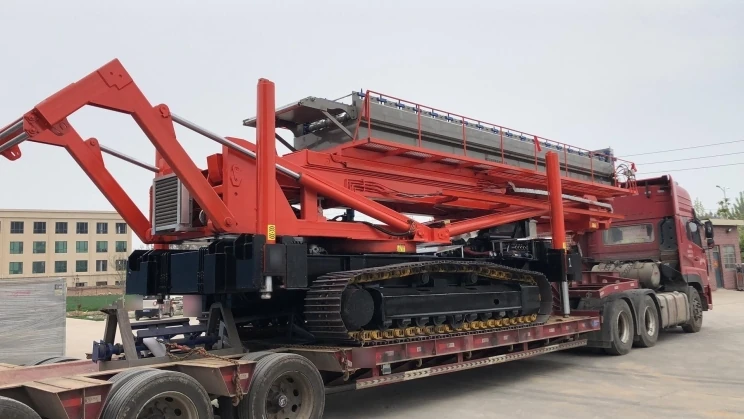
Reference photograph showing folded crawler equipment carried on a separate low-bed trailer. It does not verify a completed delivery or the transport scope in either proposal.
Request comparable endpoints from actual providers
Obtain the response that makes the alternative real
An equipment proposal can be compared with a service only after the service has an actual provider and defined scope. A possible local service is a procurement route to investigate, not an equivalent completed offer. Likewise, an asset brochure is not a task-specific equipment proposal. Ask each party to identify what it can actually provide and what remains conditional. Keep unresolved site work and excluded task positions attached to that response instead of assigning them to an unnamed future provider.
- Identify the ceiling faces, roof-zone references and exceptional task positions in the common assignment.
- Keep task height, proposed platform datum and floor information separately named.
- State the material requirement and who is expected to define the presentation boundary.
- Provide access-route, destination and transport or delivery-handoff information relevant to both proposals.
- Ask what actual equipment, personnel or activities each offer includes without assuming a complete service.
- Compare ownership or service-completion endpoints, including unresolved local work after the main task ends.
Recognize an imaginary service alternative
A comparison may not fit a purchase decision if the service has no actual provider, its coverage is undefined or the asset has no task-specific configuration response. A service label does not eliminate site questions, and ownership does not establish future use. This guide supplies no rental offering, financial threshold, operational arrangement or interpretation of service-contract duties. The buyer needs actual proposals and appropriate project and commercial review. Do not treat a theoretical access service as available merely to make an equipment quotation appear unattractive or favourable.
Ask ARCLIFT for the equipment-side alternative
Discuss a ceiling-platform supply proposal with the common task, height references, floor information, site zone, destination and transport boundary. State that a separately sourced access-service proposal is being compared and identify its actual endpoint. ARCLIFT’s role here is technical selection and supply coordination; no rental or complete access service is established. Final project-specific equipment and service commitments require their actual providers and review. Editorial photographs do not demonstrate available services, a supplied crew or a completed customer project.
FAQ
Is an access service the same as hiring a platform?
Not automatically. Hire describes equipment access under actual period and return terms, while a service may define another bounded deliverable. Read what the real provider includes and excludes. The presence of equipment does not establish that operation, task management or material installation is included. Use the actual scope rather than treating the commercial labels as interchangeable.
Does a service proposal remove the need for site information?
No. The provider still needs to understand the actual task and the conditions relevant to its offer. The project must identify the information and decisions it supplies, while the actual agreement defines the provider’s scope. This article does not transfer all responsibility to either party or establish a legal allocation for an unknown destination and contract.
Can the asset price be compared directly with a service total?
Only after the buyer understands the differing equipment, work, resources and endpoints. An asset amount and a service total can both omit necessary project activities. Expose those differences and obtain actual responses instead of inventing completion costs or future asset values. The comparison supports the buyer’s assessment; it does not provide a financial recommendation or a universal preference.
Does ARCLIFT offer the service described in the example?
No such offering is established here. The example is an explicitly hypothetical procurement comparison. Contact ARCLIFT for a bounded equipment selection-and-supply discussion and approach an actual service provider separately where that route is being investigated. Neither the article nor its reference photographs demonstrate rental availability, a local team or a complete work-at-height service.