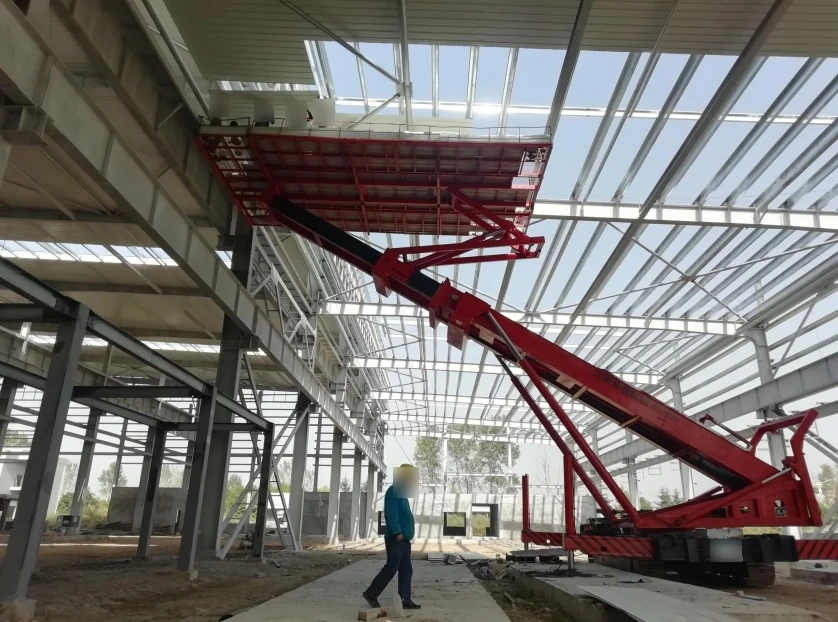
A crawler ceiling-platform rental enquiry should describe the hire package the project needs, rather than request a rate for an unnamed large platform. The task, availability period, delivery boundary, site resources, handover and return obligations can all change what a provider is pricing. Compare those services before interpreting a headline hire price.
This is a framework for approaching an actual hire provider; it does not establish that ARCLIFT offers rental or that any particular machine is available. Begin with the crawler platform buyer guide if the access concept is still open. Here the outcome is a time-bounded enquiry that lets a provider explain the proposed equipment and included services.
Contents
- Define the task the hire must cover
- Connect the requested period with site readiness
- Compare the complete hire package
- Prepare a usable enquiry and return brief
- FAQ
Define the task the hire must cover
Name the ceiling or wall assignment
Describe the workface and intended outcome: a continuous ceiling installation band, defined maintenance points or another specific task. Include material and tool needs and the proposed work positions. A building height alone does not tell a hire provider what people need to do there.
The crawler ceiling-platform family provides architecture context for a broad deck. It does not identify a rentable asset, an approved occupant count or a particular task envelope. Ask the hire provider for the actual candidate and which task information is needed to investigate it.
Separate access from other project services
State whether the enquiry is for equipment supply only or also asks the provider to quote identified attendance, handover or other services. Do not assume an operator, local support person or material-handling service accompanies a machine. Those are separate questions for the actual provider.
Likewise, supplying an operator would not automatically transfer control of the building, material task or project planning. The enquiry should let the provider state its responsibilities while the project identifies its own. Avoid using a broad “fully serviced” label without an explanation of what work is covered.
Identify task exceptions before requesting a full-period quote
List positions that differ from the main ceiling face: restricted bays, obstructed points or areas available only in another work window. Ask whether the hire proposal addresses them or leaves a separately defined requirement. The same platform height does not establish identical access to every point.
This lets the buyer compare a single hire package with a divided task scope. A second access arrangement might be worth investigating for an exception, but no alternative is selected by the enquiry. The purchase question is whether the provider’s stated coverage matches the whole assignment.
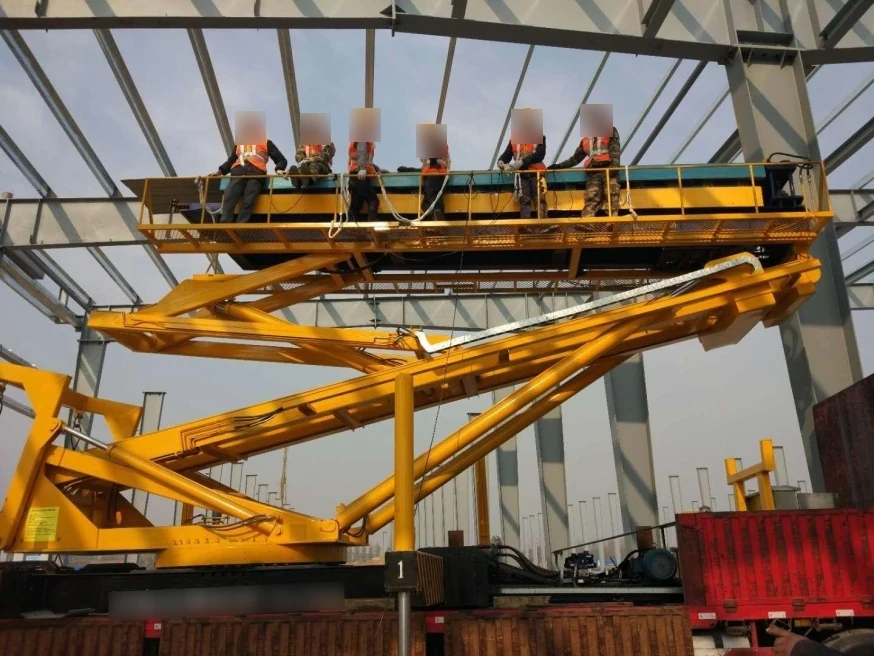
Reference photograph of a working platform beneath roof framing. It does not verify a truck-platform SKU, allowed occupancy, load limits or an approved work method.
Connect the requested period with site readiness
Distinguish the project window from equipment availability
Tell the provider when the site expects to need the task completed and ask what availability, reservation and collection terms it actually proposes. The project programme is a requirement, not evidence that a particular asset has been reserved.
Identify dependencies that could change the requested period, such as release of the work area, completion of building information or availability of the material task. Ask how the provider handles a changed request under its proposed terms. This article establishes no standard charging rule, cancellation condition or hire duration.
Define what must be ready at delivery
Ask where delivery ends and what the provider expects the site to have arranged at that boundary. A machine can arrive while its internal route, floor review or task position remains unresolved. Receiving it does not establish readiness for occupied work.
Use the entry survey and indoor floor guide for the relevant input categories. The hire enquiry should identify their current status and who supplies missing information. Do not promise a clear route simply because another device entered previously.
Ask how interruptions affect the service scope
A project may expect inactive periods, planned closures or movement between separated work windows. Describe that intended pattern and ask the provider what it proposes for equipment presence, collection, repeat delivery and support during those periods. Do not convert shift hours into an assumed rental cost.
For a hypothetical enquiry, the workface is available in separate windows but the equipment would occupy a shared area between them. One proposal might retain the machine there, while another prices separate attendance or delivery boundaries. Each needs the site’s agreement and provider-specific terms; neither is automatically the cheaper plan.
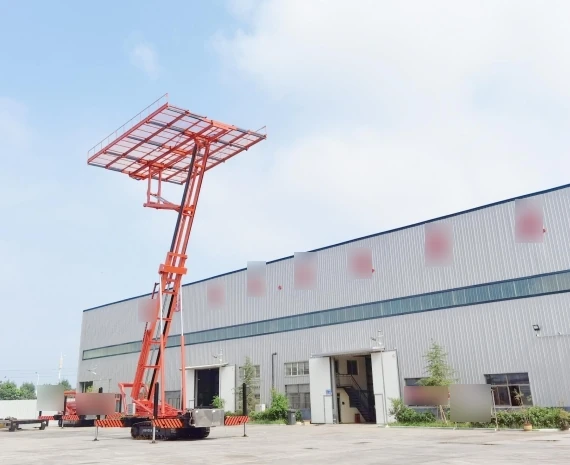
Reference photograph of a platform beside building openings. It does not verify doorway measurements, an entry configuration, clearances or permission to pass.
Compare the complete hire package
Put inclusions beside the period being quoted
Ask each provider to price the same task, requested period and completion boundaries. Equipment-only hire can look different from a package including named delivery or handover services. Expose these differences rather than comparing a day rate with a wider service price.
The following is a purchasing worksheet. The entries are questions for the provider, not standard terms or a recommended hire contract.
| Package element | Response needed | Cost or responsibility left open if omitted |
|---|---|---|
| Identified equipment | Actual candidate and task scope considered | A rate for a class may not concern a suitable candidate |
| Delivery and collection | Start/end locations and included services | Local transport or receiving services may remain separate |
| Requested period | Provider’s actual availability and period basis | Project need does not establish reservation |
| Handover | Included information and briefing scope | Familiarisation or other attendance may be unpriced |
| Support during hire | Contact, scope and attendance conditions | A telephone contact does not establish local response |
| Return condition | Provider-specific responsibility and collection assumptions | The end of site work may differ from completion of return obligations |
Compare a short main task with uncertain follow-up work
Consider an explicitly hypothetical project with a defined initial ceiling task and possible later visits after another trade finishes. Ask a provider to distinguish the initial request from the optional follow-up requirement. A single long reservation and separate proposed hires involve different availability and site-occupation assumptions.
The trade-off is between securing the service actually offered and avoiding an undefined period with unclear responsibilities. No universal utilisation threshold decides it. Use the forming-lift buy-or-rent comparison only for its ownership-versus-access cost categories; personnel-platform fit and hire terms still need their own provider response.
Keep selection and employer responsibilities visible
Great Britain’s HSE GEIS6 publication addresses people selecting, specifying and managing MEWPs and the relevant use risks. It provides context for asking about the intended task and management resources even when equipment is hired. It does not establish the classification or suitability of a particular crawler platform.
A hire agreement and equipment delivery are separate from project decisions about the floor, work method, competence and emergency arrangements. Ask the actual provider which information and services it supplies to those processes. Do not treat hire as a way to remove the employer’s unresolved site questions.
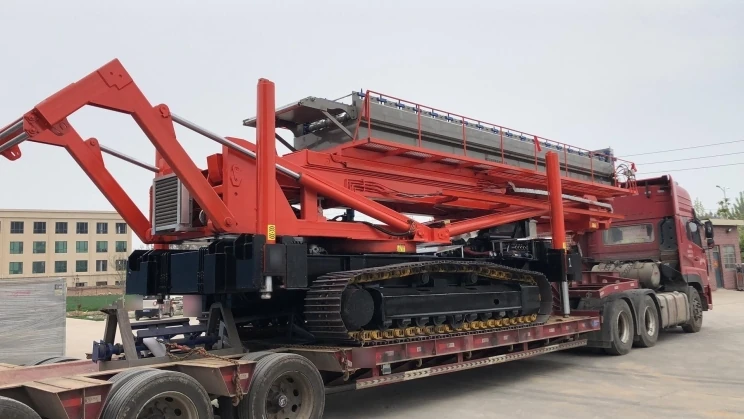
Reference photograph of crawler equipment on a separate carrier. It does not verify the carrier quotation, load security, transported dimensions or road permission.
Prepare a usable enquiry and return brief
Request the missing input before finalising the period
A provider may need the actual route and task information before discussing a specific asset. Send known facts and identify the missing input that could change selection or timing. An enquiry can advance usefully without pretending that every condition is settled.
For example, if the entrance is defined but the proposed floor support information is missing, ask what equipment-side data the floor reviewer needs. Do not request a firm service based on an invented floor conclusion. Keep reservation and commercial discussions tied to the provider’s actual response.
Define what happens when the task ends
The end of ceiling work does not by itself define the collection condition. Ask the hire provider which equipment state, available access, attendance and receiving information its collection proposal assumes. These must come from applicable equipment instructions and the actual service scope.
Materials left in the work area, another contractor’s occupation or a changed doorway can affect the collection question. Ask the site team to identify such dependencies before agreeing the hire boundary. This is not a withdrawal or preparation procedure; it identifies what the return service must address.
Send the task and service enquiry together
- Identify the ceiling task, work height and geometry of exceptional points.
- Describe people, tools and material needs for the actual assignment.
- State the requested project windows and unresolved timing dependencies.
- Provide destination, transport handoff and delivery/collection locations.
- Attach access-route information and known changes expected during the hire.
- Provide floor or ground records and request candidate support/outrigger information.
- State available power, permitted energy sources and control-related site questions.
- Ask for included handover, support, documentation and provider-specific return responsibilities.
- Identify who supplies wind/environmental information for exposed parts of the task.
Compare the written reply with the intended package
Read the provider’s qualifications against the original enquiry. If the proposed period, collection point or support scope differs, place that change beside the offer. A reply can be useful while leaving a particular task or date unresolved; it should not be represented as a complete reservation.
The platform support-purchase guide helps clarify advisory response versus attendance and parts supply. The familiarisation guide addresses the information scope of handover. Keep those topics specific instead of treating every service as included in hire.
Recognise a hire offer that leaves the task uncovered
The proposal may not fit when no actual candidate is identified, the building cannot provide the assumed work period or route, or support and return boundaries remain undefined. A low headline rate cannot resolve those conditions. This guide offers no rental availability, standard terms, operating instruction or permission for occupied travel or ceiling work.
Ask an equipment question without assuming a rental offer
Discuss the crawler platform configuration with ARCLIFT. Describe the task height, site access, floor information, material needs, destination and transport boundary, and say that your wider procurement comparison includes hire. Ask what equipment-selection or supply information can be provided; this contact does not establish rental availability. Final project-specific configuration, hire and site arrangements require the relevant providers and appointed reviewers. These editorial images cannot identify a rentable asset or verify included services.
FAQ
Does this guide mean ARCLIFT rents crawler platforms?
No rental offering or asset availability is established here. Use the article to prepare questions for an actual hire provider. ARCLIFT’s published role is equipment selection and supply coordination.
Should the enquiry ask only for a daily rate?
Request the actual task and service package first. The period basis, equipment candidate, delivery, collection, handover and support scope all need identification before a rate can support a meaningful comparison.
Does a hired platform need a site review?
Hiring does not establish the route, floor, task or emergency arrangements. The equipment and responsible project parties need the applicable information for the actual candidate and intended use. Delivery is not work authorisation.
What if the work window changes?
Notify the provider of the changed requirement and ask for its actual commercial and availability response. Do not assume a standard extension, charge or reservation condition. Keep the revised site dependencies beside the proposed service.