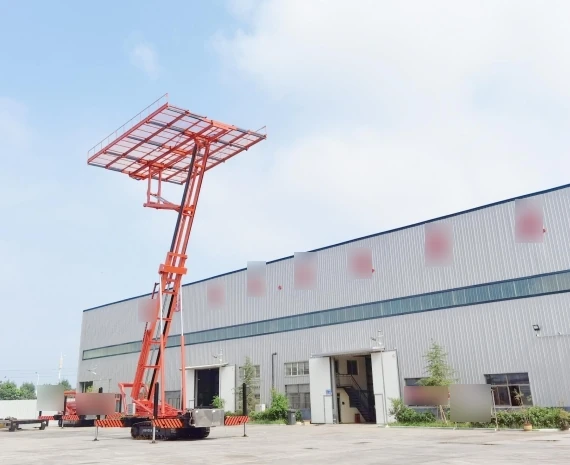
Aerial platform familiarization connects a person’s existing competence with the particular machine being handed over. For a crawler ceiling platform, the buyer should specify the configuration information, briefing scope and records needed to make that connection. A familiarization attendance sheet is not, by itself, an operator qualification or permission to use the equipment at a particular site. This guide helps purchasers agree a useful handover without giving operating instructions.
The central purchasing question is simple: what will the receiving team know about the delivered machine that it could not safely infer from a product-family description? The answer should cover applicable instructions, configuration differences, task restrictions and where unresolved questions go. The crawler platform buyer guide addresses selection; this page addresses the knowledge and responsibility transfer after an equipment proposal has been identified.
Contents
- Identify the machine and people covered by the handover
- Define the briefing around configuration differences
- Compare handover deliverables before agreeing supply
- Close information gaps without overstating authorization
- Questions about platform familiarization
Identify the machine and people covered by the handover
Use an equipment identity that survives delivery
Ask for the relationship between the offer reference, delivered equipment identifier and instructions supplied with it. A trade name can cover configurations with different assemblies or options, so record the actual version being handed over. Where final identification is unavailable at quotation, state when it will be confirmed. The receiving team should be able to reconcile delivery paperwork with the briefing record without guessing from colour or deck appearance. Keep serial numbers and other traceable project details in the private handover file rather than a public training example.
Distinguish qualification, familiarization and site permission
The HSE MEWP guidance for Great Britain distinguishes formal training from familiarisation with the particular make and model. This supports separating those records; it does not establish any person’s qualification or the suitability of an offered machine. The employer or duty holder needs to define how competence, familiarization and site authorization are assessed in its applicable setting. Procurement should ask which parts of that process a supplier delivers and which remain with the receiving organization.
Match participants to their actual roles
An operator, supervisor, maintenance coordinator and purchasing representative may need different information. Do not assume one presentation gives every attendee the same authority. Define the intended audience for each handover element and identify who checks that the right people are present. A commercial representative might confirm receipt of manuals but have no role in authorizing operation. Where several shifts or contractors are involved, ask the receiving employer how coverage will be maintained. The supplier’s scope should describe the agreed participants without claiming responsibility for an entire future workforce.
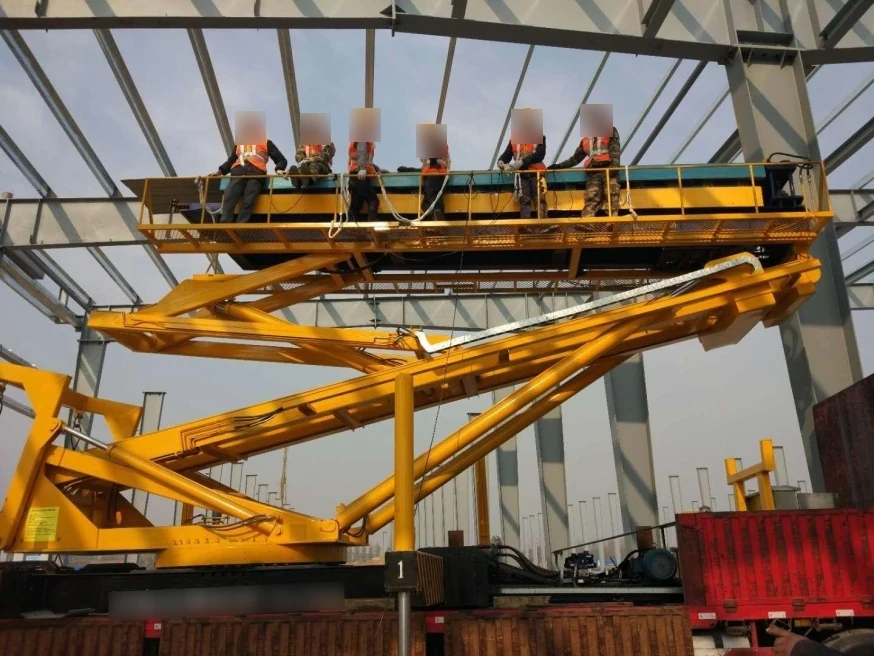
Reference photograph of a platform in a building. It does not record a familiarization session, identify qualified operators or confirm the functions of the supplied machine.
Define the briefing around configuration differences
Make the current manual available to the receiving team
Specify the instruction language, format, revision and relationship to the supplied equipment. Ask whether the documents can be reviewed before the scheduled handover, and how queries will reach the technical information provider. A file being present in a shipment is different from the team being able to locate and understand the relevant information. If an amended instruction is expected, identify which topics remain open until it arrives. Avoid replacing the controlled manual with a shortened sales summary whose purpose and coverage are different.
Identify option differences without teaching operation here
The handover scope can list the subjects that require machine-specific explanation: fitted controls, power arrangement, accessories, warnings, limitations and emergency information, as applicable. It should point to the relevant instructions rather than reproduce a generic sequence. Ask the supplier which supplied options differ from the base offer and which descriptions apply only to other versions. A control labelled remote, for example, does not establish who may use it, in which mode, or whether any particular movement is permitted. These are configuration questions for the proper instructions.
Tie the handover to the intended assignment
Provide the receiving team with the proposed task height, ceiling geometry, material-handling boundaries and access conditions. Familiarization should not be presented as an assessment of these site inputs, but the handover needs to expose where an intended task calls for information that has not yet been confirmed. For example, a purchaser may have requested a platform for a ceiling work zone while a later contractor expects a different work position or accessory. Make that change a visible review question. Use the work-zone layout guide to organize the space requirements separately.
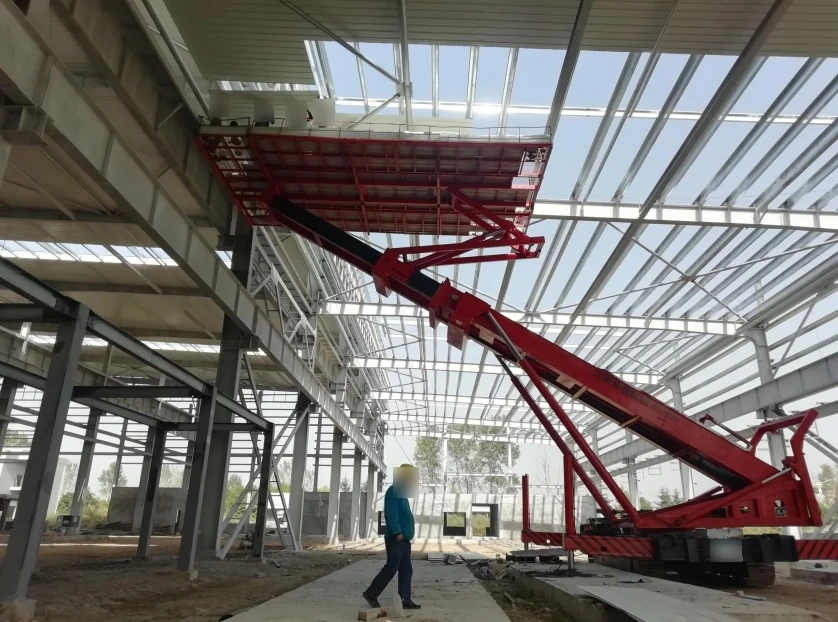
Reference photograph of a platform beneath roof framing. It cannot establish model-specific clearances, approved tasks or the instruction content needed for familiarization.
Compare handover deliverables before agreeing supply
Turn a general training promise into a defined scope
Offers sometimes describe a handover broadly while leaving its location, equipment basis or participants undecided. The following editorial table provides questions for comparison. It does not prescribe a training syllabus or establish the legal sufficiency of a session. The useful trade-off is between a convenient briefing format and the evidence needed to confirm what was actually covered. Buyers should resolve this interface before transport dates and site availability become commitments.
| Proposed deliverable | Clarification to request | Evidence of completion | What it does not establish |
|---|---|---|---|
| Equipment introduction | Exact configuration and instruction revision | Record linking the session to that machine | Qualification for other models |
| Document handover | Language, file access and update responsibility | Received document index with open questions | Understanding merely from receipt |
| Option explanation | Fitted options and excluded variants | Agreed subjects and responsible information provider | Unlisted feature availability |
| Participant briefing | Audience, prerequisites and receiving employer role | Accurate attendance and covered scope | Site authorization for every attendee |
| Follow-up support | Query channel, responsible party and agreed scope | Traceable responses to remaining questions | Unlimited service or response commitments |
Keep the record factual about what occurred
Record the equipment identity, instruction revision, date, participants, subjects covered and unresolved items. If the activity was a remote document discussion rather than an on-machine session, describe it that way. If a participant missed part of the scope, keep that limitation visible. A record should not retroactively expand a short introduction into a comprehensive assessment. Ask the receiving organization who will evaluate whether the completed activity meets its requirements. The supplier’s completion note and the employer’s decision can refer to each other while remaining separate records.
Preserve questions that need a different decision owner
A question about a fitted assembly may go to the equipment information provider. A question about qualification belongs with the employer’s competence process. A question about permission to enter a restricted work area belongs with site management. Record the destination of each question so the handover does not end with a vague request to confirm everything. The emergency-readiness guide provides a separate route for emergency-planning dependencies; attendance at familiarization should not be used to close that work automatically.
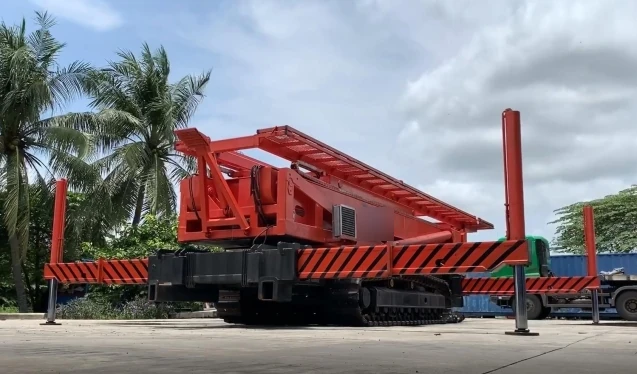
Reference photograph of a different crawler arrangement in a folded position. It does not identify an authorized travel mode, show a teaching exercise or establish shared controls across machines.
Close information gaps without overstating authorization
A proposed handover may not fit when it covers another equipment version, relies on an unavailable instruction language, excludes the people responsible for the work, or leaves important options unexplained. A familiarization record cannot repair missing qualification or approve an unsuitable site. Keep those issues with their proper decision owners before recording the affected scope as complete.
Prepare the receiving team’s questions in advance
- Equipment identifier, offered options and the matching instruction revision for the delivered configuration.
- Intended working height and ceiling geometry, including tasks that differ from the original selection brief.
- Materials and tools proposed for the work, with any unconfirmed handling assumptions highlighted.
- Floor restrictions and building access routes relevant to where the receiving team expects to use the equipment.
- Outdoor exposure or wind-related questions requiring the applicable equipment instructions and site review.
- Destination requirements and the employer’s process for competence and site authorization.
- Transport arrival date, briefing location and availability of the equipment and designated participants.
- Power and control configuration topics to be explained by the responsible technical information provider.
- Document language, format, access arrangements and the owner of future revision notifications.
- Participant roles, unanswered questions and separate decisions still required after the handover.
Record limited completion precisely
A purchaser may receive complete documents while the agreed explanation of a later accessory remains pending. Record both facts rather than forcing a single complete or incomplete label over the entire package. Identify the affected configuration and what evidence will close the remaining question. This makes the handover useful for scheduling and for the receiving employer’s decisions. It also prevents a commercial milestone from silently enlarging the supplier’s technical scope or the participant’s authorization.
Revisit the record when the knowledge basis changes
Agree who communicates a substituted control assembly, revised manual or changed supplied option. The receiving employer then decides what additional review or familiarization is needed for the people and tasks concerned. A move to another site may change permission and task planning even when the machine itself is unchanged. Keep those distinctions visible: equipment knowledge, task assessment and site authorization have related but different scopes. The handover file should preserve the earlier record while making the current applicable information easy to identify.
Send ARCLIFT the proposed platform configuration, task height, site and floor constraints, destination, transport schedule and the roles expected at handover. Identify which instruction languages and option explanations your receiving team needs. As a technical selection and supply partner, ARCLIFT can clarify the supply deliverables and unresolved equipment questions. Final competence and authorization decisions remain project-specific responsibilities of the relevant employers and site parties. This editorial guide describes handover information, not operating procedures or a qualification programme.
Questions about platform familiarization
Does a training card replace familiarization with the supplied machine?
The records serve different purposes. A qualification record does not identify which instructions, options or controls a person has encountered on the delivered machine. The responsible employer determines what machine-specific familiarization is needed within its applicable competence and authorization arrangements.
Can a supplier demonstration be called complete familiarization?
Only the actual agreed scope and evidence should be recorded. A demonstration may cover selected subjects without covering every requirement of the receiving organization. Describe its equipment basis, audience and limitations, then leave the adequacy decision with the responsible party.
What happens when a different option arrives with the equipment?
Reconcile the delivered option against the offer and instruction set. Record the difference and ask the appropriate information provider to clarify it. The receiving employer should decide whether the change requires further review before the affected scope is authorized.
Must every participant sign the same approval statement?
No universal statement follows from this guide. A document receipt, attendance acknowledgment and authorization decision record different facts. The project’s responsible parties should define the records and signatory roles so each signature has a clear and limited meaning.