
A commissioning visit is useful when its scope matches the equipment and site interfaces that will actually be available. Delivery of a lift does not establish a connected production arrangement: the former may come from another provider, the feed equipment may remain outside the order, or the permanent roof receiving area may be unfinished. Before buying attendance, describe what the visit is meant to resolve and what each participating party must supply.
This guide concerns lifting a compatible roof-panel roll former toward its intended output position. It helps buyers prepare the combined arrangement and request defined coordination services. The FAT and SAT guide covers the separate question of observations and acceptance records. Neither a visit booking nor this article supplies a trial procedure, operating limit or acceptance decision.
Contents
- Define the service the project needs
- Prepare the five physical interfaces
- Compare the visit with the production arrangement
- Purchase a bounded visit scope
- FAQ
Define the service the project needs
Identify the equipment that will be present
Name the actual former, lift, feed equipment and supplied accessories. Include current drawings and revisions, particularly where the forming line comes from another supplier. A similar profile or familiar machine photograph does not establish that the same mounting, mass distribution, controls or outlet relationship applies. The appointment must refer to the equipment the project intends to combine.
The crawler roll-forming lift catalog and truck-mounted roll-forming lift catalog describe the two lift architectures. Selection of either leaves project interfaces to be defined. For a truck arrangement, identify the actual vehicle integration boundary; for a crawler, distinguish carrier delivery from the intended site setup.
Name the parties at each connection
Identify who supplies information about the lift, forming machine, feed arrangement, electrical connection and site receiving area. Also identify who is responsible for assessing their integration. A coordinator can gather answers, but the service description should say which technical decisions that coordinator is qualified and contracted to make.
ARCLIFT’s role is an integrated equipment supplier and technical selection and supply partner. Ask what equipment information and coordination it proposes for this order. Do not assume that every service described in this guide is available, included or performed by ARCLIFT; machine providers and local specialists may have separate responsibilities.
Distinguish three possible visit purposes
A preparation visit might establish the actual equipment and outstanding site inputs. An interface coordination visit might bring the responsible providers together to resolve questions about a defined combination. Attendance during agreed verification might support a separately approved project plan. Those are different services, even if each quotation calls them commissioning.
For each requested service, name the deliverable: for example, a record of the equipment present, a response on an identified interface, or a report covering the agreed attendance scope. Ask who issues it and what it excludes. Buying an undefined number of days on site does not explain what question those days can answer.

Local reference photograph of a suspended blue machine module; it does not show a verified mounting connection or establish that the pictured components are compatible with the proposed project.
Prepare the five physical interfaces
Machine to lifting support
Provide the former’s mounting geometry, attachment information, equipment mass data and associated accessories. Include service-access needs and the proposed support arrangement. A machine can sit within the platform outline while a connection or access requirement remains incompatible with the proposed layout. The mounting interface guide explains which inputs support that review.
If the visit is intended to address this connection, ask which drawings must be available and which responsible provider must attend or respond. A specialist cannot be expected to determine an undocumented machine interface merely because both items have arrived at the site. The service scope should identify the decision it can support and any further design work it assumes.
Coil feed to the forming line
Identify the coil support and feed equipment, their provider and their intended relationship to the former. A coil shown at ground level beside elevated equipment does not establish a connected material path. Describe which part of the feed arrangement is within the purchase and which part the buyer must source elsewhere.
A requested feed-interface review needs the actual unit and applicable connection information, not only a coil description. If that unit will be absent during the visit, ask what preparation work can still be completed and what remains dependent on it. This prevents a lift-focused attendance scope from being mistaken for readiness of the entire material path.
Forming outlet to the roof receiving area
Use one project drawing to relate the former’s outlet, the roof receiving point and the intended machine orientation. Platform height, outlet height and receiving elevation are separate references. The roof survey guide provides the detailed input questions.
State whether the permanent receiving area will exist at the time of the visit. If a different location is proposed, the service description should name the geometry it represents. Observations about one receiving area cannot silently settle the relationship with another. The project needs a specific response on the outstanding outlet-to-building interface.
Equipment to power and controls
Identify the party supplying power-connection information and the party responsible for control integration. A former’s power requirement does not describe the combined equipment’s control responsibilities, functions or connection boundary. The electrical and control interface guide helps assign these questions to the appropriate specialists.
Ask which site supply and equipment documents they need before attendance. If a temporary source is proposed for the visit, locate it and distinguish it from the production supply. This is a coordination requirement, not permission to connect the equipment or a wiring instruction. Any proposed electrical work must remain within the responsible provider’s actual scope.
Equipment to the site and its working state
Provide the intended standing position, route, ground or floor information, support arrangement, nearby obstructions and relevant environmental inputs. Identify whether the equipment will be delivered, assembled or configured for the proposed visit. Those conditions affect what can be assessed. A transport arrangement does not establish the working state, and an elevated arrangement does not imply permission to travel.
If local site preparation is outside the service quotation, make its required inputs explicit. The visitor’s scope should say whether it includes collecting site information, assessing specified conditions or merely receiving the project’s existing assessment. These descriptions have different deliverables and must not be treated as equivalent assurance.
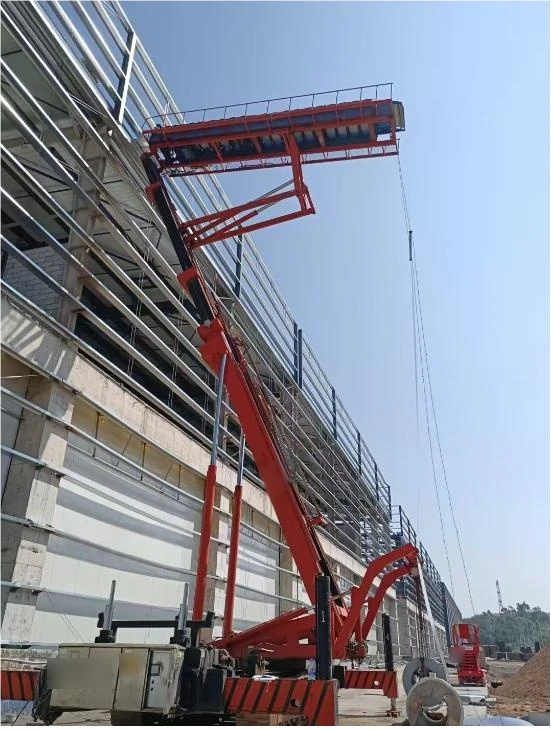
Local reference photograph of equipment beside a building; it does not measure outlet elevation, demonstrate clearance or approve the standing area shown.
Compare the visit with the production arrangement
Keep the two layouts visible
Before arranging a coordinated visit, place its proposed layout beside the intended production layout. Identify the former and lift, feed unit, supply boundary and receiving area on both. The comparison exposes whether the appointment addresses the final combination or a limited preparation question.
| Interface | Arrangement proposed for the visit | Intended production arrangement | Scope question |
|---|---|---|---|
| Former and lifting support | Actual machines and fitted items present | Specified equipment combination | Which connection is represented by the current drawings? |
| Feed equipment | Named temporary or permanent unit | Intended production feed unit and position | Which material-side interface can the visit address? |
| Power and controls | Available supply boundary and documentation | Destination production boundary | Which differences require the electrical provider’s response? |
| Outlet and receiver | Receiving location actually available | Required roof receiving area | Which geometry is represented and which remains outstanding? |
| Standing area and supports | Site position available during attendance | Intended production position | Which site assessment belongs to each arrangement? |
This table is a scope aid, not a verification plan. It gives procurement a way to buy an appointment whose purpose can be explained before travel and attendance costs are committed.
Use a temporary arrangement for a defined question
Consider a hypothetical project with the specified former and lift available, a temporary feed unit proposed for the visit and the permanent receiving area still under construction. The responsible specialists should say which questions the available arrangement can address. They should also identify what information or later attendance is needed for the permanent feed and receiving interfaces.
The buyer can then compare two service requests: a bounded visit covering the present equipment, or a later coordinated visit after the missing interfaces are available. The earlier option may leave separate work to purchase; the later option depends on the site’s programme. Neither is automatically preferable, and the example does not authorize temporary equipment or prescribe trials.
Ask each proposal to state the consequence of an unavailable prerequisite. Does the service change to information gathering, require rescheduling, or leave a named deliverable outstanding? That answer is more useful than a promise to complete commissioning regardless of the actual arrangement.
Match attendance to the dependency
A mounting question calls for the relevant machine and integration information. A changed power boundary calls for the equipment and electrical providers’ input. An unfinished receiving area calls for current site geometry. Bringing only one provider to site cannot be assumed to resolve all three.
For Great Britain context, the British HSE’s work equipment inspection guidance addresses installation-dependent equipment and reassembly at a new location, with inspection scope determined through risk assessment and equipment recommendations. It does not define a universal commissioning service or approve this configuration. Applicable destination requirements remain part of the project brief.

Local reference photograph of a long panel beside a building; it does not establish panel dimensions, production quality, output rate or a completed commissioning result.
Purchase a bounded visit scope
Send the inputs that affect attendance
Keep the request focused on the combined arrangement and the service being purchased:
- Actual former and lift identities, revisions, mounting records and included accessories.
- Panel profile, material and coil/feed information relevant to the proposed equipment.
- Outlet height references, roof geometry, orientation and receiving area for the visit and production.
- Ground or floor information, route and standing-area conditions for site review.
- Transport state, carrier or chassis boundary and planned delivery scope.
- Power and control interface documents and their responsible providers.
- Wind or other environmental inputs affecting the proposed work location.
- Destination requirements and requested document language or handover format.
- Missing interfaces, who will provide them and when they are expected to be available.
- The service requested, its intended deliverable and which participants are needed.
The list should distinguish supplied facts from proposed arrangements. A missing mounting drawing and an unfinished receiving area create different dependencies; naming them lets a provider explain the attendance scope precisely.
Compare the quotation against the promised deliverable
Ask what preparation, attendance and follow-up are included. Identify responsibility for local equipment, electrical services, site preparation, translation and any additional visit. Compare travel and rescheduling assumptions alongside the technical scope. A lower attendance price may cover less of the combined arrangement, while a broader coordination description still needs named boundaries.
Keep acceptance criteria and actual observations in the project’s controlled FAT/SAT documentation. Use the configuration-change guide if the former or site changes after the service scope is agreed. The buyer should be able to see whether that change affects the planned visit, the required participants or the deliverable being purchased.
Resolve identity and responsibility gaps first
A visit proposal may not fit the project when it depends on unidentified equipment, undocumented modifications or an integration boundary that no party accepts. Establish those basics before purchasing a general promise of completion. This preparation guide cannot release trials, set operating limits or replace project engineering, applicable inspection and site authorization.
FAQ
Is delivery of the lift enough to arrange a complete commissioning service?
Delivery identifies one part of the arrangement. The former, feed equipment, receiving geometry, power and site prerequisites determine what the requested service can cover. Name those interfaces before agreeing the appointment.
Can a temporary visit arrangement cover permanent production?
Only to the extent determined by the responsible technical review. Describe the differences explicitly. The service may answer questions about equipment present while leaving the permanent feed, supply or receiving interface outstanding.
Who should attend when two suppliers share an interface?
Ask which providers’ information and decisions are required and who coordinates their integration. Attendance can be useful only when the relevant parties can address the identified boundary; one commercial contact does not automatically own every technical decision.
Does ARCLIFT supply every service described here?
No such scope should be assumed. These are questions for the actual quotation. Ask ARCLIFT to define its equipment information, coordination and any proposed attendance, then identify the functions retained by other providers and the project.
Request a service scope for the combined arrangement
Discuss a crawler roll-forming lift service enquiry with ARCLIFT. Send the visit and production layouts, name the missing interfaces, and ask what preparation, participation and deliverable can be included for the specific appointment. State if the project instead requires a truck-mounted configuration so the supply discussion follows the actual equipment.
Identify outlet height, site readiness and destination attendance requirements. This editorial guide helps define the service; final verification activities and acceptance decisions belong to the authorized project arrangements.