
A roll-forming lift price becomes useful when it describes the same completed purchase as the alternatives beside it. The lift carries a compatible roof-panel roll former toward the receiving level, but a quotation may cover only the lifting assembly. Another may also address the former, vehicle, feed equipment or destination work. Start with what you expect to receive and have completed, then compare the amounts attached to that boundary.
This guide provides a blank commercial comparison and a hypothetical example without prices. The technical-document guide explains the records behind an offer; here the question is which equipment and services need a commercial answer.
Contents
- Define the purchase behind the price
- Build a cost comparison without guessed amounts
- Reconcile two differently scoped offers
- Request a comparable revised quotation
- FAQ
Define the purchase behind the price
Name the completed deliverable
Write the endpoint in ordinary language. You might be comparing a lift assembly supplied for your existing former, or a proposed line-and-lift arrangement with defined destination integration. Those are different purchases. Identify the equipment, destination and completion expected from each provider before asking who has the lower total. A delivered module is a tangible item, but it may leave several services to obtain locally.
Avoid an undefined phrase such as complete system. Replace it with the assemblies included and the work that connects them. The forming machine, lift, attachment, chassis, feed arrangement and site connections should each have a visible commercial boundary. This also identifies which exclusions are irrelevant because the buyer already has the required item.
Separate an owned asset from a free input
An owned former does not need another purchase price in the quotation, but using it can create information, integration and availability questions. Record its identity, documentation and intended availability. Ask what the offer assumes about the machine supplied by the buyer. Do not add an invented retrofit allowance to make a comparison look complete.
Likewise, an available vehicle may still require candidate-specific integration review and defined local work. The vehicle’s presence in the buyer’s fleet does not settle that work’s scope. The existing-former purchase guide develops the retain-versus-replace decision before the commercial comparison is finalized.
Keep the architecture visible
The crawler forming-lift family has a separate carrier question, while the truck-mounted family has a vehicle and integration question. Compare their actual transport and completion inclusions. A crawler photographed on a trailer has not become a truck-mounted system; a truck-family label does not automatically include a locally accepted completed vehicle.

Reference photograph of elevated apparatus, building steelwork and ground-level coils. It does not verify active production, current performance or the complete equipment arrangement being offered.
Build a cost comparison without guessed amounts
Use categories that expose omissions
The worksheet below deliberately contains no amounts. Copy it into the purchase review and enter only figures actually quoted for a defined scope. Where another provider must answer, retain that dependency instead of inserting zero. An item excluded by one bidder may be included by another, already owned, unnecessary for the chosen arrangement or still unidentified. Those situations have different consequences.
| Cost category | Offer A: quoted amount and scope | Offer B: quoted amount and scope | Buyer or third-party amount still needed |
|---|---|---|---|
| Lifting assembly and agreed options | To enter | To enter | Identify exclusions |
| Former, cutting and feed equipment | To enter | To enter | Owned or separately requested items |
| Vehicle or separate carrier scope | To enter | To enter | Candidate vehicle or transport service |
| Attachment and integration work | To enter | To enter | Defined local completion scope |
| Packing and onward logistics | To enter | To enter | Named handover and destination costs |
| Destination attendance and handover | To enter | To enter | Travel, facilities or local resources |
| Instructions, parts and support scope | To enter | To enter | Explicitly requested extras |
Attach the amount to its boundary
A packing amount should identify which equipment is packed and which transport handover it serves. A destination-attendance amount should identify the activity, location and assumed resources. The same word can describe very different purchases. Ask the issuer to connect the figure with a written inclusion and its exclusions rather than expanding the number yourself.
The IMO/ILO/UNECE CTU Code publication provides packing and securing context. It does not establish container fit, freight cost or approval of this shipment. The commercial worksheet should request the actual packing-study scope from the relevant provider.
Identify costs that remain outside the supplier reply
The destination may involve buyer-appointed transport, import services, local integration or site resources. Obtain the applicable response from the party that would supply each item. This article assigns no tax, duty, insurance or professional-service amount and gives no all-market rule for who must pay it. Identify the destination and agreed commercial boundary so the actual advisers and providers can answer.
An unresolved amount belongs in the unknown column. A lower visible total with more unknowns is not yet a lower completed-purchase cost. Conversely, a larger supplier scope should not be treated as desirable merely because it contains more items; compare whether the project actually needs them.
Reconcile two differently scoped offers
Hypothetical offer A: lift around an owned former
Imagine a buyer with an identifiable former at its own premises. Offer A covers a proposed lifting assembly and packing. It assumes the buyer supplies the former and arranges destination integration. There is no amount for a new line because none is being offered. The useful follow-up is to identify the missing machine information and obtain a defined integration response around that actual former.
Do not treat the excluded work as evidence of an incomplete supplier business. It may be an appropriate boundary if the buyer has a capable provider for that work. The commercial uncertainty is whether that provider’s scope and price have actually been obtained and whether its equipment assumptions agree with the lift offer.
Hypothetical offer B: proposed line and lift
Offer B describes a new former with a lift and named coordination activities. It includes equipment not present in A, but its destination attendance remains separately priced. Before comparing totals, decide whether the owned former must be retained or whether a new-line alternative is permitted. That decision changes the purchase being evaluated.
If both routes remain relevant, keep two completed-scope alternatives. Ask A for its actual integration dependencies and B for its excluded destination activities. This example is hypothetical, with no actual supplier prices or ARCLIFT package commitment. It shows why adding a guessed former price to A would conceal, rather than resolve, the different interfaces.
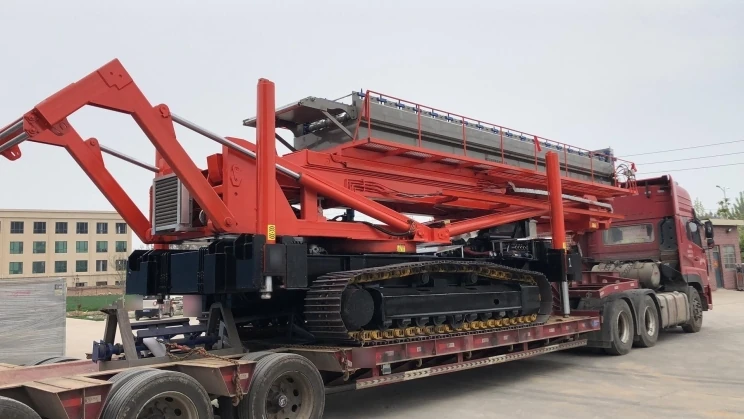
Reference photograph of crawler equipment on a separate carrier. It does not verify truck-mounted architecture, an approved transport arrangement or a completed ARCLIFT delivery.
Compare the commercial consequence of a constraint
Suppose the buyer’s current former cannot be released from another project at the intended time. The trade-off now includes availability of the asset, not simply purchase cost. Or suppose the locally proposed chassis remains unidentified. The vehicle route has an unresolved input before its completion scope can be priced credibly. Put the consequence beside the affected alternative.
Ask whether the quote is a preliminary scope estimate, an equipment offer with defined dependencies, or a proposed order basis. Each can be useful at the appropriate stage. An early number should not become a purchase commitment simply because a comparison sheet requires a total. The delivery-dependency guide explains how those unresolved choices affect schedule discussions.
Request a comparable revised quotation
Ask each bidder the same focused questions
Request the included assemblies, excluded equipment, buyer inputs and local work needed to reach your chosen endpoint. Ask the issuer to identify which amounts cover supplied items, optional items and separately requested services. Preserve a legitimate alternative as an alternative; do not force unlike architectures into an identical list of hardware.
The useful reply says what would change if you retain the former, request a new line or use a destination chassis. It should also say which unanswered input prevents a firmer commercial response. This is more useful than asking for a discount before the first comparison has established what either price buys.
Supply the facts that affect commercial scope
- Name the panel profile, material and forming machine already owned or required.
- Show the requested outlet height and roof receiving geometry for the priced task.
- Identify the site access route and any known ground or floor constraints.
- State the destination and the requested transport handover boundary.
- Identify the proposed chassis or separate carrier arrangement and its unresolved items.
- List local power, integration and attendance resources expected from another provider.
- Ask which packing, documentation and support deliverables belong to each amount.
Keep an incomparable offer outside the ranking
This comparison may not fit offers that address different panel tasks, unidentified machines or conflicting destinations. Clarify those facts first. It provides no current price, savings, financial return or statement that an all-inclusive package is offered. A commercial comparison does not establish machine compatibility or site acceptance.

Reference photograph showing a suspended blue machine module. It does not verify its identity, compatibility, attachment points or an approved lifting method.
Request a price tied to your completion boundary
Request a forming-lift quotation with your category worksheet and the completed purchase you want compared. Include the former, outlet height reference, roof zone, site access, destination and transport assumptions. Ask ARCLIFT, as a technical selection and supply partner, to identify its proposed scope and the questions left for local providers. Final commercial and technical commitments belong in the project-specific offer. These editorial reference images do not verify an inclusion or quotation.
FAQ
Can a public price answer the purchase question?
It cannot establish your actual scope. Identify the former, base, destination and completion boundary, then obtain a configuration-specific response with the relevant exclusions and assumptions visible.
Should an excluded item be entered as zero?
Only a confirmed absence of cost within the defined comparison supports that entry. An amount not supplied is unknown; an item already owned still needs its availability and integration assumptions considered.
Must the cheapest offer be rejected if it excludes local work?
No automatic conclusion follows. Obtain the local provider’s scope and amount, then compare complete alternatives. A narrower equipment offer can be appropriate when the missing work is genuinely arranged elsewhere.
Does this worksheet calculate an investment return?
No. It organizes quoted amounts and missing commercial inputs. It contains no revenue forecast, utilisation assumption or recommendation about financial returns.