
Compare roll-forming lift offers by what you would receive and what must still be supplied or completed. The lift positions a compatible roof-panel forming machine near the roof receiving level; the machine, its attachment, coil equipment and site connections can sit on different sides of a quotation. A lift-module price and a coordinated forming-and-lift price therefore answer different purchases. Reading the returned documents should expose that difference early and identify the one unanswered equipment question preventing a useful comparison.
This guide starts with documents already received. For collecting the initial application requirements, use the roll-forming lift RFQ guide. For the forming-line boundary, the ARC-RF8 reference page identifies topics requiring project confirmation; its archived classes do not establish the specification or document scope of an offer.
Contents
- Read the equipment description behind the offer
- Match each document to a question
- Check that the documents describe the same arrangement
- Resolve the gaps before comparing quotations
- FAQ
Read the equipment description behind the offer
Compare a lift module with a coordinated proposal
In an explicitly hypothetical comparison, Offer A covers a lifting assembly for a buyer-owned former. Offer B covers a proposed former and lift with identified integration work. Start by asking what task both offers must address: the required panel, intended outlet-to-roof relationship and destination. Then list the lifting assembly, forming machine, attachment, feed equipment, vehicle or carrier, power/control interfaces and loose items included in each. An illustration does not add an unlisted item to the purchase.
Offer A may be the relevant starting point if the existing former is fixed, but its machine information and remaining integration still matter. Offer B may cover more connections while still excluding destination assembly or site supply. Neither example describes an actual ARCLIFT offer. Ask for the equipment and services required to reach the same agreed completion boundary, including the work supplied locally. That answer makes the prices understandable without assigning a guessed cost to every exclusion.
Read what the supplied document answers
A layout for discussion can help identify the intended arrangement without being ready for fabrication or site use. An issued interface drawing may answer a defined connection question without approving the complete installation. A manual describes its stated configuration and use conditions; it does not establish that the equipment in another drawing is the same configuration.
For the hypothetical module offer, a layout might answer where the buyer’s former is proposed to sit while leaving its attachment unresolved. The coordinated proposal might identify that connection but still depend on the selected chassis. Note the applicable equipment, purpose and revision beside the answer. Ask which decision can rely on it; detail and signatures alone do not expand its scope.
Identify what comes with the offer and what follows later
Early documents often contain dependencies on a selected forming line, chassis or site arrangement. Keep those dependencies beside the relevant item. “Subject to chassis confirmation” needs a named chassis input and a reviewer; it cannot remain an invisible qualification underneath a seemingly fixed specification.
A quotation can sensibly include a discussion layout now, a configuration-specific interface drawing after the machine is identified, and completed observations after the relevant activity. Ask whether each later deliverable and the work behind it are included, separately priced or by others. A promised record is useful purchase scope, but it remains different from evidence that an activity has already occurred.
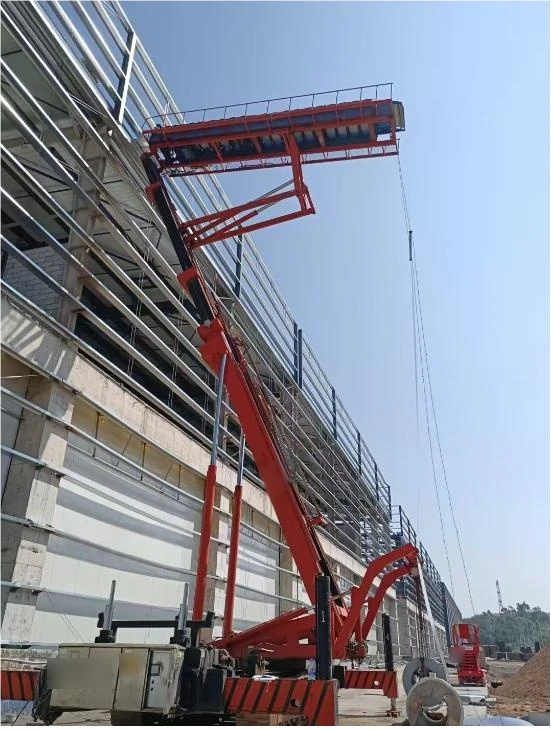
Reference photograph of raised equipment beside a building. It does not establish the drawing revision, forming-line interface, operating envelope or supply scope of a proposed system.
Match each document to a question
Use a reading matrix, not a file count
The following matrix is an editorial comparison aid. It lists questions to ask about candidate documents, not a promise that every listed document is included or required for every purchase. Enter the actual reference and the issuer’s stated scope in the project version. Keep unavailable items visible rather than filling cells from a different machine’s brochure.
| Document being reviewed | Question it can address within its stated scope | What still needs separate confirmation |
|---|---|---|
| Technical schedule | Which configuration and supply items does the offer describe? | Unresolved options, exclusions and the order’s agreed baseline |
| General arrangement | Where are the identified modules and interfaces shown? | Detailed connections, state-specific loads and site fit |
| Mounting or chassis interface record | Which connecting boundaries and inputs have been considered? | Final integration responsibilities and destination vehicle review |
| Electrical and control records | Which power connections, control functions and interfaces are documented? | Site supply, integration verification and the exact installed version |
| Instructions and maintenance information | What use and maintenance scope does the identified document cover? | Match to delivered equipment, required language and handover arrangements |
| Inspection or test record | What activity was completed, against which criteria, on which configuration? | Uncovered interfaces, later changes and site-specific acceptance |
| Packing or transport record | What is included in the identified shipment and transport state? | Carrier planning, route review and destination receipt conditions |
Normalize similar labels before comparing their values
In a hypothetical quotation comparison, both bidders provide a file called “general arrangement” and a row called “machine mass.” Those labels may conceal different boundaries. One drawing may show only the lifting assembly; the other may include the forming line and its connection. One mass may include packaging and loose accessories; the other may describe an assembled machine. Neither difference, by itself, establishes a better offer.
Use a definition column before requesting another number. The examples below are possible ambiguities to resolve, not descriptions of any actual bidder or proposed configuration.
| Shared label | Possible meaning in one offer | Different meaning in another | Clarification needed for comparison |
|---|---|---|---|
| General arrangement | Lifting assembly outline | Assembly plus identified forming line | Drawn objects, omitted interfaces and equipment state |
| Machine mass | Packed shipment including loose items | Assembled equipment without packaging | Included objects, exclusions and weighing or calculation basis |
| Working height | Forming-machine outlet relative to its reference | Personnel-platform elevation | Physical point, datum and task; these are different product questions |
| Electrical package | Connection information for the supplied module | Coordinated lift-and-line interface records | Equipment boundary, responsible integrator and issue stage |
Record an unresolved definition as “not yet comparable.” Do not align the numbers by subtracting guessed packaging mass or converting one height label into another. First ask each issuer to identify the same physical objects and state. Only then can the reviewer decide whether a missing value, an additional interface record or a genuinely different supply scope explains the gap. This keeps the clarification proportional: a renamed column may resolve an ambiguity, while a polished extra brochure may add no usable answer.
Distinguish a planned check from its result
A test procedure explains a proposed activity. A completed test record identifies what was actually checked and what happened. A blank form can help procurement agree the evidence expected later, but it cannot demonstrate that equipment passed a check. Likewise, a demonstration photograph is not a substitute for acceptance criteria, recorded observations and the configuration identifier.
When a completed record is offered, check whether it concerns the same system and revision. Record any deviations and unresolved items. The FAT and SAT acceptance guide develops that separate acceptance question; this page only explains how to avoid comparing a proposed procedure in one offer with completed evidence in another.
Keep a standards reference in its proper role
The ISO record for ISO 12100:2010 describes machinery risk-assessment and risk-reduction principles, including documentation of that process. This is a scope reference for a competent technical review. It is not a document-delivery checklist, a substitute for the controlled standard, or proof of conformity for an ARCLIFT offer.
Ask which equipment boundary a cited document addresses and who is responsible for its application. A standard number on a cover sheet does not answer whether the forming line, lift, vehicle and site interfaces have been reviewed together. Do not infer a destination conclusion from a general reference.
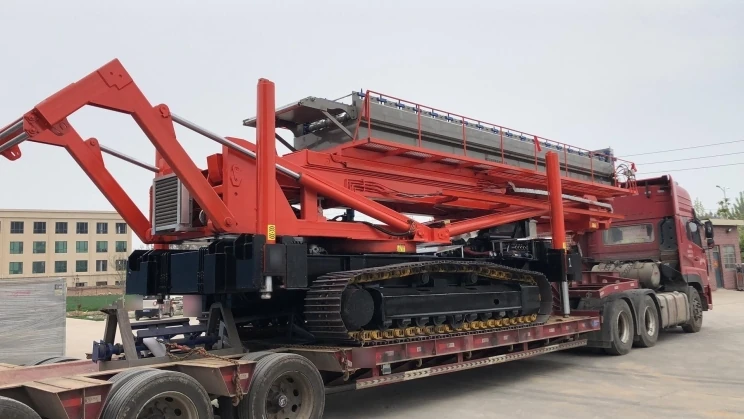
Reference photograph of crawler equipment on a carrier. It cannot establish the packing list, transported dimensions, securing design or road status of an offered roll-forming system.
Check that the documents describe the same arrangement
Distinguish a requirement from an equipment response
Suppose the buyer requests an outlet at a particular roof relationship and the same statement appears in the discussion drawing and quotation. The repeated requirement could still be an assumption. Ask whether the proposed configuration has answered it, which physical height datum the answer uses and what machine or site input remains open. An outlet requirement cannot be replaced by a platform-height label simply because both rows say “height.”
The same problem occurs when a buyer’s provisional former outline is copied into several files. Keep the actual machine record and the supplier’s response to that record distinct. One clarification can resolve the issue: identify the proposed machine, the equipment response based on it and the missing input that still affects the offer. Another brochure repeating the outline adds no independent answer.
The trade-off is between a simple purchase summary and the conditions needed to make it meaningful. Keep the summary concise, with the controlling condition beside the affected item. A confirmed outline answers an outline question; attachment, site clearance and combined operation still need their own applicable evidence.
Keep transport and work states distinct
An equipment envelope in the stowed state does not describe the clearance needed when raised. A shipment mass may exclude separately packed items. A forming-line drawing may describe the production arrangement while a transport sketch shows the module removed. Those differences can be legitimate if each document labels the state and explains the relationship.
Create a state column in the comparison: packed, carried, assembled, positioned or operating, as relevant. Ask who owns the transition between states and which information becomes available before that transition. A document for one state should not silently answer a question about another, especially where access, support, mass or service connections change.
Compare exclusions beside the apparent inclusion
If an offer includes an interface drawing but excludes destination integration, keep both statements on the same comparison row. If instructions are included in one language and another language is needed, identify the translation scope and controlling version. If a record is conditional on buyer-supplied material information, identify the specific input and its due point.
This makes the quotations comparable without inventing a cost adjustment or declaring one offer superior. Procurement can ask the bidders to clarify the same missing item. The configuration-change guide becomes relevant when a later substitution changes the equipment behind a previously comparable offer.

Reference photograph of a long panel and elevated equipment. It does not verify the panel specification, forming quality, handling method or acceptance result for another project.
Resolve the gaps before comparing quotations
Prepare a document clarification sheet
Use one short clarification sheet for both offers. Give each row the purchase item, each offer’s stated answer, the missing definition or equipment response, and the decision affected. For example: “former mounting included?” asks about purchase scope; “which machine and attachment does the drawing cover?” asks about evidence. Keeping those questions together avoids mistaking a file name for an included integration service.
- Identify the schedule covering working height and the intended equipment state.
- Link roof geometry and work-zone drawings to the proposed arrangement revision.
- Identify the material, profile, panel length and coil or feed assumptions used for the forming line.
- Record which party provides the wind and weather planning inputs for site review.
- Name the issuer of ground or floor data and the reviewer of support information.
- Connect access and transport route constraints to the relevant state drawing.
- Clarify outrigger or support-interface records without assuming a reaction value.
- Assign destination, chassis and container documentation to the responsible parties.
- Identify voltage, power, controls and connection information included in the offer.
- State which records are preliminary, conditional, by others or due after an activity, and trace repeated inputs to their origin rather than counting each reuse as confirmation.
Each answer should change a comparison row or resolve a named uncertainty. Retain a clear distinction between “supplier has answered the commercial scope question” and “the technical reviewer has accepted the solution.” Those are different decisions and may occur at different times.
Recognize when the offer is not ready to compare
The comparison may not fit a project whose candidate offers describe different tasks, different forming modules or unidentified carriers. Resolve that mismatch before ranking document maturity. An apparently missing record may reflect a different supply boundary, while an apparently complete record may concern equipment that is no longer proposed.
Hold the affected decision when configuration identity is unresolved, a critical interface has no owner, or a document’s purpose cannot be established. Missing information is not proof that a solution will fail, but it prevents the buyer from treating the offer as settled. This guide does not approve engineering, document adequacy or destination requirements.
Ask for answers tied to the offer
Send ARCLIFT a request to compare the forming-lift scope with the two equipment boundaries and your unresolved purchase questions. Identify the former owned or required, outlet-height basis, roof/work-zone relationship, floor and access constraints, transport arrangement and destination. Share sensitive offer extracts through the agreed project channel. ARCLIFT supports technical selection and supply coordination; the final technical schedule and responsible project reviews determine the agreed arrangement.
The final, signed technical schedule and relevant issued records must identify the agreed arrangement. The reference photographs provide editorial context only; they cannot replace drawings, calculations, inspection results or configuration-specific instructions. Close the document questions alongside the commercial scope, and retain the unresolved items for the responsible technical review.
FAQ
Does a complete-looking manual make an offer technically complete?
No. Check which equipment and revision the manual covers, what is excluded, and whether the other modules and interfaces are addressed. A manual can be relevant while leaving vehicle integration or site questions unresolved.
Can two drawings with different dates both be valid?
Yes. They may serve different purposes or describe different states. Ask the issuer to explain the relationship and identify the controlling revision for the decision being made. Date order alone is insufficient.
Should procurement request completed test records before the equipment exists?
Agree the expected procedure, criteria, record format and due stage first. A completed result should follow the relevant activity. Label samples and blank forms clearly so they are not mistaken for evidence of the proposed equipment.
What makes document scope comparable between quotations?
Use the same equipment boundary, required deliverables, issue stages and responsibility definitions. Place conditions and exclusions beside each inclusion. Record remaining differences explicitly instead of assuming that similarly named files contain equivalent information.