
You can screen a height class before the former is final. You cannot freeze mass, feed side, or power until the former is named. Send the screen with the blanks still blank. Delivery dependencies are in the purchase-dependency guide. The former and the lift together are specified in the line specification.
Contents
- Screen the class and freeze nothing else
- Compare a named former with a blank former
- Ordering early may not fit
- Lines you can send before the former is final
- FAQ
Screen the class and freeze nothing else
Write the outlet, then the screen
The outlet height on your section is the number that matters. ARC-T18 is the 18.5m truck screen. ARC-T25 is the 25m truck screen. ARC-C25 is the 25m crawler screen. Pick the screen that is nearest the outlet you measured, and write “screen only” beside it. That phrase stops a later reader from treating the class as a finished machine. If the outlet is still a guess, write the guess and the word unknown. Do not upgrade the class to cover a guess.
List the three blanks that stay open
Mass of the former, feed side, and power stay open until a former has a name and a drawing revision. An importer once issued a purchase order for a 25m screen “to hold the slot” and typed a mass copied from a different former. The slot was not a machine, and the mass poisoned every later interface question. Leave the three cells blank or write unknown. Confirm on RFQ is the status, not a delay you should be ashamed of.
Say what you are allowed to promise internally
You may tell your own team which class you are asking about. You may not tell them the chassis is included, the deck load is known, or the former will fit, unless a document says so. Those sentences are how an early screen becomes a fake order. Chassis, load, and fit are confirm on RFQ. Say that in the same email that names the class.
Keep ARC-RF8 conditional
If the line might be in the same purchase, name ARC-RF8 as conditional. Its catalog sheet class is 0.3–1.0mm. Your coil is not that band until you write your coil. If the former will be someone else’s machine, say so, and do not attach ARC-RF8. A conditional line is allowed. A silent assumption is not.
Compare a named former with a blank former
Two columns, same lift screen
| Line on the note | Former already named | Former still blank |
|---|---|---|
| Height screen | 18.5m or 25m, as a screen | Same screen, marked screen only |
| Mass, feed side, power | From that former’s sheet, or unknown | Unknown; do not borrow |
| Cutting and controls | Ask with the former’s name | Leave off this purchase |
| What you can order | Only what the offer freezes | A question, not a machine |

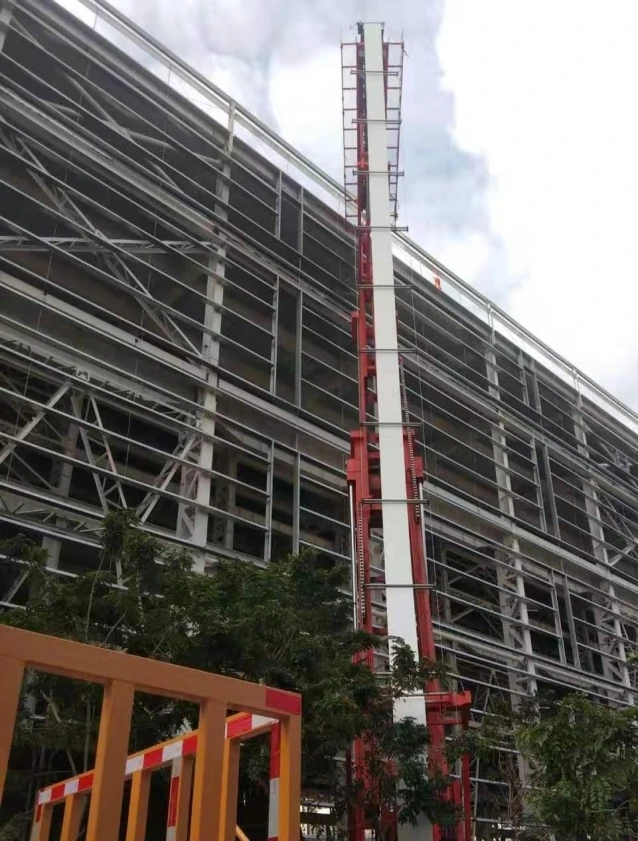
Reference photograph of a forming module beside a lift frame. It cannot stand in for an unchosen former.
Do not borrow a neighbour’s interface
Another project’s former mass is not a placeholder you may type. It looks like data and it is fiction. If you need a number to satisfy a form, the form is wrong. Send unknown. The RFQ data guide already treats empty as unknown. Use that habit here.
Separate the commercial hold from the technical freeze
A commercial conversation about timing can happen while the former is open. Call it a conversation. Do not call it an order for a configuration. Lead time language does not belong on this page, and a class code is not a delivery promise. Ask the supplier what, if anything, can be discussed before the former revision exists. Accept “nothing” as a complete answer.
Photographs are not a former

Reference photograph of coils beside the building. It cannot identify the former you have not chosen.
Coils in a photograph were formed somewhere else. They are not your former. Do not attach it as a specification. Attach your drawing, or attach nothing and say the drawing is not ready.
The trade-off is calendar pressure against a false interface. Screening early can keep a height class in view. Freezing mass early can waste the screen, because the real former will not match the borrowed number. The limitation is that feed side and power are properties of a named machine. The constraint is the missing drawing. The interface you do not have yet is the whole point: do not invent one so the file looks closed.
An anonymous buyer had a roof contract and no former. The outlet height was measured, so an 18.5m screen and a 25m screen were fair questions. The purchase draft then listed a former mass taken from a brochure for a different profile, a left-hand feed copied from the last job, and a power figure nobody could source. That draft was not an early order. It was three invented interfaces. The draft that was actually sendable kept the height screens and replaced the three figures with unknown. ARC-T18, ARC-C25, and ARC-RF8 stayed on the shortlist only as conditional names: the former row had to be filled before any of them could be treated as a matched set.
A second anonymous file tried to “reserve both classes” by writing two quantities. The team thought two lines on a purchase order would hold both machines until the former arrived. A screen is a question you can repeat. A quantity is an order. They deleted the quantities and left one RFQ with two height classes, one measured outlet, and blank cells for mass, feed side, power, and which lines must stay open during the lift. Calendar pressure remained. The false interface did not.
Chassis words are the same trap. Adding a truck or a crawler because the page looks empty does not make the former more final. The chassis review is where that choice belongs, after the former mass is a measured input rather than a borrowed one. Until then, write chassis unknown next to the height screen you are willing to discuss.
Ordering early may not fit
A purchase order that lists a guess
This path may not fit when the document you are about to sign lists a former mass, a feed side, or a power figure you copied. That is not an early screen. That is an order for a machine you have not defined. Stop and replace the figures with unknown, or wait for the former sheet.
Two classes ordered to “be safe”
It may not fit when someone asks for both 18.5m and 25m as if buying both screens reserves both machines. A screen is a question. Two questions are allowed on one RFQ. Two imaginary orders are not. Write which outlet you measured and which class you want compared.
Chassis words added for comfort
It may not fit when the early note says the truck is included because an empty chassis line looked unfinished. Included, local, or unsure are the only honest chassis words, and unsure is the right one before the former and the destination rules are known. The chassis review is where that word is explained. Do not soften it here.
A sheet class used as the former
It may not fit when 0.3–1.0mm is written as the former specification. It is the ARC-RF8 catalog band. Your profile drawing is the specification. If the drawing is late, say late. Do not promote the band into a design.
Reference photograph of a panel path. It cannot substitute for a former drawing.
Lines you can send before the former is final
- Work height to the outlet you measured, plus the catalog screen
- Roof geometry the future panel must clear
- Profile and thickness if you have them; otherwise unknown
- Wind exposure at the eave, or unknown
- Ground or floor under the future setup
- Access route, even if the former mass is unknown
- Outrigger or track footprint, or unknown
- Destination country
- Chassis included, local, or unsure
- Transport assumption stated as a question
- Power and feed side marked unknown until the former is named
- Documents you do have, and a list of the ones that are late
Send the work height, the site, the destination, the transport question, the handover zone, and the floor note. The signed schedule is project-specific. Editorial images do not select your former.
Open ARC-T18, ARC-C25, or ARC-RF8 only if the line might be included. Request a quote, WhatsApp +86 15515922444, or leelogly120@gmail.com. U.S. CBP import and export basics are a destination example, not your paperwork, and not a reason to invent a former.
FAQ
Can I place an order with the former blank?
You can ask a question. Do not sign a configuration that fills the blank with a borrowed mass.
Which class do I name?
The screen nearest the outlet you measured: 18.5m or 25m. Mark it as a screen.
Should I attach ARC-RF8 now?
Only if that machine might be the former. Otherwise leave it off and say the former is someone else’s.
What do I do with feed side?
Write unknown until the former drawing names it. A guess will be treated as data.