
When choosing a roll-forming lift supplier, a buyer needs to know who is making each statement and which equipment or service that statement covers. A seller, a source-information issuer and a local integration provider can be different parties. A factory photograph or a technical-looking brochure does not, by itself, explain their relationship or identify the package that the buyer will receive.
This article builds a supplier-question comparison before a purchase commitment. It concerns a system that raises a compatible roof-panel roll former, not a generic personnel lift. The importer supply-package guide maps onward supply; here the earlier decision is whether the proposed upstream counterparty can explain its identity, evidence and actual scope coherently.
Contents
- Separate three identities in the enquiry
- Ask what the evidence actually describes
- Compare two supplier presentations
- Request a reply that can support a purchase decision
- FAQ
Separate three identities in the enquiry
Identify the commercial seller
Ask which party issues the equipment offer and which scope it proposes to supply. The answer should be consistent across the quotation and its stated commercial contacts. The buyer needs an identifiable counterparty, rather than an assumed relationship inferred from similar names or images. This article does not provide company-verification or payment advice. Its narrower purpose is to keep the person presenting a brochure distinguishable from the party making the actual equipment commitment, particularly where several providers participate in the package.
Identify the equipment-information issuer
A configuration schedule, arrangement drawing or instruction set has an issuer and an equipment scope. Ask the seller to explain how the information relates to the offered assembly. A document can be useful without belonging to the seller’s own manufacturing organization. Conversely, a recognizable manufacturer’s general brochure may not describe the machine now proposed. Preserve attribution through the agreed project channel, and distinguish an archive example from an order-specific record. Do not transfer another company’s history or credentials into the seller’s public identity.
Identify the party answering each connection
The former, lifting assembly and vehicle or carrier can create different interface questions. Ask who supplies the relevant answer and whether coordination is included in the actual offer. A seller may coordinate information without performing every physical activity. The buyer should understand that boundary instead of treating a single contact as proof that every technical or local service is included. For a truck proposal, the destination-chassis guide develops the separate vehicle sourcing and completion question.

Reference photograph showing a suspended blue machine module beside red lifting equipment. It does not verify the issuer or applicability of a proposed machine record.
Ask what the evidence actually describes
Match the record to the proposed assembly
Request enough identity information to understand which former, base and supporting arrangement the record covers. A height label from one document cannot describe another assembly merely because both are called roll-forming lifts. Keep measurement points and conditions with their actual record. Where the seller cannot yet identify the configuration, ask for a bounded preliminary response rather than accepting numerical certainty from an unrelated example. The technical-document guide explains how to read returned records once their relationship to the offer is established.
Distinguish a reference scene from a supplied result
A photograph may help explain a crawler base, an elevated former or a broad work deck. It does not identify the owner of the equipment, the supplier of the pictured job or the scope available now. Ask what the seller intends the picture to illustrate. A neutral family reference can be useful; a claim that it proves a completed customer delivery needs attributable evidence that this article does not supply. Keep permitted marketing use separate from the confidential equipment information needed for an actual purchase review.
Clarify what may be shared and through which channel
Some records may contain private source or customer information. Ask the seller what can be provided for the buyer’s project, in what form and for what stated purpose. A refusal to publish a raw document is not the same as a refusal to answer a configuration question. The useful response identifies the available project information and remaining limitations. Great Britain’s HSE supply-role guidance offers jurisdiction-specific context about equipment roles and accompanying information; it does not verify a supplier relationship or determine duties in another destination.

Reference photograph showing a suspended steel coil beside vehicle-mounted apparatus. It does not verify an ARCLIFT project, customer or completed delivery.
Compare two supplier presentations
Define the hypothetical common purchase
Imagine two hypothetical supplier replies to the same request for a roof-forming system. Presentation A contains extensive factory imagery and a broad equipment table, but the commercial offer does not identify the actual former or local completion scope. Presentation B describes its seller role and a proposed equipment boundary, while some configuration information remains pending. This is an editorial comparison, not a described supplier assessment or ARCLIFT case. The question is which missing answers prevent the buyer from understanding each offer, rather than which presentation looks more impressive.
Ask A about attribution and B about the remaining scope
For A, request the relationship between the displayed information and the actual equipment being offered, including who issues the configuration response. For B, request the particular pending record or local completion answer. These gaps need different follow-up. Clear role language does not establish technical adequacy, while extensive imagery does not establish the seller’s identity or included services. The trade-off is between the apparent breadth of a presentation and the narrower information on which a real purchase decision can depend. Neither should be substituted for the other.
Read the response for ownership of the answer
A useful reply says which party will provide the requested equipment information and what it covers. If the answer is a request for more site or machine data, preserve that condition. If it identifies an external provider who has not yet agreed a service, keep that scope unresolved. The following comparison distinguishes attributable answers from assumptions. It makes no ranking of suppliers, no assertion about their legal status and no promise that a particular party will accept an expanded role.
| Supplier presentation item | Question that tests its relevance | Decision it can inform |
|---|---|---|
| Factory or yard photograph | What equipment context does this illustrate, and what relationship is actually claimed? | Whether the image is a neutral reference or an unsupported identity claim |
| Technical schedule | Who issued it and which offered assembly does it describe? | Whether the stated equipment information belongs in this comparison |
| Local completion description | Which actual party and defined activity are proposed? | Whether the purchased package reaches the expected handover boundary |
| Broad support wording | What deliverable is included, by whom and under which actual offer? | Whether a service is established or remains a request |
| Pending configuration record | Which buyer input or issuer response is still needed? | Whether further enquiry can resolve the specific gap before commitment |
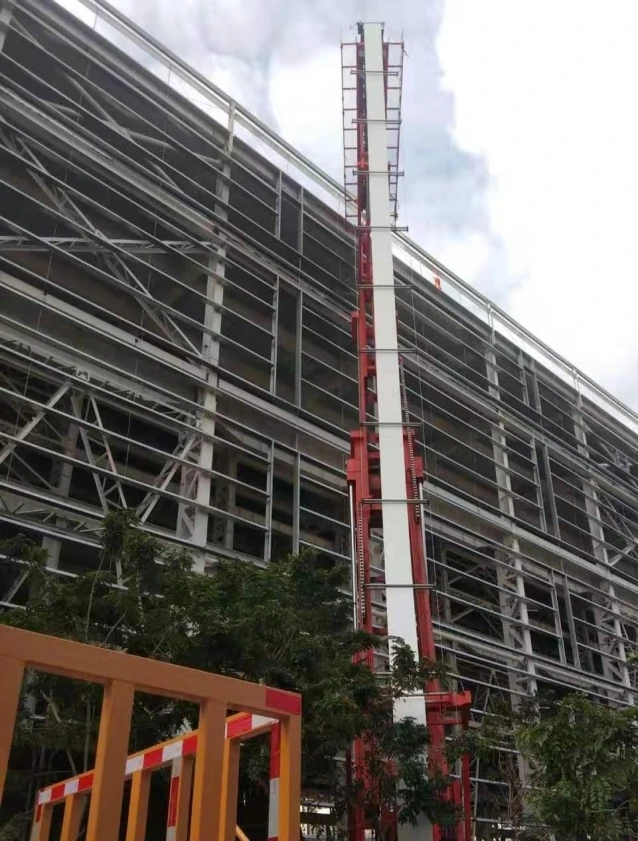
Reference photograph showing a long sheet beside a building facade and elevated apparatus. It does not verify a current offered configuration or authority to share its records.
Request a reply that can support a purchase decision
Use evidence questions connected to the actual task
Send the equipment objective before asking about every available corporate document. The crawler forming-lift family and truck-mounted family identify the architecture; the supplier response must identify the actual proposed scope. A precise question is easier to answer than a demand to prove every future capability. It also exposes a relevant gap: an identifiable seller with no answer for the proposed machine interface still has a configuration issue to resolve before the buyer treats the package as complete.
- Identify the commercial seller and the equipment scope its actual quotation covers.
- Describe the roof zone, requested outlet height and panel material requirement behind the enquiry.
- Ask which issuer provides the configuration records for the proposed former and lifting arrangement.
- State the site access, ground information and destination that limit the requested response.
- Separate transport, local chassis or integration work from equipment shipped by the seller.
- Request the permitted project-information channel and identify who answers each unresolved interface.
Recognize a presentation that cannot carry the promise
A proposed supplier package may not fit a defensible purchase comparison when its seller is unclear, its technical references describe unidentified equipment or essential completion work has no agreed provider. More imagery cannot close those gaps. Equally, an honestly limited preliminary reply is not a final technical offer. This article establishes no manufacturing ownership, commercial appointment, local service network or conformity result. It helps the buyer distinguish identities and actual commitments while leaving company checks, contract terms and destination obligations to the appropriate advisers.
Ask ARCLIFT for an attributable scope response
Discuss the supplier-scope question with ARCLIFT. Identify the former, outlet height, roof zone, site and destination, and show where the seller, record issuer or transport/local-completion boundary is unclear. ARCLIFT is an integrated equipment supplier and technical selection and supply partner. Ask what equipment and information can actually be proposed for your task. Final project-specific commitments require their own confirmation; these editorial images do not establish factory ownership, a customer delivery or an agreed service relationship.
FAQ
Must the seller issue every technical record itself?
The important point is that the record remains attributable and its relationship to the offered equipment is explained. Several parties may contribute information to a package. The buyer should know who answers the relevant question and what scope the answer covers. This page does not prescribe a supply-chain structure or turn another issuer’s information into the seller’s manufacturing credentials.
Does a factory photograph establish the seller’s role?
It does not establish that relationship by appearance alone. Ask what the image is meant to illustrate and what supported claim accompanies it. A family reference can explain equipment architecture without proving ownership or a completed project. Do not use visual similarity or a copied brochure to infer that the commercial seller owns the pictured facility or supplied that job.
Is a conditional response necessarily unhelpful?
No. It can identify the exact machine record, site geometry or local provider still needed. Such a response moves the enquiry forward when its limits are clear. It becomes misleading if the condition disappears from the later purchase description. Keep the unresolved input attached to the answer until the responsible party supplies the information needed for the actual proposal.
Does this comparison replace importer due diligence?
No. It focuses on equipment scope, attribution and technical-answer ownership. Business verification, commercial protections and destination-specific legal roles require their own appropriate checks. The importer package discussion addresses the different onward-supply boundary, while the actual transaction still needs its own records and agreed responsibilities.