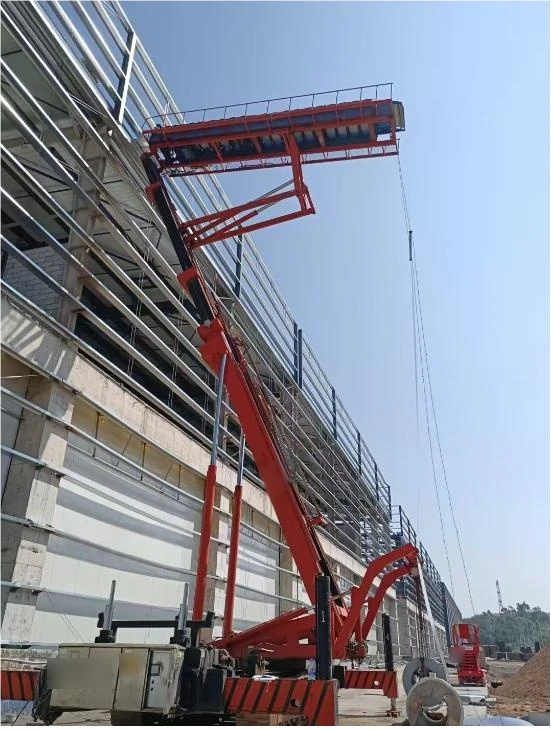
An outdoor roll-forming purchase needs an environmental scope for more than the hours when panels are being made. Planned idle periods and any proposed storage exposure also need a defined equipment configuration and supporting supplier information. A general outdoor-use description can leave these parts of the project outside the offer.
The equipment elevates a compatible roof-panel roll former near the receiving level. This guide helps buyers describe the intended production windows, intervening exposure and supplier/site responsibilities. It provides no weather thresholds or operating instructions. The panel handover guide owns the outlet-to-receiver relationship; the relocation guide covers a change of work zone. Here the purchase question is which environmental conditions and interrupted-use scope the proposed equipment package actually addresses.
Contents
- Identify what the weather decision affects
- Distinguish observations from equipment limits
- Compare interrupted work states
- Include weather responsibilities in the enquiry
- FAQ
- Request scope for production, idle periods and storage
Identify what the weather decision affects
Keep equipment availability separate from roof availability
Identify the roof receiver expected during each production window and the party controlling that activity. The machine and roof team are connected by the panel but may face different conditions and work restrictions. A supplier’s equipment information therefore cannot establish that the roof receiving work is available.
The project also needs an applicable arrangement for incomplete handover if a window is interrupted. Identify the material’s location and process stage for the responsible parties. Supporting, cutting, moving or securing it requires the actual equipment information and site method; the procurement enquiry should expose that dependency without inventing a response.
Identify the coil and feed equipment in the scope
State the proposed coil support, uncoiling and feed arrangement separately from the lifted former. The coil-loading guide explains that purchase boundary. An environmental reply for the lift alone does not necessarily address separately supplied feed equipment or material awaiting the next activity.
Ask which equipment items the provider’s environmental information covers and which material-condition questions belong to the project’s material party. If a feed item is still undecided, flag its exposure requirements as an unresolved purchase input rather than treating the entire package as covered.
Include the base area, access and temporary services
Give the supplier and relevant site reviewers the locations and construction-stage information used for the proposal. Ground or floor conditions, access reservations and temporary services can change while the equipment remains in the same place. Name the site parties responsible for those matters and the source of their information.
If the programme depends on a standing area or route being available after an idle period, identify that dependency in the enquiry. It is a site-scope question, not a recommendation to move equipment in particular weather. The supplier’s equipment documentation and the project’s ground, route and services reviews address different parts of the arrangement.
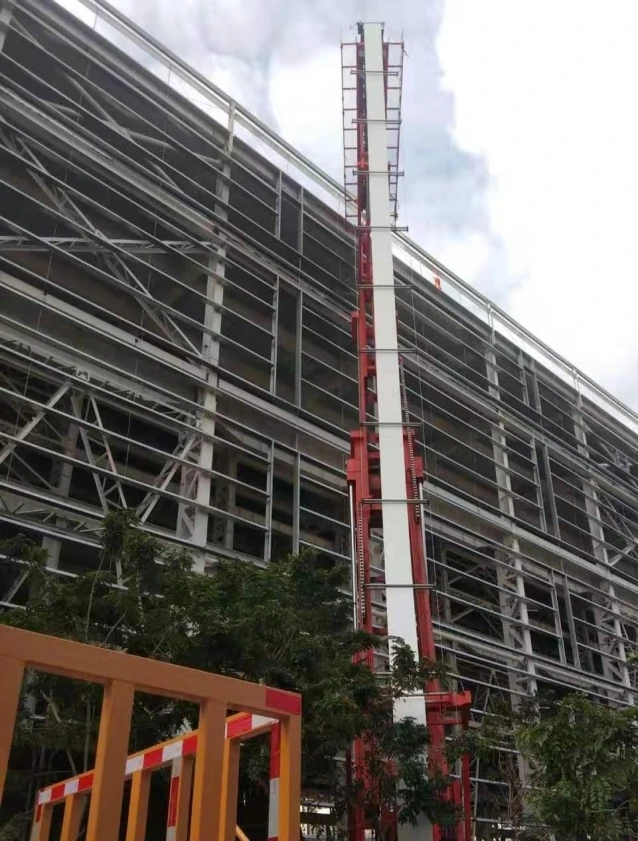
Reference photograph showing a long panel-shaped object beside elevated red equipment and a building. It does not show an accepted panel handover or prove behaviour in any weather condition.
Distinguish observations from equipment limits
Identify the source of each criterion
Request the actual equipment instructions and the project parties’ criteria for their respective work. Record which configuration and state each statement covers. A machine-specific condition, a roof work restriction and a material-handling decision should not be compressed into one supposedly universal limit. Nor should a number from an unrelated model become the basis for procurement.
For Great Britain context, HSE’s work-at-height weather FAQ addresses poor weather and slippery roof conditions. It is a reminder that roof work has its own weather considerations. It does not supply an operating limit for a roll-forming lift or resolve this project’s equipment, material and receiving interfaces.
Keep forecast and site observation separate
Forecast information supports scheduling; an observation describes conditions at a particular location and time. The responsible site parties should determine what information they need and how it relates to the work areas. A distant weather report cannot be presented as proof of the conditions around the forming outlet or roof receiver.
The enquiry can ask who provides monitoring resources, who receives information and who has authority over each activity. It should not specify instrument positions or thresholds without project design. If different contractors use different information sources, the coordination question needs an owner before their decisions are expected to work together.
Relate the review to the building’s enclosure stage
The equipment can remain at the same ground position while the surrounding building changes. Ask which roof sections, wall openings and temporary enclosures the environmental review describes at the planned work stage. Keep the forming outlet, ground-side coil area and roof receiver identifiable within that description. Their locations may be unchanged while the information describing their surroundings no longer matches the project.
In a hypothetical two-phase programme, the first review concerns an unfinished bay; later work is planned after nearby wall and roof elements are installed. Compare the two phases using the actual construction drawings and planned temporary arrangements. Ask the responsible parties which exposure assumptions still apply to each part of the work package and what information is needed for the later phase. Do not predict airflow or declare the later phase more sheltered or more demanding from enclosure alone.
For purchasing, this comparison distinguishes an equipment-information question from a construction-stage dependency. The supplier may need the intended environmental scope clarified; the site team may need to resolve what building condition will exist during the proposed production window. Procurement can request answers for both phases without buying an unsupported all-weather promise. The output is a phase-specific list of questions, not a revised weather threshold or permission to continue work.
Define the equipment information that procurement needs
Describe three intended conditions separately: production at the proposed roof zone, planned idle periods between work windows, and any proposed storage exposure. For each, ask which exact equipment configuration and documents the provider’s answer covers. The same assembly may be described differently in supplier information for different conditions; procurement should request that explanation rather than choose a state itself.
State the destination, relevant seasonal or exposure requirements and what the project knows about the intervening periods. If the proposal specifies protection equipment or site provisions, ask what is included, what must be arranged locally and which conditions the provision is intended to address. Do not assume that covers, enclosures or other protection are standard or even part of the offered solution.
The reply should identify a document and configuration, plus any missing project input needed for the answer. Visible paintwork or a cabinet in a photograph cannot establish environmental capability. An applicable supplier description is the useful purchase evidence.

Reference photograph showing ground-level coils and raised equipment near building steelwork. It does not establish exposure limits, material condition or an approved response to interrupted work.
Compare interrupted work states
Distinguish a production pause from a different exposure requirement
A short interruption within a planned work window and an idle period between construction phases may have different equipment and site dependencies. Ask which supplier information covers each proposed condition. Do not decide the answer from elapsed time alone: the actual equipment configuration, exposure and project arrangement matter.
Storage is a separate question when the buyer expects the equipment to remain unused under stated conditions. Say what is proposed and request the applicable supplier scope. A reply covering production conditions should not be taken to answer a storage enquiry unless it explicitly does so. Equally, a statement about stored equipment does not define the conditions for production.
Compare environmental scope across the offer
| Intended condition | Equipment-side question | Supply or site dependency to identify |
|---|---|---|
| Production in the nominated window | Which configuration and environmental documents cover the proposed duty? | Roof receiver, material interface and applicable site work requirements |
| Planned idle period between windows | What information covers the intended equipment condition and exposure? | Reserved standing area, services and any provisions excluded from the offer |
| Proposed storage exposure | Which documented storage scope applies to the identified equipment? | Storage location and any supplier-specified local provisions |
| A later building enclosure stage | Does the proposal address both described stages? | Construction drawings and exposure assumptions needing project review |
| Separate feed or electrical components | Which included items are covered by the supplied information? | Documentation from local or other equipment providers |
| Receiver unavailable after an interruption | Which equipment question, if any, remains to be answered? | Roof-team availability and the renewed handover relationship |
Use the same work windows and exposure description when requesting prices. If one offer includes a specified protection item or service and another leaves it to the buyer, show that difference explicitly. The description should identify its purpose and applicable configuration; inclusion alone does not establish suitability for every weather condition.
Separate programme recovery from equipment scope
Consider a hypothetical project where the next receiving crew cannot return in the planned window. Even after equipment questions are answered, production may still lack its agreed receiver. Alternatively, the roof team may be available while a longer unused period has introduced an equipment-information question outside the original proposal. These situations need different follow-up conversations.
Ask the project parties to identify the changed dependency: receiver, material condition, ground or access information, services, or the equipment scope itself. This keeps a programme revision from becoming an unsupported assumption that the original arrangement remains ready. It also helps the buyer identify whether an additional supply item or local service is needed, rather than requesting an undefined all-weather package.
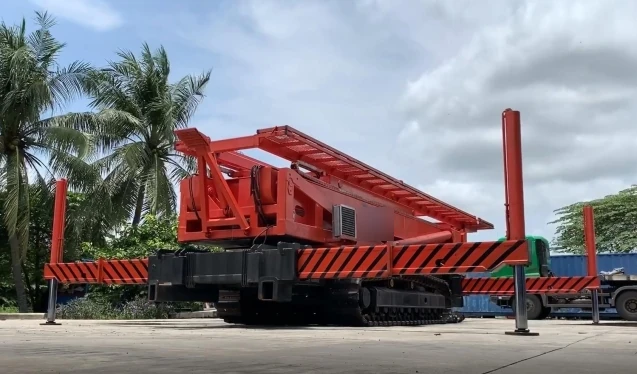
Reference photograph showing folded crawler equipment with supports extended. It does not depict a verified weather shutdown state or prove readiness for travel or restart.
Include weather responsibilities in the enquiry
Describe the work windows and intervening exposure
Give the reviewer an environmental brief tied to the intended equipment package:
- Identify the former, lift and included feed or service components, with the proposed configurations for supplier review.
- Describe production windows, planned idle periods and any storage exposure as separate requirements.
- Show outlet height and roof geometry, the expected receiver and the construction enclosure stage for each phase.
- State the coil/material interfaces and which material requirements remain with the project party.
- Identify the ground or floor information, support-area assumptions and access reservations used by the proposal.
- Name wind and weather responsibilities for equipment, roof work, material activities and temporary services.
- Provide power/interface information and the destination, transport or local assembly constraints affecting the package.
- Ask for applicable documents and a clear split between included protection or other provisions, local services and exclusions where the proposal specifies them.
This brief connects equipment information to the actual programme. It does not need a buyer-invented shutdown state or weather limit. Where the project has not decided an exposure condition, say so and ask which further information is needed.
Ask suppliers to price the same environmental requirement
Request a reply that identifies the configuration and documents covering each intended condition, plus any specified provisions included in the quote. Ask what information is required from the site and which services or items remain outside the equipment supply. An answer for the lift alone differs from one that explicitly addresses the included former and feed components.
The roof team separately establishes its work availability and the project parties coordinate the material and site decisions. Keep that responsibility distinct in the comparison. Buying documented equipment scope can resolve an equipment question; it cannot buy the availability of an independently managed roof workface.
Recognize an incomplete weather concept
The production concept may not fit a final decision when equipment conditions are undocumented, the receiving team has no defined role during interruptions, or material and site responsibilities are unresolved. This guide supplies no wind speed, weather tolerance, shutdown sequence or restart permission. Better weather alone cannot establish that every affected interface is ready again.
FAQ
Is there one weather limit for the complete work package?
Do not assume so. Equipment, roof work, material handling and access may have different applicable criteria and owners. The project must coordinate them using the actual configuration and site conditions.
Does an outdoor equipment photograph prove weather capability?
No. It shows a visible scene without establishing conditions, operating status, equipment limits or approval. Request configuration-specific information for the capability that affects the purchase.
What if the receiving crew is unavailable after a pause?
The project needs to resolve the receiving and material handover dependency before treating the original production arrangement as ready. Equipment availability alone does not answer that question.
Does improved weather release the system to restart?
No automatic conclusion follows. Material status, equipment information, site conditions and receiving responsibilities need the decisions required by the actual project method.
Request scope for production, idle periods and storage
Start with the truck-mounted forming-lift family, then request advice on the environmental supply scope. Describe the work windows, intended idle periods and any storage exposure, with the site phase, equipment package and roof receiver identified. Name a crawler alternative if relevant. Ask ARCLIFT which configuration-specific documents and supplier provisions the proposal covers and which dependencies need a separate site arrangement.
Include the outlet height, destination and transport assumptions where they affect the requested scope. This editorial enquiry does not set operating conditions; final environmental and interrupted-work decisions need the applicable equipment information and project method.