
Send eight lines and a model name. A blank is a better RFQ than a guessed load. Screen ARC-T18 at 18.5m, ARC-T25 or ARC-C25 at 25m, ARC-F25 only if the job is a deck, and ARC-RF8 if the line is in the same buy. Platform load, chassis, and transport stay confirm on RFQ. The point of the file is to make two suppliers answer the same sheet.
Contents
- The eight lines and the status of each
- Which purchase you are opening
- What a useful reply refuses to invent
- Where to send it
Eight lines, each with a status
Write the line, then write known, measure on site, or confirm on RFQ. Do not fill a status with a number you hope is close.
Work height
The outlet on your section, from the datum you mean. 18.5m and 25m are screens you may cite beside that measurement. They are not a substitute for it.
Panel and coil
Profile name, drawing revision, thickness, coil width, feed side. If the former is ARC-RF8, the sheet class 0.3–1.0mm is only the catalog screen. Your coil may sit inside it or not. Say which.
Machine mass
Known, or unknown. A kilogram taken from a photograph is how a lift gets designed to fiction.
Chassis line
Yes, no, or unsure. One clause: included, local builder, or not decided. Repeat the same words in the email and on the form.
Access in one sentence
Public road, yard, soft ground, or a door. Name the narrowest gate if you know it. If you have not measured the wire, say that. A catalog class cannot discover a gate.
Destination and how many
Country, port, and whether this enquiry is one machine or two. A second machine for a second crew is a different quote from a spare former.
Dates you already hold
Roof dates you already hold are useful. A demand that we invent a manufacture promise is not. Leave that promise off the sheet.
Who answers the follow-up
Name the person and the hour band in their time zone. A file nobody can question is a brochure pointed the wrong way.

Reference photograph. It does not identify a model.
Status table you can paste into the form
| Line | Example of a fair entry | Catalog number you may mention | Status if unknown |
|---|---|---|---|
| Outlet height | Eave on revision C, measured | ARC-T18 18.5m or ARC-T25 / ARC-C25 25m as the screen | Measure on site |
| Profile | Drawing attached | ARC-RF8 sheet class 0.3–1.0mm | Confirm on RFQ |
| Former mass | Unknown | None | Confirm on RFQ |
| Chassis | Local, cab stays | Not a height | Confirm on RFQ |
| Pad | Slab, covers unmarked | None | Measure on site |
| Deck instead of former | People under a soffit | ARC-F20 20m, ARC-F25 25m, ARC-F31 31m, ARC-F35 35m | Confirm load on RFQ |
| 40HQ | Box is the limit | ARC-T25HQ packing route | Packing study, confirm on RFQ |
| Power | Site cable, voltage unknown | None | Confirm on RFQ |
Lift only
You own the former. The RFQ is an interface: mass, mount, coil side, power, and the base.
Lift and line
Put ARC-RF8 and the lift in one message so the mount is reviewed once. Chassis stays on the lift line.
Deck, not a former
If the sentence is about a ceiling crew, stop. A forming-lift RFQ will answer the wrong question.
Two outlets
If two people disagree, send both numbers and label them. Do not average them.
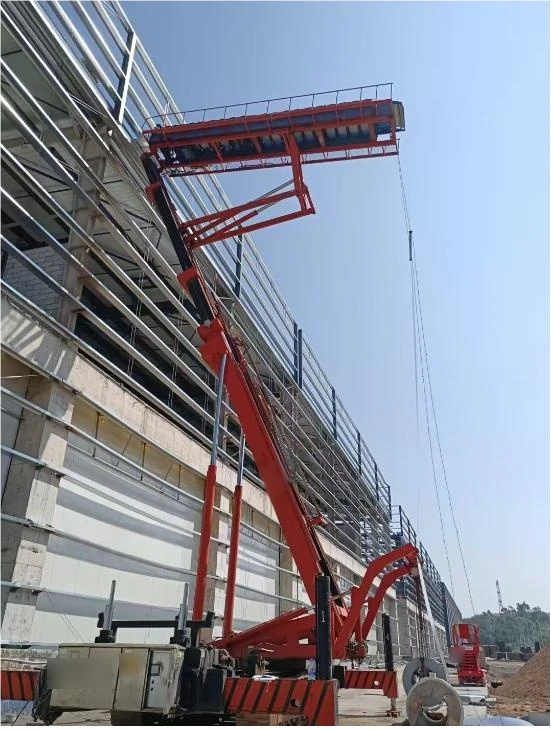
Reference photograph. It cannot replace a section.
The trade-off is a short file against a wrong machine
A thin RFQ gets more questions or a class label with every load left open. A thick RFQ full of invented numbers is worse, because the quotation will treat fiction as a fact. The constraint is honesty about blanks. Unknown is a value we can plan around.
A reply you can compare
Ask every supplier to restate the eight lines in the same order. A reply that jumps to a model code without your outlet and your chassis choice is not ready to set beside another reply.
Blanks that should stay open
Bearing, legal axle, and the week a crate might move. Write them as questions. If a seller closes them with an adjective, ask which document they are quoting.
Ugly attachments are welcome
A phone photo of the eave, a PDF with a revision cloud, and a sketch of the gate are enough to start. Date each file so an older drawing does not win by accident.
A second reader before you send
Hand the file to someone who did not write it. Ask them to point at the outlet, the former, and the chassis choice without asking you a question. If they cannot, the reviewer in another country cannot either. Fix the sentence. A polite paragraph that hides the datum still hides the datum.
Write heights in metres and thicknesses in millimetres, and say so once at the top of the file. If a drawing uses feet, convert it yourself and keep the original beside the conversion. Do not ask the supplier to guess which unit won. Name the drawing revision in the same line as the number. Outlet 22 on revision C is a fact. About 22 is a conversation that will come back as a question. If two drawings disagree, send both and say which one the roof contractor is building to.
A useful reply restates your eight lines, marks each one confirmed or open, and names the document that would close an open line. It does not invent a platform load or a price to make the email feel finished. If a reply offers those without a schedule, treat them as marketing and ask for the line again. You can compare two honest replies. You cannot compare a story with a blank. When you open a catalog model, use the quote link so the model code arrives with the eight lines instead of in a separate thread.
Add the hour band the contact can be reached, in their own time zone. Say whether a translator is needed. Say whether the roof contractor or the importer is allowed to change the outlet after you send the file. Those three sentences stop a week of crossed emails. They are not a commercial term. If the former is already on a previous roof, say what you want repeated and what you want changed, as facts. The RFQ is a selection file. It is not a place to beat another machine with a claim this website will not make. Attach the coil certificate if you have one, and say if you do not. A missing certificate is a blank. A certificate for a different thickness than the drawing is a conflict, and conflicts should be visible in the first email rather than in the third. Name the port only if you already know it. If the port is a guess, write the country and leave the port confirm on RFQ. Two machines for two crews need two chassis lines even when the height class is the same. Say that in the quantity line so the reply does not assume a spare former on a shared truck.
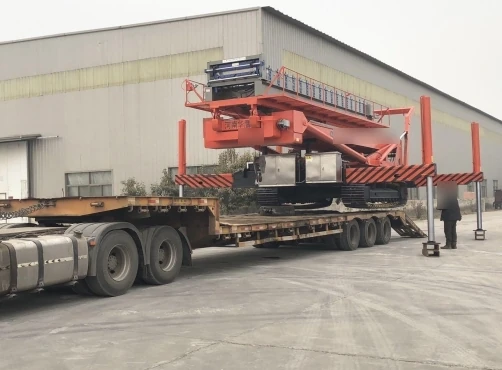
Reference photograph. It does not prove a truck scope.
Failure modes
The RFQ may not fit a catalog model when the height is a wish with no section, when the profile cannot be drawn, when the site cannot be entered by the base you named, or when you need a price by tomorrow and will not send the eight lines. It may not fit when the purchase is a deck and the file still says roll former. Change the model list. Do not hope a salesperson will notice.
Copy these into the form
- Work height and outreach to the outlet you marked, beside the catalog class you want screened
- Roof geometry, slope, and obstructions
- Profile, material, thickness, coil width, and feed side
- Wind exposure and the stop rule
- Ground or floor under the setup
- Access route and the narrowest gate
- Outrigger or track footprint, or unknown
- Destination country and port
- Chassis or carrier included, local, or unsure
- Transport or container assumption, stated as a question
- Voltage and who owns the controls
- Documents the destination will ask to see
- Control cabinet position, and the weather, dust, or wash-down that reaches it
Use the form with the model in the link
Send the work height, the site, the destination, the transport assumption, the work zone, and the floor or ground note. The signed technical schedule is project-specific. Editorial images do not set a price, a load, or a lead time.
Open the quote link on ARC-T18, ARC-T25, ARC-C25, ARC-F25, or ARC-RF8. The same eight lines fit request a quote, WhatsApp +86 15515922444, and leelogly120@gmail.com. The OSHA fall-protection overview is for your destination reviewer where it applies. It is not a substitute for the eight lines.
Do I have to fill every box?
No. Empty means unknown. Invented numbers are the problem.
Can I name the model in the link?
Yes. Use the quote button on the catalog page so the code arrives with the lines.
Will a load chart come back the same day?
Not from the website. A chart belongs to a configuration. The RFQ is how that configuration gets defined.
What if I only know the building height?
Send it and mark the datum. One true dimension beats six guesses.