
A pre-purchase roll-forming lift demonstration is useful when the buyer can say which question it should answer and which equipment would actually be shown. A general video of a machine moving does not establish the offered combination’s compatibility with your former, panel requirement or roof receiver. Start with the purchase question, then ask what observation the supplier can propose within a defined demonstration scope.
This is an exploratory enquiry before the specification and contract are settled. The FAT and SAT guide addresses contract-defined acceptance evidence. A supplier demonstration should not be described as that acceptance process unless the actual agreement establishes it. No demonstration availability or operating method is promised here.
Contents
- Define the question before requesting a demonstration
- Identify the arrangement that would be shown
- Match observations with their actual limits
- Request a useful pre-purchase response
- FAQ
Define the question before requesting a demonstration
Decide what you need to understand
The buyer may need to understand which assemblies form the proposed package, how the former’s inlet and outlet relate to the lift, or what an optional feed arrangement includes. These are different questions from proving a performance criterion or accepting equipment. State the decision the demonstration would help you make before requesting an event or video.
For example, seeing the identified assembly can help clarify a discussion drawing. It does not settle the loads or attachment design hidden behind that outline. If the decision requires controlled machine data, request that information directly rather than asking a visual presentation to answer a different kind of question.
Separate equipment orientation from a project conclusion
A roll-forming lift raises a compatible roof-panel former toward the intended receiving level. The crawler forming-lift family explains one architecture, while a truck-based proposal needs its vehicle boundary identified. A reference demonstration may illustrate that architecture without covering the exact base, former or options the buyer is considering.
Ask which aspects are representative and which concern the offered equipment. The answer may be useful for orientation even when it cannot establish a final project conclusion. Keeping that limited value explicit is more informative than labelling the whole presentation either proof or irrelevant.
Distinguish a sales question from an acceptance criterion
An exploratory question might ask which parts of a line are included or where the material interfaces are located. An acceptance question requires the agreed equipment, material, conditions, criteria and responsibilities. Do not attach a passed label to an informal demonstration whose scope never defined those elements.
If the buyer wants a later contractual observation, record that as an item to negotiate rather than silently expanding the initial demonstration. The parties responsible for the actual equipment determine the appropriate programme and conditions. This article supplies no test protocol, load or operating sequence.

Reference photograph showing a suspended blue machine module. It does not verify its identity, compatibility, attachment points or an approved lifting method.
Identify the arrangement that would be shown
Connect the demonstrated machine with the offer
Ask for the identity and configuration covered by the presentation. Identify the former, lift, base, feed items and options actually present. Then ask which differ from the proposed purchase. A similar painted structure or model label cannot establish that the same attachments, services and machine arrangement are involved.
For a buyer-owned former that will not be present, the supplier should explain which questions about the eventual combination remain open. A demonstration with another line may help explain architecture, but it cannot become evidence that the buyer’s line has been integrated. The existing-former purchase guide develops that separate purchase boundary.
Identify the material and observation context
If panels or sample material are part of the proposed presentation, ask which material and profile they represent and what the observation is intended to show. A display section, a photograph of a panel and a recorded forming event are different evidence objects. Keep their identities and purposes distinct.
Do not infer a thickness range, unlimited length, surface quality or line speed from a clip. Such conclusions require their own agreed basis for the actual proposal. The buyer can request clarification of the material and configuration without prescribing a particular trial or asking personnel to repeat an operation for the camera.
Understand what the viewing format omits
A remote presentation, recorded video and an attended event expose different information. Ask what views or documents would answer the purchase question and whether the relevant equipment can be identified. A close view may hide the relationship between assemblies; a distant view may show the arrangement without revealing its details.
Treat camera coverage as communication scope, not measurement. The supplier should determine safe arrangements for any event. This guide provides no instructions about observer positions, movement, loading or demonstration conduct. The buyer’s request should explain the needed information and let the responsible parties propose an appropriate response.
Match observations with their actual limits
Use a question-to-observation matrix
The matrix below organizes a request. It does not prescribe activities or acceptance methods. Replace each possible observation with the supplier’s actual proposed response and keep unresolved questions alongside it. A useful demonstration may answer only part of the purchase brief.
| Buyer question | Possible information to request | Identity or context to retain | Question left for separate evidence |
|---|---|---|---|
| Which assemblies are included? | Identified arrangement explanation | Presented items versus quoted items | Final scope and exclusions |
| Where are the material interfaces? | Coordinated inlet/outlet description | Actual former and common references | Site-specific feed and receiver fit |
| What does an option contain? | Itemized option explanation | Installed option and offered version | Compatibility and purchase inclusion |
| What does a sample represent? | Material and sample basis | Profile, material and stated observation | Unobserved product requirements |
| How does the base differ? | Actual crawler or vehicle arrangement | Demonstrated base and transport state | Destination access and integration |
| What later work is needed? | Explanation of absent local items | Boundaries outside the event | Contractual and destination completion |
Hypothetical video with a different former
Imagine a buyer wants a lift around its existing roll former. The supplier offers a recorded presentation of another former on a lifting assembly. The buyer’s immediate question is how the machine, lift and optional feed items are divided commercially. The recording may help explain those categories if the supplier identifies the items and differences clearly.
It does not show the buyer’s machine, establish its mounting or answer its actual outlet-to-roof relationship. Ask for the records needed to investigate those gaps. This is a hypothetical enquiry example, not an account of an ARCLIFT demonstration. The useful outcome can be a clearer purchase scope and a focused missing-record request without a compatibility conclusion.

Reference photograph showing a suspended coil beside vehicle-mounted apparatus. It does not verify an approved handling method, included coil equipment or the scope of this purchase.
Compare a visible event with a controlled record
A presentation can show what is visible in its recorded context. A controlled record can identify the equipment, conditions and actual question assessed. Their value depends on the decision. The trade-off is between accessible orientation and the specific evidence needed for a technical or contractual commitment.
The HSE inspection guidance provides Great Britain equipment-assessment context. It does not make a sales presentation an inspection or establish the requirements for this proposed purchase. Keep local assessment and agreed acceptance scope separate from the demonstration’s stated purpose.
Record the unanswered project interfaces
After the response, identify the actual gaps: the absent former, unconfirmed material, different base, missing roof relationship or unresolved local supply. Name the next information needed for each, instead of writing a broad statement that the demonstration was successful. The buyer should understand what became clearer and what did not.
The roof-zone survey develops geometry at the real destination, and the mounting guide handles the actual machine connection. Neither can be replaced by a general scene showing a lift beside a building. A promising visual relationship is a question for review, not a measured answer.
Request a useful pre-purchase response
Send a short demonstration brief
State the buying decision, candidate equipment and information you want explained. Say whether you own the former, need a new line or remain open to both. Ask the supplier what presentation or existing information it can actually propose, identifying differences from the requested package. Do not assume that arranging a visit or producing footage is included in an equipment enquiry.
If the supplier responds with documents instead, assess whether they answer the question. The objective is useful understanding, not a demonstration for its own sake. A clear arrangement drawing can be the appropriate response to a location question, while a contractual observation requires a separately agreed scope.
Attach the information that keeps the request specific
- Identify the former owned or required and the panel profile and material basis.
- Name the purchase question the demonstration should help resolve.
- Show the intended outlet height and roof-zone relationship where relevant.
- Describe the site, access and ground or floor inputs still awaiting review.
- State the destination and actual transport or chassis assumptions.
- Identify power, control and optional equipment boundaries requiring explanation.
- Ask for the demonstrated-versus-offered configuration differences in the reply.
- Keep future acceptance requirements separate from the exploratory request.
Use the result to choose the next purchase step
An answered scope question may support a more focused quotation request. A missing identity or absent machine may instead point toward collecting records. If the demonstration reveals a different equipment boundary from the one expected, revise the enquiry openly. Do not keep the original price comparison while silently changing what the buyer expects to receive.
Recognize a demonstration that cannot answer the decision
The request may not fit when the equipment cannot be identified, the material is untraceable or the intended conclusion concerns conditions absent from the event. This guide establishes no demonstration availability, operating instruction, acceptance result or certification by video. Observations remain limited to their actual context.
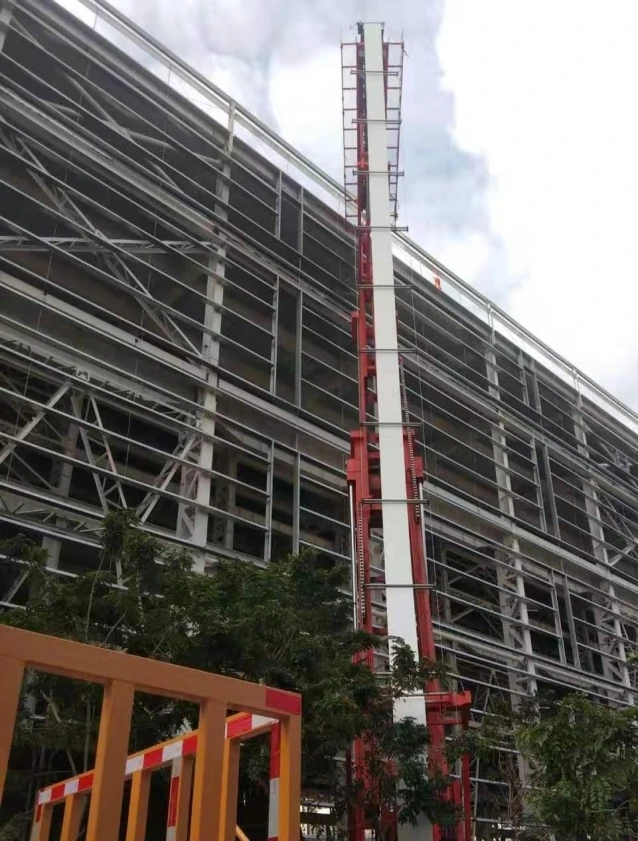
Reference photograph showing a panel beside elevated apparatus and building steelwork. It does not verify panel length, quality, production status or an approved receiving method.
Ask what evidence can be proposed for your question
Send ARCLIFT a pre-purchase evidence request, stating the decision and the equipment you want explained. Include the former, height reference, roof zone, site access, destination and transport boundary. Ask what information or demonstration scope can be proposed and which project-specific questions would remain afterward. ARCLIFT coordinates technical selection and supply discussion; final commitments need the actual evidence. The editorial photographs are reference scenes, not demonstration or acceptance records.
FAQ
Is a supplier video a completed FAT?
Not merely because a machine is shown working. FAT concerns the agreed equipment, conditions, criteria and contractual evidence. An exploratory video has only its stated scope.
Can another former demonstrate compatibility with mine?
It can help explain architecture while leaving your machine’s actual interfaces unresolved. Identify the differences and request the machine-specific information needed for further review.
Must the buyer ask for a live event?
Choose the response that answers the question. Documents, an explanation or existing recorded information may be useful. The provider must identify what it can actually offer and its limits.
What should the buyer retain after the presentation?
Keep the equipment and material basis, the questions addressed, the actual observations and the unresolved project interfaces. Avoid a generic passed label that expands beyond what was shown.