
If the site record and the offer do not use the same frequency words, stop the comparison and ask. Do not average them, and do not pick the number that makes the quote look easier. Screen the height class while the words disagree. The rest of the electrical split is in the electrical interface guide. The form rows are in the RFQ data guide.
Contents
- Put the two frequency words side by side
- Compare the record with the offer
- A mismatched frequency may not fit
- Frequency lines to attach
- FAQ
Put the two frequency words side by side
Copy, do not translate
Write the frequency words exactly as the site record prints them, and exactly as each equipment sheet prints them. If a sheet is silent, write silent. Do not convert a silent sheet into the site’s words. ARC-T18, ARC-T25, and ARC-C25 are height screens. ARC-RF8’s 0.3–1.0mm band is a material class. None of those is a frequency.
One machine, one pair of words
Do this for the lift, then again for the former, then again for feed equipment. A match on the lift does not answer the former. A package cover that states one word for “the line” must be split or marked as unsplit.
Name who must answer
The site owner can confirm the record. The equipment seller can confirm what that seller’s sheet requires. You can show that the words differ. You cannot decide which word wins. Confirm on RFQ means the cell goes back to the person who owns it.
Keep voltage words in their own cell
Frequency and voltage are neighbours on many forms and they are not the same fact. Copy both if both are printed. Do not let a voltage match hide a frequency mismatch, or the reverse.
Compare the record with the offer
Use one table per machine
| Cell | What to write | If the papers disagree |
|---|---|---|
| Site record | The printed words and the date | Do not edit the record to match the offer |
| Equipment sheet | The printed words and the machine name | Ask that seller, not the other one |
| Status | Match, mismatch, or silent | Mismatch stops the comparison |
| Who answers | Source owner or equipment seller | Confirm on RFQ |

Reference photograph of a forming module beside a lift frame. It cannot print a frequency.
A common mismatch is two documents, not two opinions
Buyers sometimes hold a site drawing that says one mains frequency and an equipment sheet that says another. Those are not preferences. They are different statements. Treat them as a stop, the same way you would treat two different outlet heights. Ask which statement the offer was built on.
Silence is not the site’s number
If the equipment sheet does not state a frequency, do not fill it from the building. Mark silent and ask. An offer that is silent might be unfinished, or it might assume a home-market figure the destination does not use. You will not know which until the seller writes the word.

Reference photograph of coils beside the building. It cannot reconcile two sheets.
Do not “correct” the site to save the offer
Changing the site cell so it matches a catalog is how a later board review fails. The site record stays as issued. The offer changes, or the offer is not for this site.
The trade-off is a fast comparison against a quote for the wrong supply. The limitation is that a height class carries no frequency. The constraint is the pair of documents in your hand. The interface is the seller’s written reply that repeats your site words and says whether that seller’s machine is offered for them. Without that reply, the offers are not on the same site.
An anonymous enquiry put a site drawing and a lift sheet in one email. The drawing stated one frequency. The sheet stated another. The buyer deleted the sheet’s word so the file looked consistent, then asked for a price. The seller priced the altered file. The board owner later rejected the match. The repair was to restore both words, mark mismatch, and ask the seller for a configuration-specific reply. The 25m screen was unchanged. The frequency row was not.
A second anonymous file had a matching lift row and a silent former row. The team called the line “matched” because the lift matched. The former was ARC-RF8 in name only, and its sheet had no frequency line. The corrected status was match for the lift, silent for the former. Silent is not a match. Confirm on RFQ went to the former seller alone.
A third anonymous file tried to finish the mismatch by editing the site drawing. The drawing stated one frequency. The lift sheet stated another. The former sheet was silent. Someone changed the drawing’s word so the lift sheet would match, then called the package aligned. The board owner still held the unedited record. The equipment seller had priced the edited word. Both were consistent with a file the other party did not have. Restoring the record, marking mismatch on the lift, and marking silent on the former took one table and no new height class. The 18.5m and 25m screens stayed in the same email so the frequency status could not be mistaken for a reason to change class.
Treat a match on voltage as irrelevant to this row. Buyers hide a frequency mismatch behind a voltage that happens to agree. Copy both if both are printed, and do not let one agreement close the other cell. If several bidders send sheets, compare each sheet to the same unedited record. A bidder who repeats your site words and says whether the machine is offered for them is comparable. A bidder who repeats only the height class is not. Destination belongs beside the record so nobody substitutes a home-market habit for the paper in the folder. Confirm on RFQ is the status you send, not a delay you apologize for.
Make the status visible in the subject of the email, not only in a cell the seller can skip. “Lift mismatch, former silent, site record dated and attached” is a complete subject. A subject that says only “power question” lets the reader answer a different question. Attach the unedited record and the equipment sheet as separate files so nobody has to guess which word was changed. If you are screening both 18.5m and 25m, say that the frequency status is identical for both screens unless a seller writes otherwise. A class does not carry its own frequency. Feed equipment, when it exists, gets a third status rather than a shrug. Silent on the feed is still silent. Leave the site drawing unedited in the folder the seller returns, and compare the returned words to that file rather than to the reply’s own restatement. A restatement can drop the awkward word. The original record cannot.
A mismatched frequency may not fit
Two words averaged into one
This comparison may not fit when someone picks a middle position or deletes the awkward word. Put both words back. A mismatch is a status, not a nuisance.
One word made to serve every machine
It may not fit when the lift’s frequency line is copied onto the former and the feed. Check each sheet. A shared package noun is not a shared statement.
A destination assumed from the seller’s home market
It may not fit when the offer is silent and the buyer inserts the frequency they think is normal at the destination. Write the destination. Write silent. Ask. Do not invent the normal.
Height used to end the argument
It may not fit when a buyer changes from 18.5m to 25m to escape the mismatch. The class does not carry the words. The sheets do.
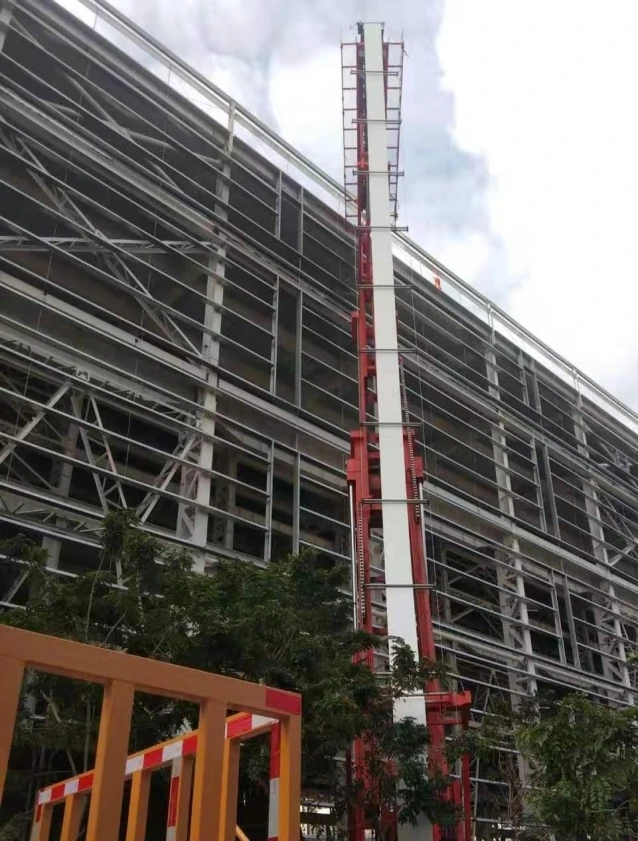
Reference photograph of a panel path. It cannot choose a supply frequency.
Frequency lines to attach
- Work height at the outlet, and the catalog class to screen
- Roof geometry, unchanged by the frequency row
- Profile, material, and coil on their own rows
- Wind limit, or unknown
- Floor or ground under the machines
- Access route to the set-down
- Outrigger or track footprint
- Destination country, written next to the site record
- Transport split, so papers travel with the right machine
- Power words: site frequency, each machine’s frequency, or silent
- Documents: both sheets attached, with dates
Send the work height, the site record, the destination, the transport split, the roof zone, and the floor note. The signed schedule is project-specific. Editorial images do not print a frequency.
Open ARC-T18, ARC-T25, or ARC-RF8. Request a quote, WhatsApp +86 15515922444, or leelogly120@gmail.com. The IEC 60204-1 scope record is a machine-side boundary note. It does not reconcile your two sheets.
FAQ
Do I pick the site word or the offer word?
Neither, on this page. Show both. Ask the owner of each paper.
Is silence a match?
No. Silence means you ask. Do not fill it from the other sheet.
Can one reply cover the lift and the former?
Only if the reply names each machine. A line reply that names neither is still silent.
Does the height screen wait?
No. Send the height screen with the mismatch marked. Do not pretend the words already agree.