
A quotation can repeat the requested panel length while leaving its meaning unclear. The buyer may mean the ordered product dimension, the line provider may describe a machine setting, and the roof drawing may identify a different installation reference. Before comparing offers, define the physical endpoints and document that govern the ordered panel. The useful output is a measurement-basis sheet, not a calibration instruction.
The complete line guide connects panels, material and installed equipment. This page isolates length meaning and evidence. Discuss the forming-equipment reference with the intended lifting family. A long sheet in a photograph establishes no cutting range or acceptance result.
Contents
- Define the ordered panel dimension
- Connect the length request to the proposed equipment
- Compare evidence against a shared measurement basis
- Issue a length-definition sheet
- FAQ
Define the ordered panel dimension
Identify the actual drawing endpoints
Ask the panel requirement owner to mark the endpoints of the ordered length on the governing drawing. Identify the drawing revision and the condition of the panel being described. Do not let a general roof-zone distance silently become the product dimension. The relevant question is what physical product the buyer expects to receive, not which number is largest in the project records. Where the drawing leaves an end detail unresolved, keep that dependency visible so the equipment provider knows which part of the enquiry is still preliminary.
Keep installation references separate from product dimensions
The roof layout may describe zones, interfaces or openings that inform the ordered panel requirement. Ask the responsible project party to provide the resulting product definition rather than calculating it inside the equipment enquiry. A roof reference and a finished-panel dimension can be related without being interchangeable. The buyer should retain the source of each field, particularly where another contractor supplies cutting information. This prevents a machine provider’s response from being mistaken for authority to alter a roof detail or choose an installation allowance the project has not defined.
State which end condition the request concerns
Ask whether the proposed length statement describes the panel at the former’s output boundary or another expressly defined product condition. If later work changes an end, identify that as a separate service or project requirement. Do not assume a general cutting description covers every end treatment. The actual provider should explain the output it proposes. A clear condition statement helps the buyer recognise when two offers refer to different completion boundaries even if both quote the same nominal product dimension in their commercial summary.

Reference photograph showing a suspended blue machine module, not a coil. It does not verify a cutting assembly, measurement reference or compatibility.
Connect the length request to the proposed equipment
Identify the offered cutter and its supply boundary
Request the actual cutting arrangement proposed with the former and which components or services are included. A line quotation may describe the former clearly while leaving its output equipment conditional. Keep that uncertainty attached to the length response. The buyer needs to know what the provider is offering to address, not an instruction for changing machine settings. If another party supplies cutting equipment, ask which interface information the line provider needs and who returns a coordinated answer about the identified assembly.
Separate a requested value from evidence of an outcome
A length entered in an enquiry is a requirement. A supplier’s stated proposal is a response. A record of an observed panel concerns an identified object and condition. Keep those three roles separate. Ask what evidence the provider proposes for the actual ordered dimension and how the parties will agree its basis. A copied value in a quotation should not be reported as a demonstrated result. Equally, a useful earlier observation should retain its real scope rather than being discarded simply because it does not answer every aspect of the new purchase.
Preserve the sample and record connection
If the provider offers a sample or observation record, request its panel identity, material, profile and equipment reference. Ask which endpoints and product condition the record addresses. Leave the actual agreed assessment method to the responsible parties. The acceptance guide develops that wider agreement. This length sheet should carry the buyer’s exact question into it, without inventing an accuracy figure, measuring setup, calibration procedure or conclusion that a short sample establishes a different panel length.
The US NIST explanation of metrological traceability distinguishes a measurement result from the instrument used to obtain it and explains that traceability alone does not establish fitness for a particular purpose. For this enquiry, keep any reported length tied to its identified product and measurement basis. This reference supplies no panel tolerance, required calibration method or endorsement of the offered cutter.

Reference photograph showing a suspended steel coil beside vehicle-mounted apparatus. It does not verify an included handling option or approved material movement.
Compare evidence against a shared measurement basis
Work through a hypothetical length disagreement
Imagine a roof contractor requests a panel dimension between marked product endpoints. Bidder A repeats the requested length but supplies no definition. Bidder B describes a length statement at its proposed cutter boundary and identifies a different reference in its sketch. These hypothetical replies are not yet comparable. Ask A to show its basis and B to explain the relationship to the ordered product. The difference may be terminology, an excluded later service or a real product departure. It cannot be resolved by assuming both parties mean the dimension that procurement intended.
Compare each statement by object and condition
| Length statement | What it describes | Clarification before comparison |
|---|---|---|
| Ordered panel dimension | Buyer’s required product | Governing endpoints and drawing revision |
| Roof layout distance | Project geometry | Product requirement supplied by its owner |
| Supplier proposal value | Offered equipment response | Actual cutter and output boundary |
| Sample observation | Identified panel and recorded condition | Which requirement and equipment it addresses |
| Later end-work allowance | Separately described project work | Included service and responsible party |
| Unresolved reference | Missing product definition | Named owner and information needed |
The trade-off is between differently bounded evidence and scope. A detailed record for the wrong product condition does not close the ordered requirement. A concise response can be useful if it states exactly what remains unresolved.
Keep a changed length basis visible in the purchase
If the project changes the endpoint definition, issue the revised product requirement and ask the provider which part of its response needs review. Do not overwrite the old reference while retaining the previous evidence as though nothing changed. If only wording is clarified, record the agreed interpretation without claiming the equipment changed. A mixed-length project adds another question about which zones require which products; it does not remove the need for a common measurement basis. Each scheduled requirement should use the same identified convention or clearly explain why a different one applies.
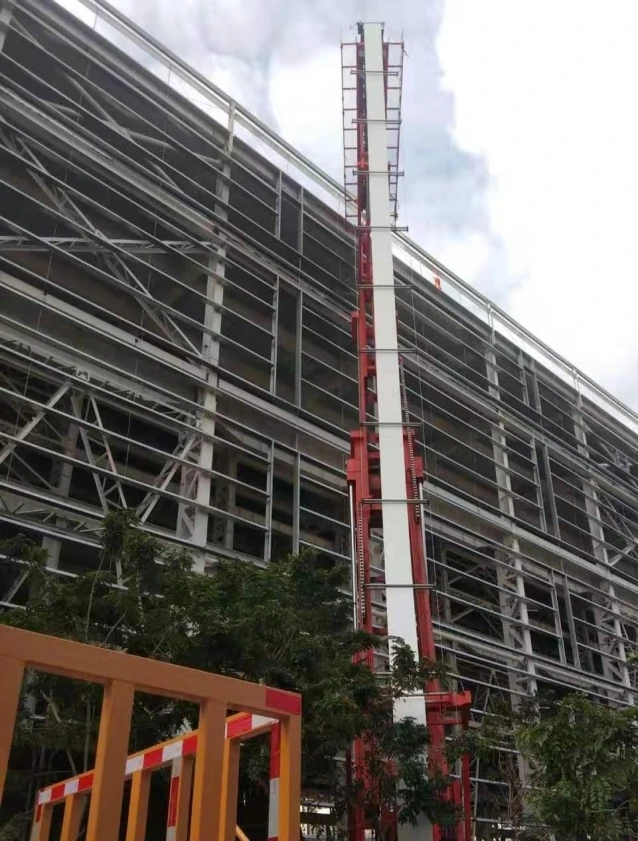
Reference photograph showing a long sheet beside a building and elevated apparatus. It does not verify a measured panel length, cut-end condition or acceptance result.
Issue a length-definition sheet
Include the six references needed for an answer
- Attach the ordered panel drawing with both length endpoints, revision and described product condition.
- Identify the material and profile so the length question concerns a defined product rather than an isolated number.
- State which cutting or later end-work functions are requested and ask what the actual offer includes.
- Name the sample or observation evidence requested without supplying an invented tolerance or assessment method.
- Show outlet height, roof receiving zone and site access context for the separate panel-handover discussion.
- Give destination documentation, transport, ground and power information relevant to the proposed lifted assembly.
Ask the supplier to return the sheet with its proposed equipment reference and any departure marked. It should be possible to identify what is offered without translating an unqualified machine-length claim into a product promise.
Connect the answer to receipt without designing the route
The identified panel length belongs with the receiving enquiry. The panel-handover guide addresses the physical and responsibility boundaries beyond the former. Passing the same product definition to that review helps the parties discuss the same object. It does not establish support spacing, roof storage or a permitted handling method. Keep those technical questions with their appointed reviewers while procurement reconciles the equipment and service scope around the agreed ordered panel dimension.
Recognise a length response that may not fit
An offer may not fit when it addresses a different product condition, relies on an unidentified cutter or treats an unresolved roof reference as the ordered length. This guide provides no numerical accuracy, machine setting, calibration instruction or permissible panel span. It does not establish capability from a long-sheet photograph or a historical machine description. Resolve the actual endpoints, output boundary and evidence request before the buyer treats a length statement as a meaningful basis for equipment selection.
Discuss the ordered length basis
Send the panel-length enquiry to ARCLIFT with the marked product drawing, material and proposed cutting scope. Include the site roof zone, outlet height, destination and transport assumptions. Ask for a project-specific response identifying the offered output boundary and evidence needed for final comparison. ARCLIFT supports technical selection and supply coordination; the actual product and acceptance parties retain their decisions. The editorial photographs establish no measured length or cutting performance.
FAQ
Is a roof dimension automatically the ordered panel length?
Ask the responsible product owner to define the ordered product and endpoints. A project drawing can inform that requirement without being the machine enquiry itself. This article supplies no installation allowance or dimension conversion.
Does a quotation value prove cutting accuracy?
No. It is part of a proposed response. Ask which actual equipment, product condition and agreed evidence address the requirement. Keep a requested value distinct from a recorded observation of an identified panel.
Can a short sample prove a longer product requirement?
Its relevance is limited to what the actual record addresses. Ask the parties which questions it answers and what remains open. Do not extrapolate a different length or handling outcome from appearance alone.
Does this sheet replace a mixed-length schedule?
No. It defines what length means. A schedule identifies the different products needed for the project. Each scheduled item should refer to the same agreed basis or identify its own expressly different requirement.