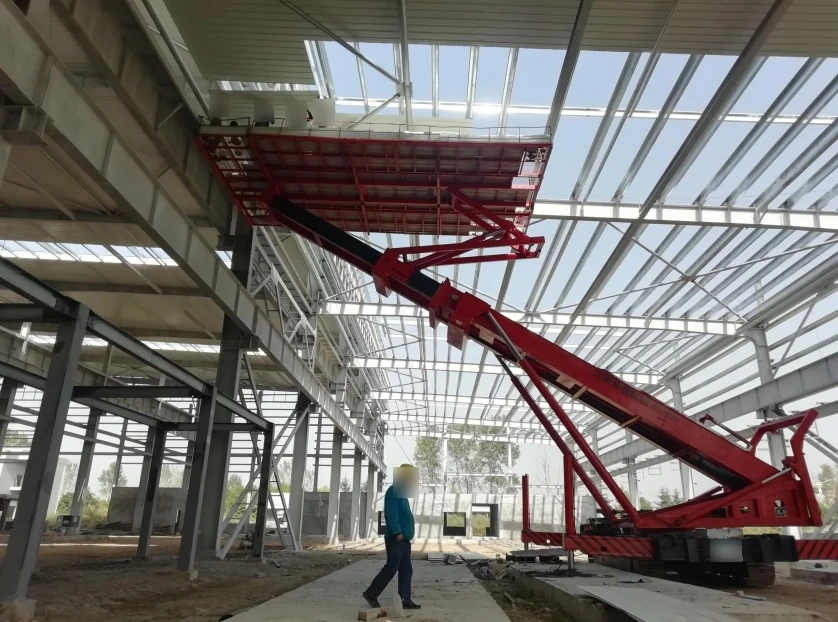
A statement that a platform is quiet does not tell a purchaser what was measured or whether the information addresses the facility’s requirement. Even a numerical noise statement is incomplete without its subject, quantity and conditions. The useful output is an evidence request that keeps the actual equipment record separate from the facility criterion and identifies what its appointed reviewer still needs to compare them.
The power-selection guide addresses energy sources and site dependencies. This article addresses the meaning of noise evidence. A crawler ceiling-platform category, an electric label or an interior photograph establishes no acoustic value, exposure result or indoor approval.
Contents
- Identify the subject of the noise statement
- Keep measured evidence separate from facility requirements
- Compare supplier replies on their actual scope
- Send a noise-evidence request for review
- FAQ
Identify the subject of the noise statement
Ask what equipment and function the record describes
Request the equipment identity and configuration behind the actual statement. Ask which function or condition was represented and which power arrangement applied. A record for a component is different from a record for the proposed machine, and neither automatically represents the complete project task with other tools present. Keep those scopes named. Procurement should not create an acoustic result from a motor description or infer that a reference platform photographed inside a building was accepted for the current facility. The first useful answer identifies the subject of the evidence the supplier actually has.
Retain the stated quantity and terminology
Copy the record’s own quantity name and units into the private comparison, with its issuer and reference. Ask the competent reviewer to interpret it rather than reducing every statement to one field called noise level. Different labels may describe different questions; this article provides no conversion or acoustic calculation. A buyer can obtain an attributable record without claiming to have assessed it. If the supplier gives only a number in an email, ask for the subject, basis and underlying document before treating it as comparable to a differently defined statement in another offer.
Identify the actual record issuer
Ask whether the information is a manufacturer declaration, another identified report or a preliminary supplier statement. Preserve the issuer and date privately so the reviewer can assess relevance. A quotation heading alone should not be treated as an independent test. Equally, an actual report should retain its stated limitations rather than being dismissed because it does not address the whole facility. The useful distinction is what the issuer states about the identified equipment, and which part of the buyer’s current question still requires a different record or project assessment.
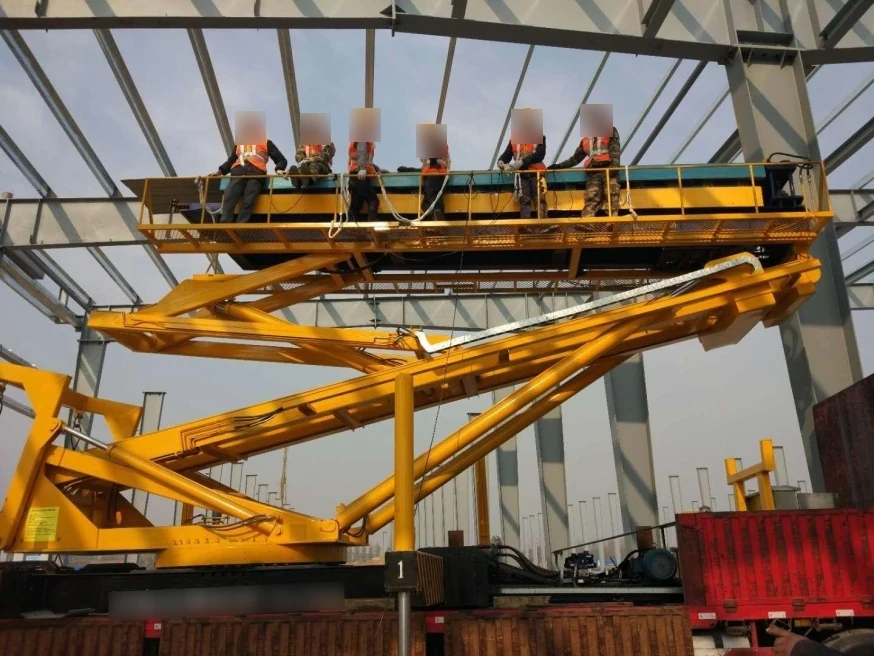
Reference photograph showing a yellow working platform beneath roof framing with vehicle-bed context. It does not verify noise emissions, a truck-platform model or an occupied task.
Keep measured evidence separate from facility requirements
Ask for the conditions attached to the evidence
Request the actual method or test-code reference and the equipment operating condition identified in the record. Ask the reviewer which other context it needs, rather than designing a test within the purchasing article. HSE’s noise-information guidance provides Great Britain machinery-supply context for declared noise information and its measurement basis. That context supports asking for the actual record; it supplies no noise value or compliance result for an ARCLIFT proposal and does not decide destination applicability.
Obtain the facility’s actual requirement
Ask the facility owner or its appointed specialist to state the relevant requirement and the context it describes. Keep the issued criterion separate from equipment evidence. A workplace task question and a restriction affecting another area can need different information. This article defines no threshold, exposure period or acceptance criterion. The buyer should identify the applicable project requirement and who will compare it with the supplier information. Otherwise a procurement team may ask for one type of evidence while the facility expects an answer to a different acoustic question.
Describe the intended task without estimating a result
Give the reviewer the intended location, activity and other relevant task context requested by the appointed parties. Identify separate tools or concurrent activities without combining their noise into a guessed total. A machine record may be useful while leaving the complete work scenario unresolved. The buyer should not promise that changing the power option will meet the facility requirement. The actual configuration, task and building context need their own competent assessment. An unknown comparison should stay visibly unresolved rather than becoming a favourable conclusion based on the word electric.
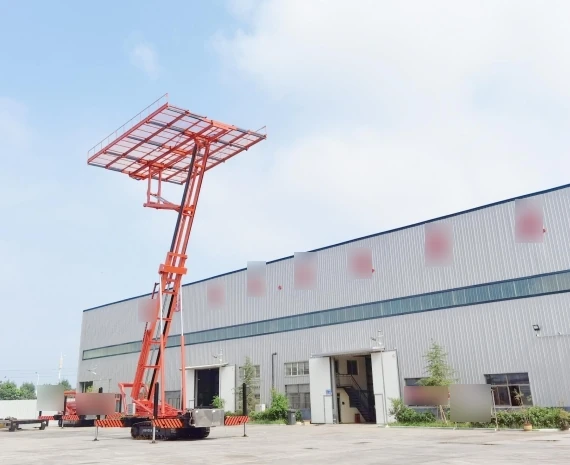
Reference photograph showing an empty platform beside building openings. It does not verify acoustic performance, site acceptance or measured clearance.
Compare supplier replies on their actual scope
Work through a hypothetical quiet-equipment enquiry
Imagine a facility asks for noise information for a particular ceiling task. Bidder A describes an electric option as quiet but provides no record. Bidder B returns an identified declaration for a stated configuration and condition, without claiming it settles the facility requirement. These are hypothetical replies. B supplies more interpretable equipment evidence, while the site comparison still belongs with the appointed reviewer. A needs to identify the basis behind its description. Do not rank the offers from unqualified numbers or conclude that the more explicit evidence establishes acceptance of the complete task.
Use an evidence-to-requirement comparison
| Comparison field | Supplier information to request | Facility information to retain |
|---|---|---|
| Subject | Exact equipment and configuration | Actual task and location under consideration |
| Quantity | Record’s stated terminology and units | Requirement’s stated comparison basis |
| Condition | Function, power arrangement and record conditions | Relevant work condition defined by the project |
| Issuer | Attributable declaration or report | Owner of the project criterion |
| Coverage | What the evidence expressly addresses | Parts of the task outside that evidence |
| Remaining question | Missing record or supplier clarification | Competent review of relevance and acceptance |
The trade-off is interpretability and scope, rather than a generic promise of quieter work. A useful response can identify a limit of its own evidence; that is different from supplying no basis at all.
Ask about a changed configuration before transferring evidence
If the offer changes its equipment or power arrangement, ask whether the supplied record still describes that proposal. Do not assume that an unchanged catalogue name means an unchanged evidence basis. Conversely, a changed quotation reference may be commercial only; ask the issuer or provider to identify the actual difference. Keep the facility reviewer informed of the configuration to which the evidence applies. This helps procurement compare the proposed machines honestly without selecting a noise-control measure, estimating an exposure or making the supplier responsible for every sound source in the project.
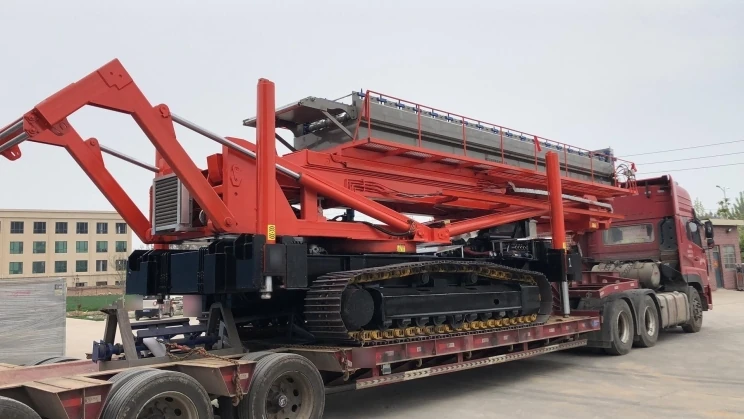
Reference photograph showing folded crawler equipment carried on a separate low-bed trailer. It does not verify a platform delivery, noise test or approved carrier arrangement.
Send a noise-evidence request for review
Collect six evidence and context inputs
- Identify the proposed platform configuration, power arrangement and equipment function the supplier statement describes.
- Request the actual record, issuer, quantity terminology, units and stated measurement or declaration conditions.
- Obtain the facility’s issued requirement and name the specialist who will determine the relevant comparison.
- Describe the intended task and separately identified tools or activities without calculating a combined result.
- Include task height, site floor/access information and work-zone geometry for the separate platform review.
- Give destination documentation, transport and site power context so the evidence request concerns the actual proposal.
The provider should be able to say what record it has and what it does not have. The project reviewer can then identify the missing comparison rather than being asked to approve a vague claim that the machine is quiet.
Keep evidence completeness separate from purchase acceptance
A complete evidence package can support a competent decision without predetermining it. Record the actual reviewer response and any further supplier question through the project’s process. Do not mark a machine accepted merely because a document has arrived, and do not treat absent evidence as proof of a particular noise value. The practical outcome is a specific next request: an identified record, a corrected subject, clarification of a condition or a project assessment. This is more useful than repeatedly asking suppliers for their lowest noise number without knowing what the facility intends to compare.
Recognise an evidence reply that may not fit
A reply may not fit when it describes another configuration, an unidentified quantity or conditions unrelated to the question being assessed. This article states no acoustic value, exposure threshold, indoor-suitability result or noise-control design. It does not prescribe measurement, hearing protection or operating methods. The actual project and destination requirements need their appointed specialists. An equipment photograph or power label cannot replace a record, and an equipment record cannot automatically settle the facility’s complete task assessment.
Ask for the evidence behind the statement
Send the noise-evidence enquiry to ARCLIFT with the proposed configuration, facility question and requested record fields. Include task height, site zone, destination, floor/access context and transport assumptions. Ask which attributable information can be coordinated for the project-specific reviewer before final selection. ARCLIFT supports technical selection and supply coordination. These editorial photographs identify no acoustic result or accepted indoor condition, and this enquiry does not commission a noise test.
FAQ
Does an electric option establish a noise result?
No. Ask for the actual equipment evidence and its conditions. A power description is not an acoustic measurement and does not decide whether the complete task meets the facility’s requirement.
Can two quoted noise numbers be compared directly?
Only after the actual quantities, subjects and conditions have been understood by the responsible reviewer. This article supplies no conversion or assessment method and recommends keeping each record’s terminology intact.
Is a declaration the same as facility approval?
No. It concerns its identified equipment and stated scope. The facility’s requirement and complete task context still need their own competent comparison and decision through the actual project process.
What if no relevant record is supplied?
Keep the evidence gap explicit and ask the actual provider what information is available. Do not invent a value from another machine, a motor label or an indoor photograph, and do not claim the gap proves a particular outcome.