Site acceptance records for a crawler ceiling platform should distinguish the equipment received, the configuration assembled, the site conditions reviewed and the contractual scope accepted. Those are related stages with different evidence and decision owners. A delivery receipt or a successful demonstration cannot silently cover all of them. This guide helps a buyer specify the records and interfaces required at the destination; it is not an installation procedure, test instruction or declaration that a platform is ready for work.
Begin with the ceiling task and supply boundary agreed during procurement. The crawler ceiling platform project-data guide describes those inputs. Acceptance then asks what arrived and what has actually been established against that agreement. Keep the discussion about the large-deck platform, its supplied assemblies, site interfaces and responsible parties rather than importing a roll-forming machine’s production tests.
Contents
- Define the stages that the acceptance record covers
- Match the delivered configuration to the destination
- Link each finding to a criterion and decision owner
- Prepare a stage-specific handover package
- Questions about site acceptance
Define the stages that the acceptance record covers
Separate delivery receipt from technical acceptance
The receiving team may confirm package identity, apparent condition and quantities against shipping information. Record what was available to inspect and any discrepancy without treating receipt as approval of the assembled machine. If an assembly remains packed or inaccessible, say so. The purchaser should agree who receives the equipment, who records condition and who can resolve supply discrepancies. Those roles may be different from the people who later assess installation, site matching or contractual acceptance. The record should preserve that distinction in its headings and signature purpose.
State the delivered and assembled boundaries
Ask which assemblies, accessories and documents are included, which arrive separately and which site services remain outside the supply. If assembly or commissioning support is agreed, identify its provider and scope in the contract. The acceptance package should make clear whether a finding refers to the transport state, a partially assembled state or the documented final arrangement. Do not assume a missing guard, accessory or connection is intentional because it was absent from an early photograph. Resolve the discrepancy with the responsible information provider.
Keep contractual completion and permission for work distinct
A commercial acceptance milestone can address agreed deliverables while site work still depends on separate decisions. Define those decisions rather than assigning every meaning to the phrase accepted. The responsible local parties determine applicable inspections, operating authorization and task controls. A purchaser should ask how outstanding site conditions are reflected in the record and whether they affect the contractual milestone. This is a scope discussion, not a proposed legal clause; any legal or contractual interpretation belongs with the relevant project advisers.
Include the handover destination for each record: purchasing may need the agreed deliverable status, while the receiving equipment manager needs current instructions and unresolved technical items. Naming those recipients helps prevent important qualifications from disappearing when a short acceptance summary is circulated without its attachments.

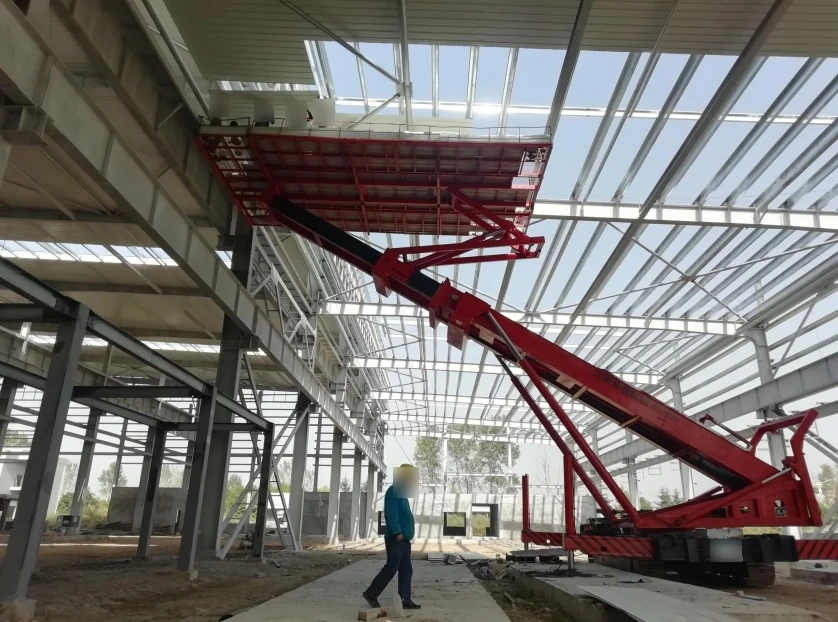
Reference photograph of a platform inside a building. It does not document a site acceptance event, an inspection result or the completion of installation.
Match the delivered configuration to the destination
Reconcile the equipment information before judging results
Use the delivered equipment identity, supplied drawings, instruction revisions and agreed option list to define the item being reviewed. Compare those references with the accepted offer and record discrepancies. A result associated only with a product-family name leaves uncertainty about what it covers. If the equipment has changed since a prior assessment, ask the responsible technical provider to identify which earlier information remains applicable. Keep traceable serial and project information in the secure handover file, while general summaries use non-sensitive references.
Identify the site inputs needed by the reviewers
The acceptance team needs current task positions, ceiling geometry, floor information, access constraints and the intended work-zone layout. Reference the applicable survey and equipment data instead of copying provisional values into multiple forms. A facility representative may confirm availability of an area without having authority to approve its structural suitability. Name the relevant reviewer for each interface. The work-zone layout guide can organize space questions; acceptance should record the scope considered and the decisions actually received.
Specify the inspection and assessment responsibilities
The HSE inspection guidance for Great Britain describes inspection after installation or reassembly where equipment safety depends on installation conditions. Its applicability and the destination requirements need competent review. A supplier’s contractual demonstration does not automatically replace such responsibilities. Ask the project team to identify the required assessments, their owners and their relationship to the acceptance event. This guide sets no test loads, inspection intervals, pass values or operating sequences.

Reference photograph of apparatus near a building. It cannot establish an accepted site location, approved ground conditions or the configuration covered by a project handover.
Link each finding to a criterion and decision owner
Agree the criterion before collecting the result
For every contractual check, identify the agreed criterion, applicable configuration, responsible reviewer and evidence to be retained. A statement that the platform was demonstrated is too broad to establish what was assessed. Keep the agreed method in the appropriate controlled project document; do not invent it in the acceptance summary. If no criterion exists, record the item as needing agreement rather than creating a pass label after an observation. This protects the meaning of the record for both purchaser and supplier.
Use stages to expose incomplete interfaces
The editorial matrix below separates typical record purposes. Its rows are planning prompts, not a mandatory test programme or a completed inspection. The trade-off is between a compact summary and enough detail to prevent one stage’s result being applied to another. A concise stage record can still be useful when it clearly references the supporting document and states the limits of its decision.
| Stage or interface | Record to identify | Decision owner to name | What remains separate |
|---|---|---|---|
| Arrival and receipt | Packing reconciliation and condition observations | Receiving party and supply discrepancy contact | Assembled configuration acceptance |
| Supplied assemblies | Delivered configuration and document index | Technical information provider and purchaser | Local site suitability |
| Assembly responsibility | Agreed scope and completion evidence | Assigned assembly provider and reviewer | Authorization for the ceiling task |
| Site matching | Current floor, access and work-zone review references | Appropriate site and technical reviewers | Unreviewed locations or conditions |
| Contractual acceptance | Agreed criteria, results and open items | Contractually assigned parties | Other required inspections and permissions |
Keep a late accessory outside the earlier observed combination
A staged delivery can separate the equipment physically present from the combination described in the supply agreement. Consider a hypothetical purchase in which the main platform arrives before an optional extension included in the agreed scope. The first destination record can identify the main platform and the observations actually made on that delivered arrangement. The absent extension remains an identified supply item, with its affected contractual scope visible. Its inclusion on the order does not make it part of the configuration observed that day.
When the extension arrives, its package receipt answers an arrival question. The record also needs a response from the responsible technical parties about the now-proposed combination: which supplied assemblies and current documents define it, and what earlier observations, if any, remain applicable. The buyer should ask for that scope determination rather than merely changing the accessory row from pending to received and treating the entire proposed arrangement as already covered. The main platform finding may remain useful within its original boundary; it should not be relabelled as a finding about an arrangement absent from the event.
This distinction supports a practical purchasing decision. A limited milestone can remain linked to the main platform actually presented, while the later combination has its own outstanding questions tied to the agreed supply and site task. Ask the contract parties what each milestone covers and the technical reviewers which evidence is relevant. If the accessory changes a working region or site interface, identify that proposed physical difference for their response; do not presume either that new testing is always required or that earlier evidence is sufficient. No extension availability or compatibility is asserted here. The example explains how to preserve the meaning of observations across separate deliveries without prescribing assembly, demonstrations or acceptance tests.
Record exceptions without disguising their status
An exception record should identify the issue, affected equipment or stage, responsible owner and the evidence needed for resolution. Do not label an item minor simply because it is inconvenient to resolve. Technical significance needs assessment by the relevant person. If a contractual decision is limited to part of the supply, draw that boundary explicitly. Keep any deferred item linked to the stage it affects. A closed commercial invoice or shipment claim does not automatically close a technical question in the equipment handover.
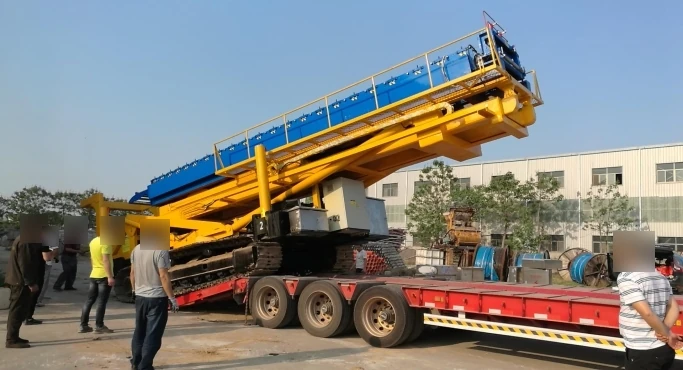
Reference photograph of different equipment near a low-bed carrier. It does not verify an unloading method, arrival inspection or acceptance result for the ceiling platform.
Prepare a stage-specific handover package
An acceptance event may not fit the planned scope when key assemblies are absent, the applicable instructions are unresolved, site conditions differ from the agreed basis or required reviewers are unavailable. Record the affected stage and missing prerequisite. A photograph, supplier attendance or general signature cannot replace the evidence needed to decide that stage.
Collect the inputs for the actual destination stage
- Delivered equipment identity, supplied assembly list and applicable drawing and instruction revisions.
- Task height, ceiling geometry and the work zones included in the site review.
- Materials and tools proposed for the platform task, with outstanding load inputs identified.
- Floor information, support assumptions and the reviewer responsible for matching equipment and building data.
- Access route and available space for the agreed delivery and assembly scope.
- Wind or environmental exposure questions affecting any external part of the planned activity.
- Destination requirements, required inspections and the parties responsible for confirming applicability.
- Transport state, packing reconciliation and separately arriving assemblies or documents.
- Power interface information and the specialist responsibilities needed before the relevant stage.
- Acceptance criteria, planned witnesses, exception owners and the records required to close each stage.
Preserve the difference between scheduled and completed work
Use dates and status fields that show whether an assessment is planned, performed, reviewed or accepted within its stated scope. If a witness was absent, record what occurred and ask the designated decision owner how that affects the agreement. Do not imply that a later signature proves attendance at an earlier event. Link revised findings to their earlier issue so the receiving team can see which conditions changed. Keep original observations available to authorized project participants rather than replacing them with a clean-looking summary.
Transfer open obligations into the next handover
The operating organization needs to know which documents, parts or decisions remain outstanding after delivery and contractual acceptance. Route instruction and parts questions into the maintenance and spares handover, with owners and the affected configuration. Route personnel information into the familiarization process. The site team retains responsibility for the task and area decisions within its scope. A useful acceptance package connects these handovers without claiming that completion of one resolves all the others.
Send ARCLIFT the agreed platform supply scope, destination, transport and arrival plan, task height, site work-zone layout and available floor information. Identify the delivery, assembly, document and acceptance interfaces you need clarified. As a technical selection and supply partner, ARCLIFT can organize the proposed supply records and questions for the responsible parties. Final acceptance criteria and site decisions must be project-specific. This editorial matrix and its reference photographs are neither test instructions nor evidence of a completed project acceptance.
Questions about site acceptance
Does signing a delivery receipt mean the platform is accepted for use?
Its meaning depends on the actual document and agreed responsibilities. The record should identify whether it confirms receipt, condition or another limited matter. Technical acceptance, required inspections and site authorization should not be inferred from a general delivery signature.
Can an earlier supplier test replace the destination review?
Only the responsible review can establish what earlier evidence covers. Its configuration, conditions and criteria may differ from the delivered and installed state. Reference applicable prior evidence precisely and identify the destination interfaces it does not address.
What if only one work zone has been reviewed?
State that boundary explicitly. The record should not imply that every location in the building is included. New zones, routes or task conditions need consideration by the relevant project parties before earlier findings are applied to them.
How should incomplete documents be handled at handover?
List the missing document, applicable configuration, responsible provider and affected decision. The designated reviewer must determine the consequence for the stage concerned. Recording the gap is useful; treating a promised future document as already received or approved is not.