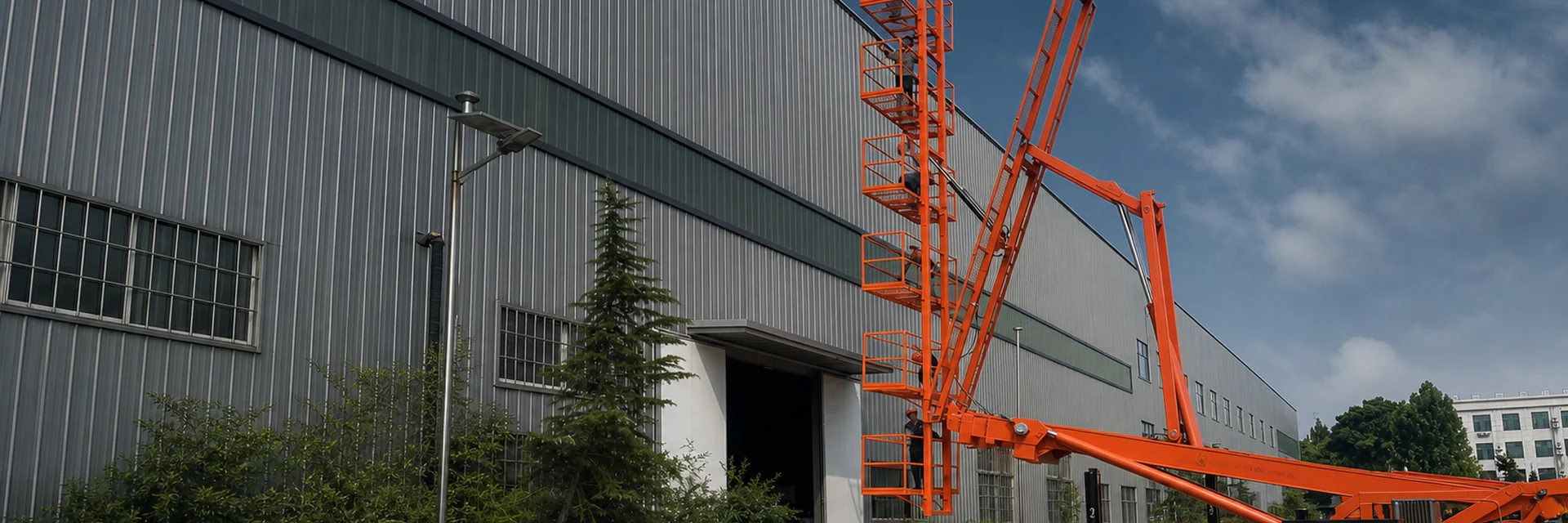
Select a dual-power crawler platform by mapping where each power mode may operate, what every shift requires, how the machine moves between zones, where charging or refueling occurs, what ventilation and emissions controls apply, how cables are managed, and what happens when the preferred source is unavailable. “Diesel plus electric” is not a complete specification. Actual architecture, permitted changeover, runtime, electrical input, charger, engine, emissions, and operating limits require signed configuration data. This guide helps buyers build a duty plan without promising continuous operation or assuming that a second source removes site constraints.
Contents
- Start with a zone-by-zone duty plan
- Define both energy interfaces
- Evaluate changeover and operating trade-offs
- Identify not-fit conditions
- Build the power review package
- Resolve final questions and FAQs
Start with a zone-by-zone duty plan
Divide the project by permitted energy source
Mark unloading, external travel, entrances, indoor routes, work bays, charging, refueling, maintenance, and emergency parking. For each zone, state which energy sources the site permits and why. Indoor work may restrict combustion engines because of exhaust and air-quality risks; hazardous areas may have additional equipment restrictions; public or live facilities may impose noise and cable controls.
Do not assume electric operation covers the entire indoor shift. Record travel distance, number of work-front changes, raising and lowering cycles, platform task time, standby time, lighting or accessory demand, temperature, gradients, and the opportunity to recharge. These inputs help define the duty, but only configuration-specific data can establish expected behavior.
Define the reason for two modes
A second source might support outdoor relocation before indoor work, provide a planned backup, or match different zones. Each use creates a different architecture and control question. Ask whether the modes drive travel, lifting, accessories, or only selected functions; whether changeover requires shutdown; and which limitations apply in each state.
The crawler platform buyer’s guide places power beside access, floor, task load, and rescue. The remote-control planning guide covers the control and emergency interface that remains important in either mode.
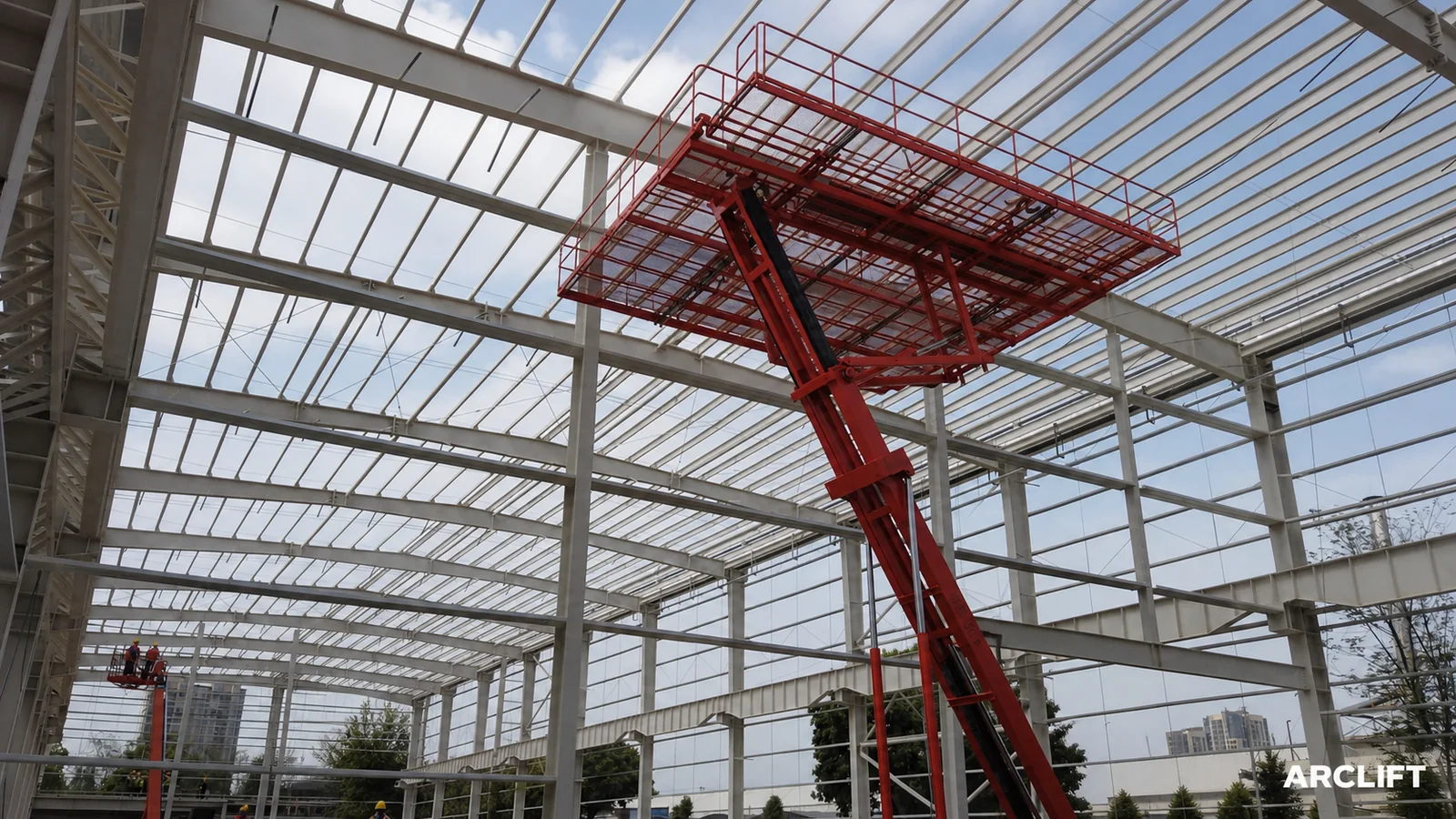
AI-assisted editorial composite. It illustrates a general work context and cannot prove power architecture, runtime, charging, emissions, load, or project suitability.
Define both energy interfaces
Map the electrical supply
Record voltage, frequency, phase, connection arrangement, available current, protective devices, earthing, charger location, charging time window, cable length and routing, connector control, environmental protection, and who may connect or isolate the supply. Confirm these against the destination installation and quoted configuration.
Battery chemistry and charging architecture affect the site plan. Obtain the operating and maintenance information for the actual system, including ventilation, fire precautions, charger protection, inspection, isolation, spill response where relevant, and battery condition monitoring. OSHA’s battery-charging requirements for construction call for designated charging installations and ventilation to prevent gas accumulation for the covered battery arrangements. The applicable destination rules and battery instructions must control the project.
Map fuel and exhaust controls
Define approved fuel, storage, transfer, refueling area, ignition control, spill response, engine inspection, exhaust direction, ventilation, monitoring, and restrictions on engine use. OSHA notes that diesel exhaust contains gases and fine particles that can create a health hazard when not controlled; its diesel exhaust overview links hazard recognition, exposure evaluation, and control measures.
Do not treat an open doorway as a ventilation design. The site should determine whether combustion operation is permitted, what controls and monitoring are required, and how exhaust is prevented from reaching workers or air intakes. If indoor engine operation is prohibited, the method must prevent unintended start or mode selection.
Include cable and route management
If the platform receives external electrical power during work, plan the cable from the connection point to every setup. Protect it from crushing, cutting, water, heat, sharp edges, doors, vehicles, and trip exposure. Define permitted movement while connected, isolation before relocation, inspection, connectors, reels, and responsibility.
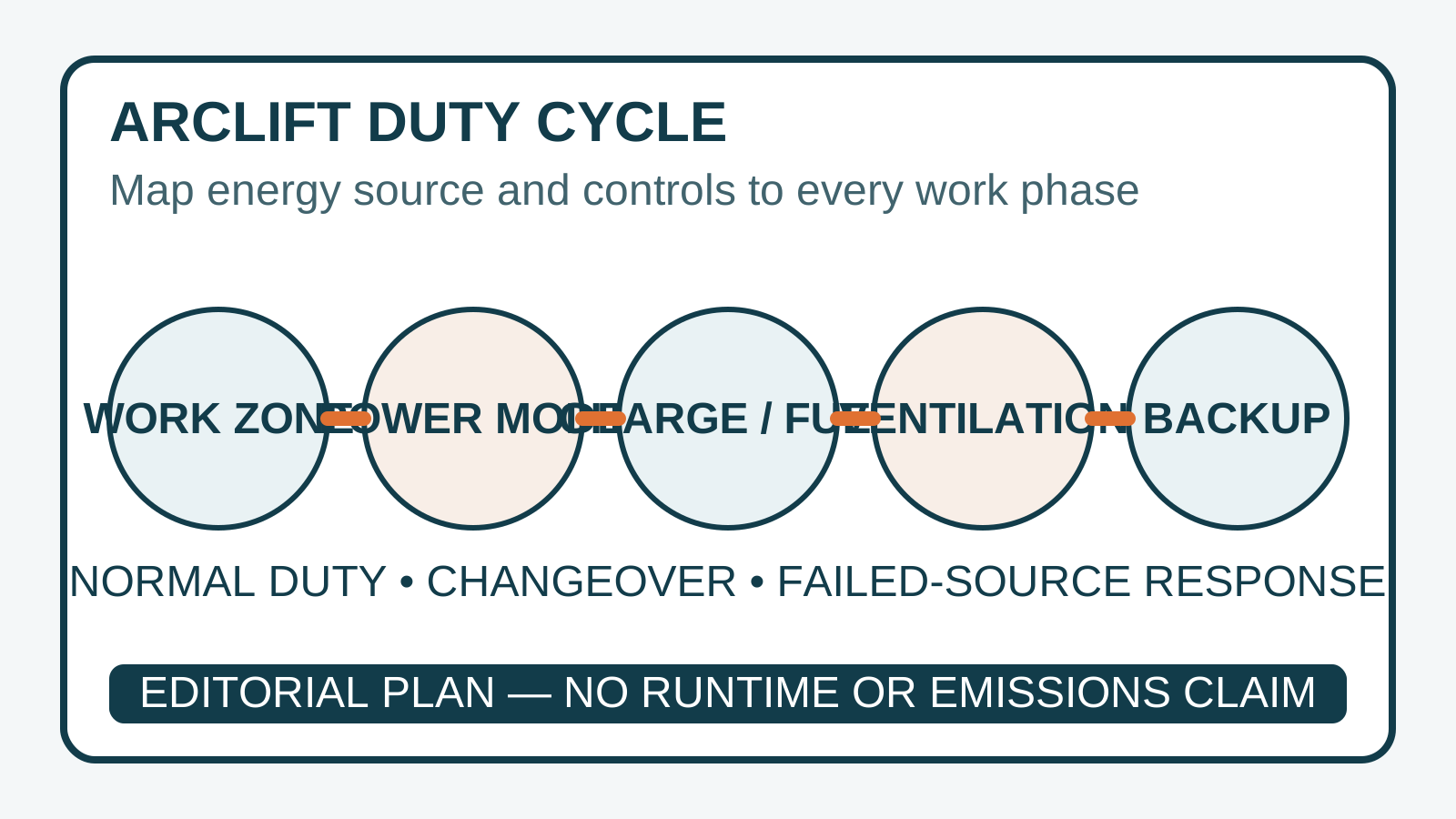
Editorial diagram. Tap to open the full-size editorial diagram. It organizes work-zone, power-mode, charging or fuel, ventilation, and backup questions; it is not a runtime or emissions claim.
Evaluate changeover and operating trade-offs
Two sources create more interfaces
Dual power can align different work zones with different energy constraints. The trade-off is additional equipment, inspection, maintenance, control logic, operator knowledge, and site infrastructure. The second source should be treated as a designed operating mode, not an informal fallback.
Ask what happens during changeover: required machine state, isolation, warm-up or shutdown, controller indication, unavailable functions, alarms, and recovery after an interrupted change. Confirm whether the platform must be lowered, whether travel is permitted, and how the crew verifies the active mode.
Duty cycle matters more than a label
A realistic duty schedule separates energy-consuming activities. Travel, turning, lifting, lowering, hydraulic accessories, lighting, standby, temperature control, and repeated positioning may affect demand differently. Record the planned sequence and request a project review without converting preliminary estimates into a promised runtime.
Build operational margin through a documented charging or refueling plan, not an invented percentage. Include delayed access, longer work cycles, lower temperature, charging interruption, maintenance, and a failed source. The backup response may be safe lowering and withdrawal rather than continued production.
Maintenance and handover must cover both systems
Pre-use checks should address the relevant battery, charger, cable, connector, engine, fuel, exhaust, leaks, warnings, isolation, and control functions. Handover should explain mode selection, restrictions, emergency response, maintenance intervals, storage, and destination documentation. Only trained and authorized people should perform tasks assigned by the instructions and site rules.
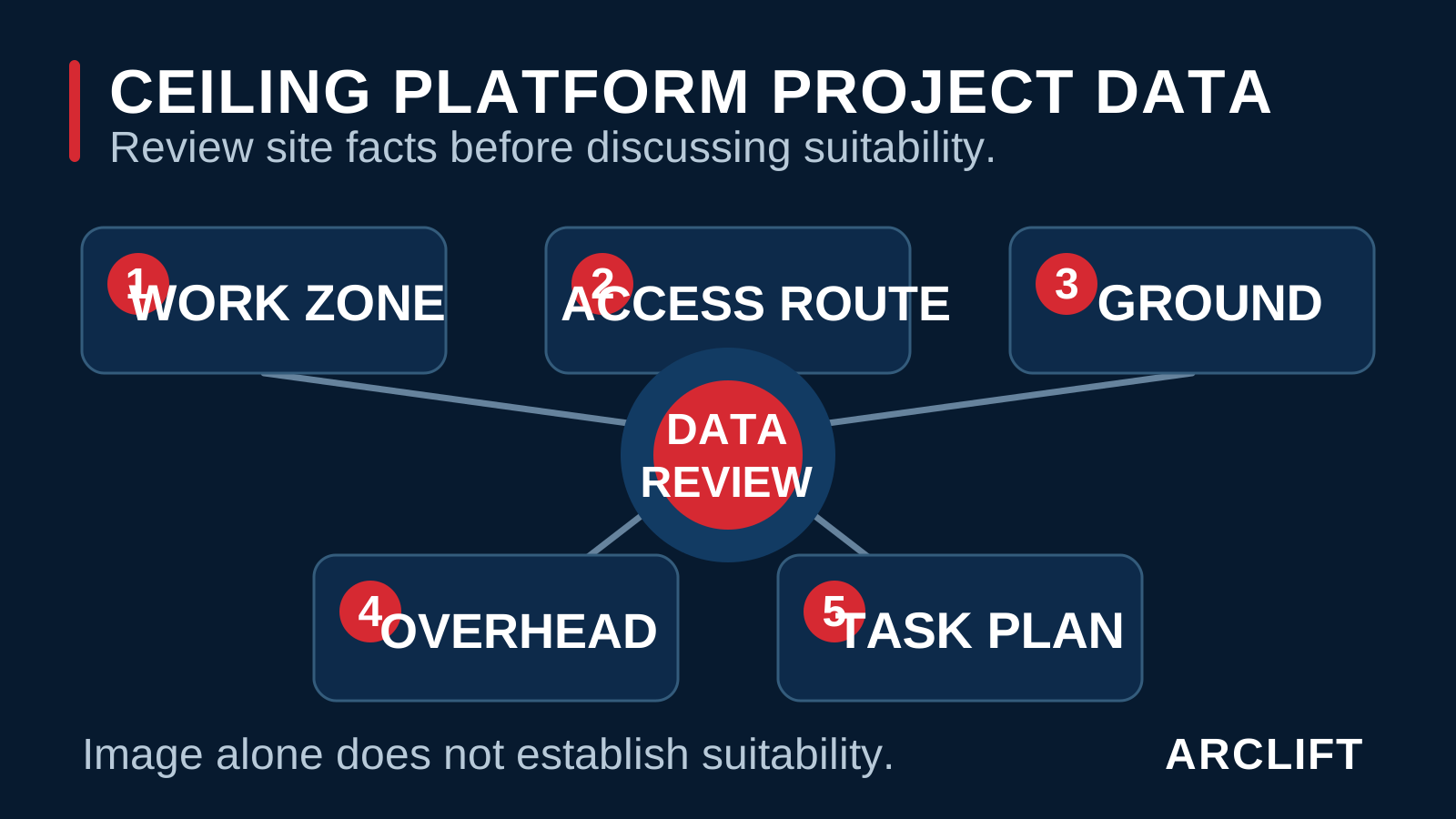
Editorial diagram. Tap to open the full-size editorial diagram. It is a planning aid and cannot confirm power behavior, runtime, charging, fuel use, controls, or suitability.
Identify not-fit conditions before quotation
A dual-power configuration may not fit
Dual power may not fit when neither mode has an accepted site interface, the electrical supply is undefined, charging cannot be separated and ventilated as required, fuel storage or refueling is prohibited, exhaust controls are inadequate, or cable routing conflicts with travel and pedestrians. More modes do not compensate for missing infrastructure.
Pause when the intended indoor duty exceeds the reviewable electric plan, the engine is expected to run where the site has not accepted it, changeover behavior is unknown, or the operator cannot identify the active mode. A generic “backup” statement is inadequate when emergency lowering and recovery responsibilities are unresolved.
Consider a single-source alternative
A project with a stable electrical supply and controlled cable route may not need an engine interface. A battery-only or another approved electric arrangement may simplify indoor controls if its documented duty fits. Conversely, remote outdoor work may have different priorities. The comparison must address the actual shift, route, infrastructure, maintenance, and destination rules.
Do not infer electrical compatibility, engine emissions, hazardous-area approval, noise, runtime, charging time, or fuel use from a category label or editorial image. Treat each as open until supported by current configuration documents and site acceptance.
Build the power review package
Data for configuration and site review
- Work-zone height, outreach, task position, roof or ceiling geometry, load, and operating sequence
- Access route, travel distance, turns, slopes, floor conditions, stabilizer limits, and relocation frequency
- Indoor, outdoor, transition, charging, refueling, maintenance, and emergency parking zones
- Function-by-function power mode, permitted machine state, changeover process, and control indication
- Shift duration, travel, lifting, lowering, work time, standby, accessories, temperature, and contingency
- Voltage, frequency, phase, available current, protection, earthing, connectors, and destination supply
- Charger, battery type, charging area, ventilation, isolation, inspection, fire, and spill arrangements
- Fuel type, storage, refueling, ignition control, exhaust route, ventilation, monitoring, and spill response
- Cable route, reel, protection, crossings, doors, water, vehicles, pedestrians, and relocation procedure
- Pre-use checks, maintenance, service area, responsible roles, spares, storage, and documentation
- Emergency lowering, failed-source response, rescue access, communications, and incident process
- Destination requirements, training, transport boundary, local acceptance, and signed data revision
Turn the schedule into a shift plan
Assign the active mode and supporting controls to every phase. Include connection, isolation, charging or refueling, inspections, mode changes, work-front moves, emergency response, and end-of-shift storage. Reassess when the machine, route, load, supply, ventilation, crew, or work sequence changes.
Close the duty and infrastructure questions
Send ARCLIFT the work-zone plan, height and outreach schedule, route, floor information, task load, desired mode by zone, shift sequence, destination electrical supply, charging, fuel, ventilation, transport boundary, and rescue responsibilities. As an integrated equipment supplier and technical selection and supply partner, ARCLIFT can organize the configuration questions and signed project data required before selection.
Frequently asked questions
Does dual power mean uninterrupted operation?
No. Runtime, charging, refueling, changeover, maintenance, faults, environmental conditions, and the planned duty all matter. Do not publish or rely on an unverified continuity claim.
Can the engine run indoors?
Only after the responsible site review confirms that the specific equipment, location, ventilation, emissions controls, monitoring, and destination rules allow it. Never assume an indoor permission from the dual-power label.
What electrical data should the buyer provide?
Provide voltage, frequency, phase, available current, protection, earthing, connection point, cable route, charging window, and responsible electrical contact.
Is the second source an emergency system?
Not automatically. Confirm intended functions, permitted changeover, machine state, controls, and failure response. Emergency lowering and rescue need their own documented plan.
This article is selection guidance, not an electrical design, emissions assessment, hazardous-area approval, operating manual, or runtime commitment. Its AI-assisted composites and code-native editorial diagrams cannot prove power architecture, charging, fuel use, emissions, changeover, or project suitability. Final operation requires verified site infrastructure, competent review, trained people, and signed configuration documents.