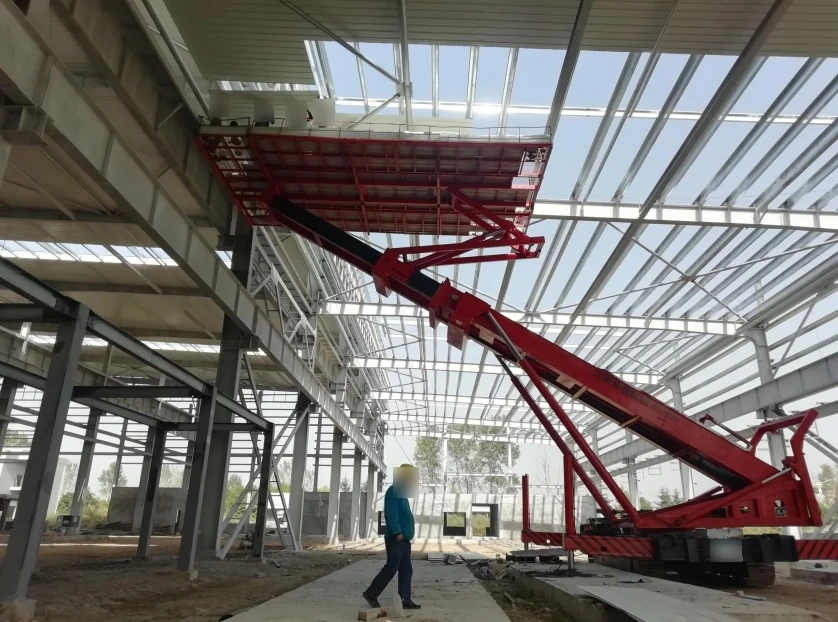
A lighting task needs a description of the actual fixture face being reached, not just the ceiling height. Inspecting a visible face, accessing a connection area and replacing an identified assembly can ask different questions of the access proposal. The buyer’s useful output is a fixture-side workface map with the required positions and the appointed trade’s separate service boundary clearly shown.
The ceiling-maintenance checklist covers the wider work package. This page isolates lighting access. Discuss a crawler ceiling platform against the actual task; an access offer does not establish an electrical method, isolation arrangement or permission to work on any service.
Contents
- Identify the lighting object and task face
- Separate access from the electrical assignment
- Compare fixture-specific access replies
- Send a lighting workface brief
- FAQ
Identify the lighting object and task face
Locate the actual fixture instead of the ceiling plane
Ask the responsible lighting or maintenance party to mark the fixture on the current plan and a relevant section. Show the actual task object and its relationship to structure or other services. A general ceiling level can leave a suspended fixture, recessed assembly or adjacent equipment undefined. If the object has not yet been identified, obtain that information before asking a platform provider for a coverage conclusion. The purpose is to give the access reviewer a physical task to assess, not to direct investigation of an unidentified electrical installation.
Mark which face the trade needs to reach
Ask the appointed trade to identify the side, underside or other expressly required access face. Keep different tasks distinct even when they concern one fixture. A view of the visible lighting surface may not answer a question about another part of the assembly. The platform provider should not be expected to infer the trade’s tool approach from a catalogue picture. A short annotated section can show the required relationship without giving wiring, isolation or repair instructions. It also makes the provider’s qualification specific when a particular face is not yet defined.
Describe the task as a purchased scope
State whether the project asks for visual access, another identified inspection task or a separately defined replacement assignment. Leave the technical procedure with the appointed trade. This matters commercially because an access offer prepared for observation can have different material and work-position assumptions from one asked to address an identified replacement task. The buyer should not expand the scope by calling every visit lighting maintenance. Ask the task owner to provide the actual requirements and identify any part of the assignment still waiting for specialist definition.
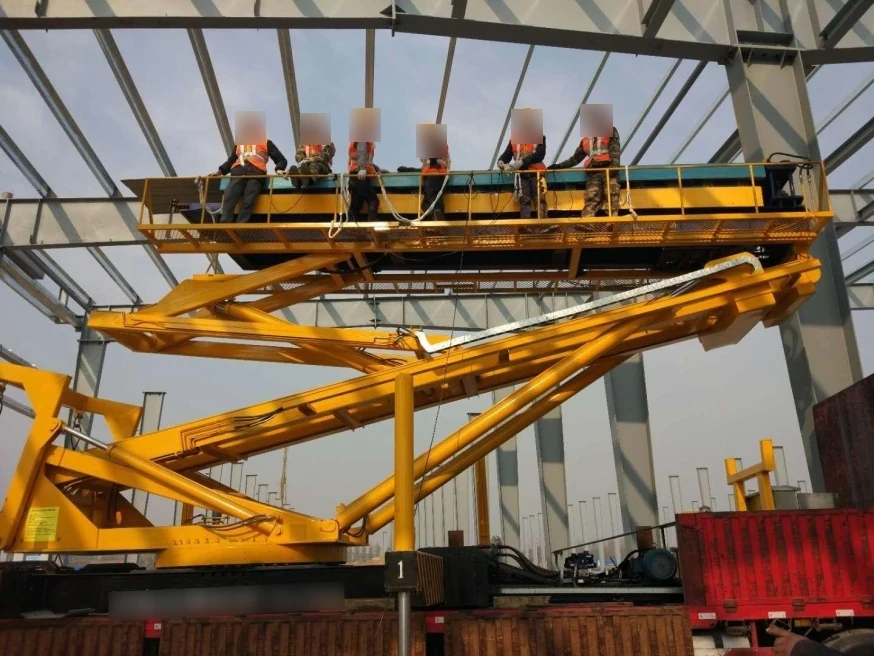
Reference photograph showing a yellow working platform beneath roof framing with vehicle-bed context. It does not verify a truck-platform model, electrical service or occupancy.
Separate access from the electrical assignment
Keep service decisions with the appointed electrical party
HSE’s electrical-safety FAQs direct electrical-safety questions to competent electrical contractors and specialist advice where needed. This Great Britain context supports keeping that expertise separate from an access-equipment response. It establishes no safe service state, electrical method or permission for the lighting task described here.
Ask the project to identify the party responsible for the electrical scope and applicable site decisions. Procurement can name that dependency without describing how a service is isolated, tested, connected or energised. A platform supplier may coordinate equipment information but should not be assumed to accept the trade’s entire assignment. If the electrical party has not defined which work positions it needs, keep the access enquiry preliminary. A clear boundary is useful because it prevents a general equipment offer from being read as approval of a specialist task it has not addressed.
Separate work access from replacement-material provision
If a task involves an assembly being supplied or removed, ask the appointed trade to identify the actual object and proposed material-service boundary. Do not assume a large deck provides a lifting appliance or a storage position. The task-load guide develops people, tools and objects present together. The lighting brief should explain why each object is relevant to the named fixture task. It must not invent a component mass, attachment or method for transferring material to or from the platform.
Include the building condition relevant to the task
Show nearby services, structure and other assemblies that affect the required face. Identify the work window and any building condition the actual proposal assumes. A fixture visible from the floor may still have a task face concealed from one proposed position. The overhead-clearance guide owns the measured geometry discussion; this workface map identifies which task makes that geometry relevant. Keep electrical service status with its owner rather than inferring it from a light being on, off or apparently disconnected in a photograph.
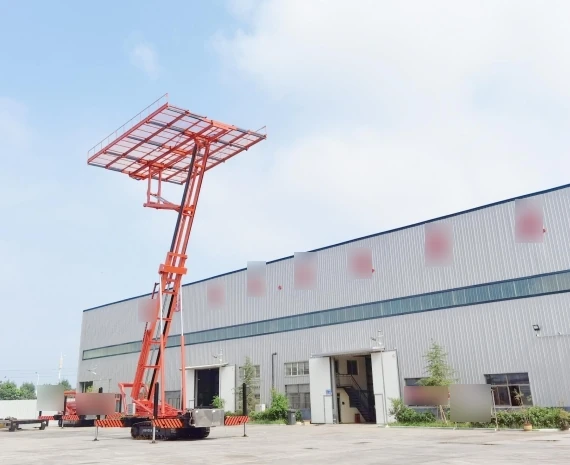
Reference photograph showing an empty platform beside building openings. It does not verify fixture access, measured clearance or passage permission.
Compare fixture-specific access replies
Work through a hypothetical inspection-to-replacement change
Imagine the original enquiry concerns viewing the lower face of a fixture. The trade later identifies a replacement task requiring a different access side and a separate material service. This is a hypothetical project change. An earlier platform response to the visible face does not establish coverage of the revised task. Ask the access provider which positions its actual arrangement addresses and ask the trade to define the remaining material and specialist interfaces. Do not assume either that the old machine is unsuitable or that unchanged fixture height makes the earlier reply complete.
Compare access scope by task face
| Lighting task input | Original observation brief | Revised defined task |
|---|---|---|
| Object | Identified fixture | Same fixture or clearly identified changed assembly |
| Required face | Marked observation face | Actual side or face required by the trade |
| Work position | Project’s stated access need | Revised position supplied by the task owner |
| Material boundary | State what is actually present | Identify replacement and removal service questions |
| Electrical responsibility | Named appointed trade | Retain actual specialist decisions separately |
| Access response | Positions addressed by the offer | Changed positions and unresolved interfaces |
The trade-off concerns what the access offer covers. It is not a judgement about electrical task difficulty, and the table provides no method for carrying out either assignment.
Ask for named exceptions across repeated fixtures
A row of similar fixtures can still contain different task positions where structure or services change. Ask the trade and building parties to identify exceptions, then request an access response to those actual locations. The buyer need not duplicate a full task package for every identical position, but it should not let a common fixture name hide an exceptional face or approach. A provider’s marked scope is more useful than a general claim that one platform serves the whole room. Keep unresolved exceptions visible rather than assigning assumed body reach or moving a task into an unreviewed deck region.
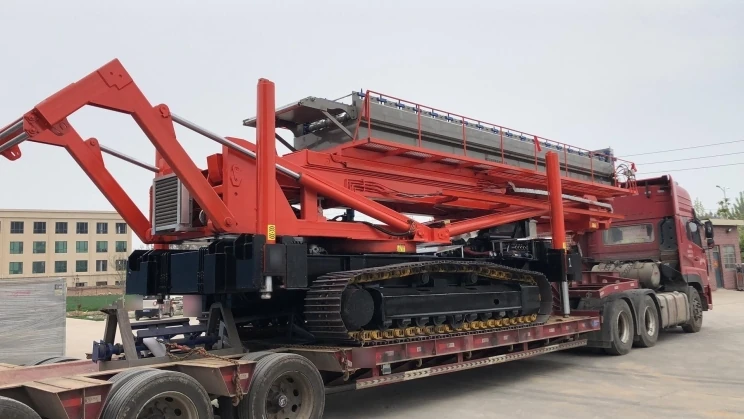
Reference photograph showing folded crawler equipment carried on a separate low-bed trailer. It does not verify a lighting-service delivery or approved equipment transport.
Send a lighting workface brief
Include six fixture-specific inputs
- Identify each relevant fixture type and locate the task object on the current plan and section.
- Obtain the appointed trade’s required face, work position and expressly defined task scope.
- Separate the electrical assignment and site decisions from the platform provider’s access scope.
- Identify replacement or removed objects and the actual material-service questions without assuming a deck function.
- Give task height, nearby geometry, site floor information and equipment access route for configuration review.
- State destination documentation, transport, power-interface and environmental context relevant to the proposed work zone.
Ask the access provider to mark covered positions and exceptions on the actual task map. The output should let the trade see which question is answered without reading a platform-family description as specialist-task approval.
Coordinate replies without merging responsibilities
Put the trade’s task definition, building information and access response beside one another. If they describe different conditions, identify the discrepancy and return it to the appropriate party. A coordinator can help collect those replies without becoming the electrical designer or site authoriser. This is particularly useful when procurement buys access equipment while another contract covers the lighting work. The buyer can request a coherent boundary between the purchases while retaining the actual technical decisions with the responsible trade, equipment and project reviewers.
Recognise an access offer that may not fit the lighting task
A proposal may not fit when the fixture face remains undefined, the required position is unresolved or a replacement task depends on an unsupported material function. This article provides no electrical isolation, testing, wiring, live-work, repair or lighting-retrofit instructions. It establishes no specialist service offered by ARCLIFT. The actual task and equipment need project-specific review. A photograph beneath roof framing cannot identify service status or demonstrate that a particular fixture can be reached from the arrangement being proposed.
Discuss the fixture-side access requirement
Send the lighting access brief to ARCLIFT with the fixture map, required faces and appointed trade’s task boundary. Include task height, site floor/access information, destination and transport assumptions. Ask for a project-specific equipment response identifying positions covered and questions still needing final resolution. ARCLIFT supports technical selection and supply coordination. These editorial photographs show reference decks, not lighting work approval, service status or electrical competence.
FAQ
Is a fixture height enough for an enquiry?
No. Identify the actual task face, required work position and surrounding geometry. A platform provider needs that relationship to assess its proposal; the general ceiling elevation does not define the specialist task.
Does an access supplier decide the electrical method?
No such scope is established here. The project must appoint the responsible trade and define its specialist decisions. Keep those responsibilities separate from the equipment information and access positions being requested.
Can similar fixtures share one task row?
They can share a common requirement where the actual task and conditions match, but identify exceptions. Structure, service arrangements or a changed face can create a different access question despite the same fixture name.
Does a broad deck include component lifting?
Do not assume it. The actual equipment and material proposal must expressly address any handling function. Identify the object and separate provider boundary rather than inferring permission from the deck’s appearance.