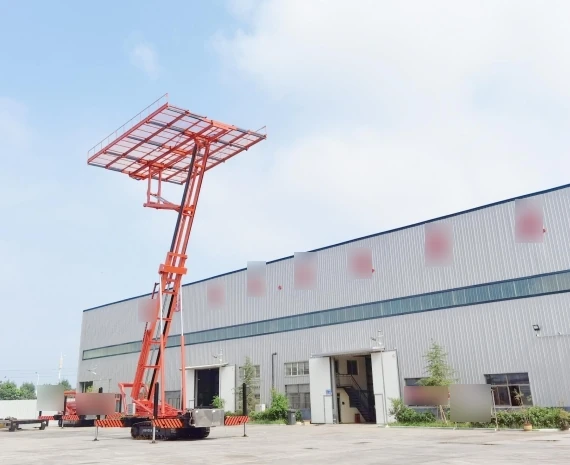
Ceiling-work technology is useful to a purchaser when a proposed feature can be connected to a real task and verified for the equipment being offered. Remote controls, alternative power arrangements, deck options and digital records are topics to investigate, not evidence that a machine is more suitable or more productive. This guide examines how to compare those topics without claiming a market trend, a new product launch or a performance improvement that has not been demonstrated.
Start with the task that needs support. A feature may be relevant to a large work zone, a restricted route, the available site supply or the owner’s maintenance organization. It may also introduce dependencies that the buyer has not budgeted or assigned. The ceiling platform project-data guide helps define the task before feature names become purchase requirements.
Contents
- Translate technology labels into purchasing questions
- Relate proposed features to building and task conditions
- Compare evidence for controls, power and information
- Build an option review that exposes dependencies
- Questions about ceiling-platform technology
Translate technology labels into purchasing questions
Ask which configuration actually includes the feature
A family brochure may describe several versions in the same document. Request an explicit statement identifying which assembly, option or software revision is included in the offer and which items remain alternatives. The relevant evidence is the applicable specification and instructions, not the prominence of a feature in promotional material. If the option is still under discussion, record it as proposed. This prevents the purchaser from evaluating a combination of features that no single offered configuration has yet been shown to contain.
Describe the task benefit as a question
Instead of assuming that a feature saves time, ask which task constraint it is intended to address and what evidence could support that conclusion. A buyer might want to understand a control arrangement because the task involves several work positions, or a power option because the available building supply is uncertain. These are valid questions without becoming claims of improved performance. Define the expected use, the relevant limitation and the person who can judge the answer. Avoid importing another site’s experience as a result for this project.
Distinguish an available option from an agreed supply item
Even when a feature is documented for a product version, its inclusion, prerequisites and delivery status still need agreement. Ask whether related accessories, instructions, installation work or support are included. Record who confirms compatibility with the remainder of the proposed equipment. The HSE MEWP guidance for Great Britain emphasizes selecting equipment for the job and site. It supplies no evidence that a particular ARCLIFT option is fitted, suitable or commercially available.
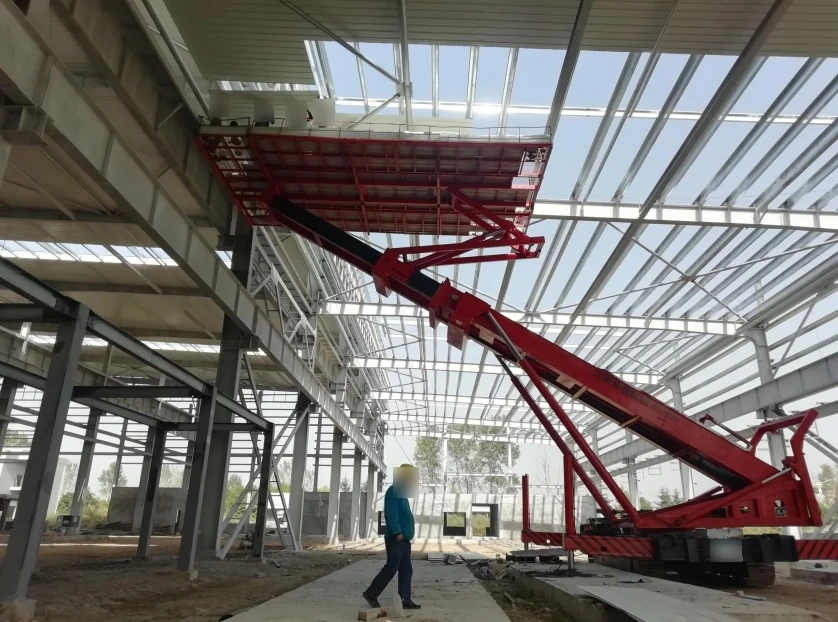
Reference photograph of a platform beneath roof framing. It does not verify a remote-control feature, power option, performance benefit or offered configuration.
Relate proposed features to building and task conditions
Define the work position before comparing deck options
Describe the people, tools and materials involved in the intended task and how the work positions are distributed. A large deck may be a relevant subject for investigation, but its photograph does not establish allowed loading, dimensions or useful coverage of a ceiling area. Ask which supplied drawing and instructions describe the proposed deck and any attachments. Keep personnel access separate from material lifting functions. A wider-looking surface cannot be used to infer either additional capacity or permission to handle a component in a particular way.
Identify physical constraints that a feature cannot answer
Floor information, route availability and overhead geometry remain project inputs even when an offer includes sophisticated controls. A sensor or a control label does not provide the missing survey or building assessment. Use the overhead-clearance survey to organize the physical questions, then ask how the offered configuration relates to them. Identify temporary structures and changes expected between survey and use. The feature review should state which conditions it assumes, so a later layout change does not leave an apparently complete comparison based on obsolete inputs.
Include the receiving team’s ability to support the option
Ask what information, authorized service access or additional supply is needed over the equipment’s life. An owner may prefer one arrangement because it fits existing resources, but that preference still requires configuration-specific confirmation. Clarify documentation language, update responsibilities, service interfaces and any externally provided component. Do not assume permanent digital access or treat a familiar-looking part as locally interchangeable. These are purchasing and support questions that can be raised early without making unsupported cost or reliability claims.
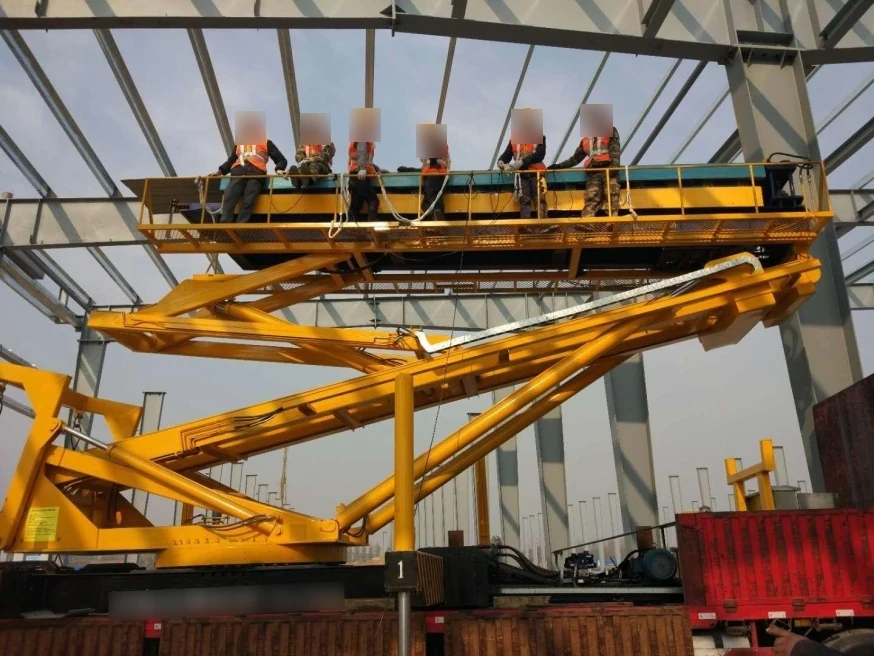
Reference photograph of a platform within a building. It cannot establish control authority, energy use, software features or the suitability of a deck option for another task.
Compare evidence for controls, power and information
Read control terminology as a scope question
Terms such as remote control or assisted control need a precise explanation in the offered instructions. Ask which functions are covered, which configuration is described and which conditions or permissions apply. This article does not establish whether any movement may occur from a particular position or with personnel on board. The remote-control planning guide develops those purchasing interfaces. A demonstration clip can show that something happened under recorded conditions, but it cannot by itself define every permitted use or substitute for the governing instructions.
Compare power options through task and supply inputs
Alternative power descriptions should be connected to the work period, available supply, environmental conditions and the responsible maintenance organization. Ask what equipment data is required to assess those inputs. Do not derive operating duration, charging time, consumption or suitability from the phrase dual power. The dual-power selection guide provides a narrower comparison framework. The trade-off is between an option’s proposed role and the infrastructure, documentation and responsibilities it requires; an extra option is not automatically a net benefit.
Treat digital records as a usability and ownership question
A digital manual, service history or equipment-data interface can be assessed by what information it contains, who controls its accuracy and whether the receiving team can access the relevant version. Ask how a correction is communicated and how records remain available when accounts, personnel or equipment ownership change. Do not equate the presence of a screen or an online portal with diagnostic capability. If an offer claims data export or support access, ask for its defined scope and dependencies rather than assuming access to every system or underlying record.
| Feature topic | Evidence to request for the offer | Site or owner input | Conclusion to avoid without evidence |
|---|---|---|---|
| Control arrangement | Applicable functions, instructions and configuration | Intended task and responsibility structure | Any permitted movement inferred from a label |
| Power option | Supplied configuration and stated requirements | Available supply and planned use conditions | Unverified duration or energy saving |
| Deck or accessory | Matching drawing, instructions and inclusion | People, materials and work-position needs | Capacity or coverage inferred from appearance |
| Digital documentation | Content, revision control and access terms | Users, language and record ownership | Automatic fault diagnosis or permanent access |
| Service interface | Defined provider, information and agreement | Local support responsibility and equipment identity | Universal parts compatibility or response time |
This editorial table compares questions, not products. Each row may remain open until the supplier and project team provide the relevant information. An item marked optional should not appear in the accepted equipment description until inclusion and dependencies have been reconciled.
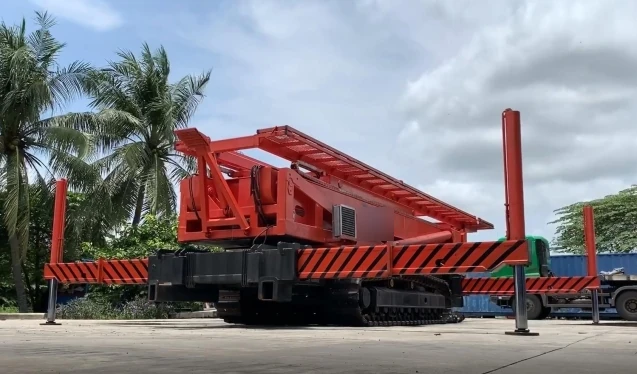
Reference photograph of a different folded crawler arrangement. It does not establish an automated function, permitted travel state or common technology specification across the pictured equipment.
Build an option review that exposes dependencies
A proposed technology package may not fit when its functions are not documented for the offered version, its site supply is unconfirmed, or its support arrangements depend on resources the owner cannot provide. A promising feature name does not resolve those gaps. Keep the option provisional and separate the missing evidence from the purchasing preference.
Collect the task inputs that make the comparison meaningful
- Task height and ceiling geometry for the specific work zones being considered.
- Personnel, material and tool information needed to review the proposed deck and accessories.
- Floor and access route conditions that remain relevant regardless of the control option.
- Wind or environmental exposure questions for the applicable equipment and intended setting.
- Destination requirements and the responsible local reviewer for equipment and site use.
- Transport state and arrival conditions relevant to optional assemblies and site preparation.
- Available power information and the person who can confirm the proposed supply interface.
- Exact configuration, option identifiers and current documentation references for the comparison.
- Receiving team’s language, record-access and service-information needs over equipment ownership.
- Inclusion, exclusions, unresolved dependencies and the person assigned to each supplier query.
Ask for evidence proportional to the claim
A statement that a manual can be supplied needs a deliverable and revision reference. A statement about an equipment function needs applicable technical information. A claimed project improvement needs evidence relevant to the actual task and comparison basis. Do not let the same brochure answer all three. This distinction keeps the review focused: buyers can request the missing evidence rather than accepting vague assurances or demanding unrelated documents. It also gives the supplier a clear question that can be answered within its role.
Keep the accepted configuration separate from future possibilities
If later options are discussed, list them outside the present supply scope and identify what would need further review. A future upgrade concept should not change the description of the equipment being purchased now. Likewise, a revision to documentation should be evaluated for its relevance rather than treated as proof of a physical upgrade. Preserve the accepted feature list and the unresolved proposals so receiving staff do not confuse an early discussion with a fitted assembly or a promised service.
Send ARCLIFT the task height, site layout, floor and route constraints, destination and power questions, together with the feature claims you need clarified. Identify the proposed equipment version and the practical problem each option is meant to address. As a technical selection and supply partner, ARCLIFT can organize a project-specific comparison of the offered information. Final inclusion and applicability require confirmed documents and responsible review. This editorial discussion and its photographs make no technology-performance or market-growth claim.
Questions about ceiling-platform technology
Does a remote-control option make a platform suitable for a confined area?
That conclusion cannot be drawn from the feature name. The physical task, geometry, equipment configuration and applicable instructions still need review. Ask which functions and conditions the offer actually documents rather than assuming the option resolves site constraints.
Is dual power always the more flexible purchase?
Its value depends on the offered arrangement and the project’s supply, task and support requirements. Request the actual configuration and dependencies. An additional option may introduce questions that the buyer has not yet resolved, so a general superiority claim would be unsupported.
Can photographs verify the available controls or software?
The reference images here cannot. They illustrate equipment and building contexts without identifying the offered controls, software or permitted functions. Use applicable technical documents and configuration confirmation for those questions, with any remaining uncertainty recorded explicitly.
How should a buyer evaluate a claimed efficiency improvement?
Ask for the task, comparison basis, conditions and evidence behind the claim. Determine whether those conditions match the intended project. Without that connection, record the statement as unverified and compare the documented equipment scope without importing the claimed result.