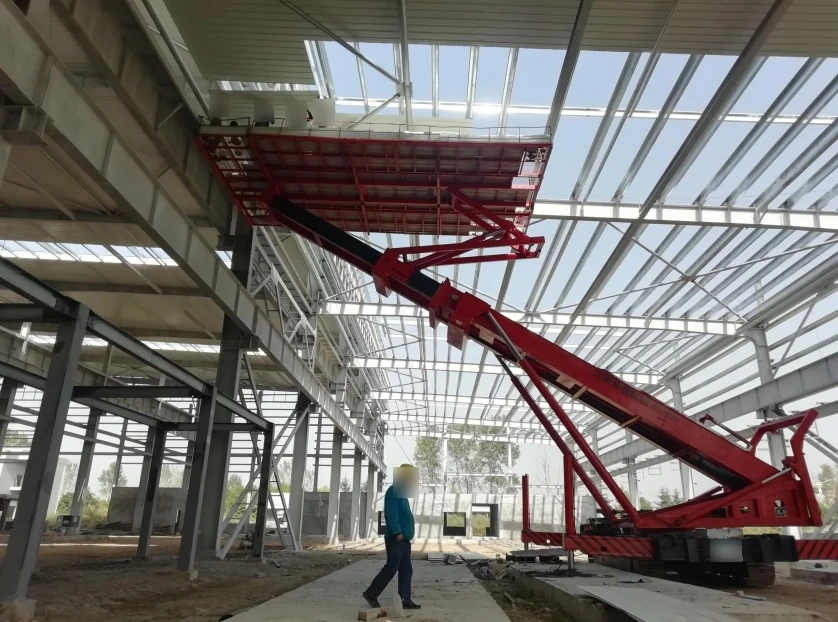
Decide the one task the second power mode must finish, and treat every other mode as a named fallback. A dual-power label does not finish a bay. Screen ARC-F20, ARC-F25, ARC-F31, or ARC-F35 only after the hall, the hours, and the charger are written down. Wider energy choices are in the dual-power selection guide.
Contents
- Decide which task the second mode must finish
- Compare the two modes on one bay
- Where dual power may not fit
- Attach these power lines
- FAQ
Decide which task the second mode must finish
Name the longest task, not the brochure word
Write the longest stretch of work the crew must do without coming down: one bay of panels, a run of lights, or a duct that crosses three frames. Put a clock on it in the crew’s own words, even if the number is rough. The supplier needs that task beside the catalog class. A second engine or a battery pack is only useful if it is the mode that can still do that stretch when the first mode is not allowed.
If the longest task is “whatever the hall gives us,” you do not have a power decision yet. You have a wish. Mark the task unknown and keep the height class as a screen, not as a promise that both modes last the same time.
An anonymous warehouse job makes the split obvious. The day shift hangs lights in a closed hall until 16:00. The night shift moves the same deck through an open loading face. Those are two tasks. The first needs a mode the air rule allows. The second can use a different mode if the offer names it for travel. Writing “dual power, both shifts” hides which mode dies at the door. Write the door, the hour, and the mode on separate lines.
Separate a closed hall from an open bay
A closed hall with no exhaust path is a different purchase from an open bay that can take a combustion mode for the move between faces. Write which one this job is. If the building owner has already banned exhaust, do not carry a diesel sentence into the indoor rows. If the owner has not answered, write “exhaust rule unknown” and stop guessing.
The crawler ceiling-platform family is the deck you are screening. It is not a statement that every class is offered with two modes. Ask for the mode list on the configuration you named.
Say what still works if the first mode stops
Name the function that must remain if the preferred mode stops: travel to the door, lower the deck, or finish the last panel. Ask the offer which mode performs that function, and whether that mode is included or still a question. Do not copy a rescue story from another machine. The answer belongs to this configuration and is confirm on RFQ until the supplier ties it to a document.
If nobody can name the function, the dual-power line is advertising. Leave it off the comparison until a person will sign the sentence.
Keep the catalog class beside the task
Use 20m, 25m, 31m, or 35m only as the catalog screen. The task height is the soffit you measured, not the class number. Write both. A taller class does not add battery time, and a shorter class does not become legal indoors because the exhaust pipe is smaller. Height and energy are two rows. Mixing them is how a quote looks finished and still cannot enter the building.
Compare the two modes on one bay
Put both offers on the same rows
Use one table for every supplier. If a cell is empty, the offer did not answer. Do not fill it from a similar machine.
| Task you can describe | Mode to ask about | If you do not know yet |
|---|---|---|
| Closed hall, no exhaust path | Electric or battery only | Confirm on RFQ; do not assume diesel is allowed |
| Open bay, short move between faces | Whichever mode the offer names for travel | Measure the move on site |
| Overnight parking with a charger | The rechargeable arrangement only | Name the bay; charger inclusion is confirm on RFQ |
| Lowering if the preferred mode stops | The mode the offer says can lower | Do not invent a time |
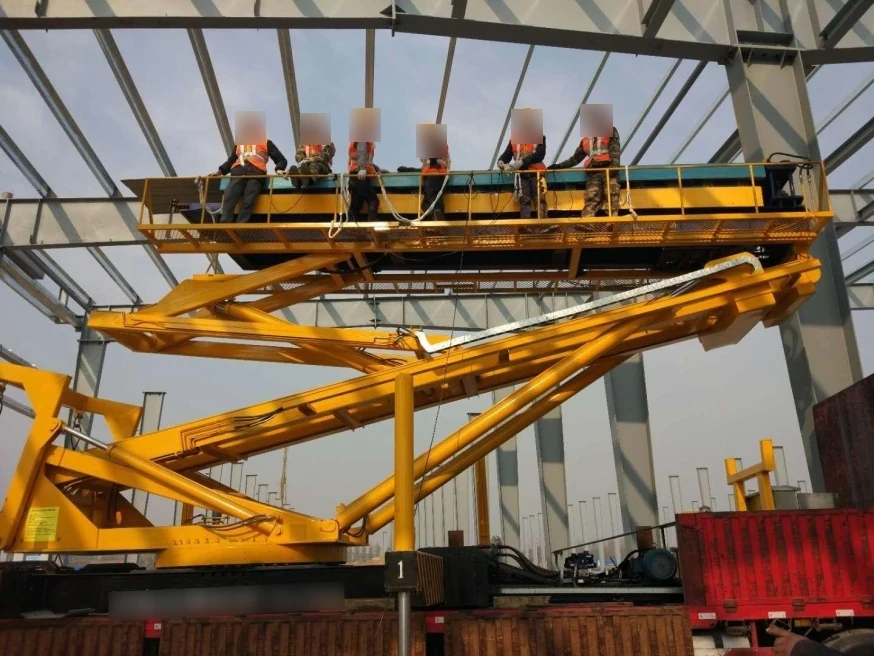
Reference photograph of the deck inside the hall. It cannot show which mode is installed.
Ask whether the charger is in the price
A rechargeable sentence without a charger is a different purchase from one that includes the charger, the lead, and a place to put them. Write included, excluded, or unknown. Unknown is allowed. A supplier that answers “standard” has not answered. Ask for the line on the quotation that names the charger.
The floor owner still has to accept the bay. Equipment scope and building permission are not the same signature.
Measure the move between faces
If the crew must drive from face A to face B under load, say so, and say whether people stay on the deck. If the move is empty and short, say that too. The energy row changes. A mode that is fine for a parked bay can be the wrong mode for a travel that crosses a doorway. Measure the doorway on site. The catalog class does not contain the doorway width.
Leave the photograph out of the energy row
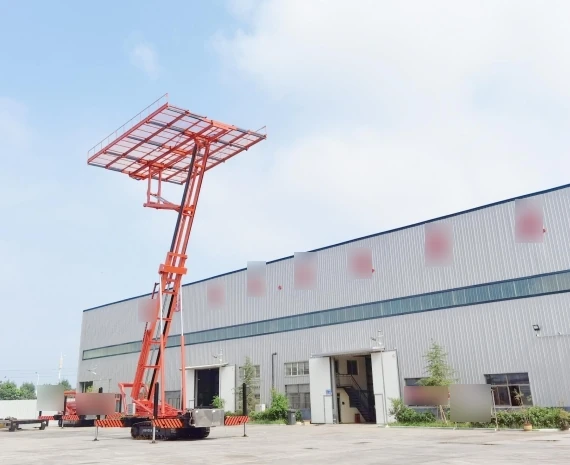
Reference photograph of the approach beside open bays. It cannot measure exhaust or a charger lead.
A picture of a deck under steel shows a scene. It cannot tell you the mode, the charger, or the hours. Use it to remember the hall. Use the table to remember the purchase. If a seller points at the picture as proof of indoor use, ask for the sentence on the offer instead.
The trade-off is simple and easy to skip. Two modes give you a fallback only when each mode has a task, a place, and a person who will say it is included. The limitation is that the second mode often arrives as a word, not as a duration, a charger, or a permission. The constraint is the hall: exhaust rules and parking rules are not on the catalog page. The interface is the quotation line that names the mode against your task. If that line is missing, you are comparing labels.
Where dual power may not fit
A hall that bans exhaust
This shortlist may not fit when the only second mode is a combustion engine and the hall will not take exhaust. Buying the taller class does not change the air in the room. Either the offer has a non-combustion mode that can do the task, or you stop and change the task. Do not ask the crew to “just crack a door” unless the building owner has written that down.
A bay the battery cannot finish
It may not fit when the rechargeable mode is real but the bay is longer than anyone has tied to that battery, and the charger is back at the yard. Write the bay length as unknown if you have not measured it. Confirm on RFQ is the right mark. A guessed runtime is worse than a blank, because the blank still asks a question.
Parking that is not a workplace
It may not fit when the only flat floor for overnight is a fire lane, a public aisle, or a wash-down pit. The machine can match the soffit and still have nowhere legal to sit. Charging and parking belong on the buyers guide sketch, not in a footnote after the order.
A height class used as a substitute for energy
It may not fit when the buyer picks 31m or 35m because the power question feels unfinished. The class is a screen for reach. Reach is not hours, and hours are not permission. If you cannot fill the energy row, send the RFQ with the row blank rather than upgrading the class to hide it.
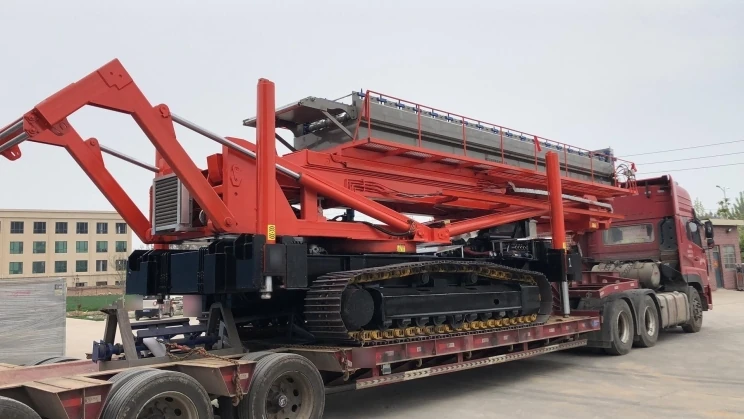
Reference photograph of crawler equipment on a carrier. It cannot set the indoor power rule.
Attach these power lines
- Work height from the floor to the soffit, and the catalog class you want screened
- Roof or ceiling geometry, beams, and any slope
- Materials on the deck: profile, panel length, or tools only
- Wind only if a face is open
- Floor under the tracks, and the overnight bay if a charger is in the offer
- Access route and the door
- Outrigger or track footprint, or unknown
- Destination country
- Transport of the crawler to site
- Voltage or fuel mode for each task, and who owns the charger
- Documents the building owner wants before entry
Send the work height, the site, the destination, the transport of the crawler, the work zone, and the floor note. The signed schedule is project-specific. Editorial images do not set a runtime or a deck load.
Open ARC-F20, ARC-F25, or ARC-F35. Request a quote, WhatsApp +86 15515922444, or leelogly120@gmail.com. The HSE work-at-height guidance is a Great Britain note for the people on the deck. It does not pick a power mode.
FAQ
Does dual power mean both modes can do the whole bay?
No. Ask which mode does the longest task you wrote down. The other mode is a fallback only if the offer says so.
Can I leave the charger off the RFQ?
Yes, if you mark it unknown. Do not write “included” because the word battery appeared.
Is 25m the runtime?
No. 25m is a catalog height class. Runtime is confirm on RFQ after the task and the mode are named.
Which class do I open first?
The class nearest the soffit you measured. Use the quote link so the code travels with the power lines.