Before elevated work, create an equipment-specific rescue-readiness record that connects plausible emergency scenarios with the exact current manual, approved site procedure, named trained people, communications, access, practice evidence and review triggers. The record does not prescribe rescue steps, state that a control or lowering function exists, replace the manufacturer instructions or site emergency plan, or prove equipment suitability.
Contents
- Define plausible emergency scenarios without inventing functions
- Confirm exact equipment information and approved procedures
- Name and prepare site-based people
- Practise, review and maintain the record
- Resolve frequent rescue-readiness questions
Define plausible emergency scenarios without inventing functions
Separate entrapment and medical incapacity
Describe the scenario at a planning level: a person may be trapped against an obstruction, become unwell or be unable to operate normally. Record who receives the alarm, which site roles are expected to respond and what access must remain available. Do not write control instructions from memory or a generic machine category.
Entrapment can make an unplanned movement dangerous, while illness can create a different urgency and support need. The readiness record should identify the scenario owner and exact source procedure rather than prescribe a common response. The remote-control planning guide addresses operator-view and communications questions, but remote control does not prove rescue capability.
Record loss of normal control or power as an unknown interface
The record may include loss of normal control, loss of a planned power source or unavailable operator response as scenarios. It must not assume that ground controls, auxiliary power, an override or an emergency descent system exists. Those are exact-equipment facts that require the current manual and approved technical information.
State who is authorised to confirm the relevant equipment information and which document revision applies. If the information is absent, mismatched or not understood by the named site people, the work remains on hold.
Include malfunction without diagnosing it
An unexpected machine condition may require the site team to stop work, protect the area, communicate and follow the exact approved arrangement. The readiness record should define the escalation interface, not diagnose faults or direct repair.
Keep external technical support and emergency services in the communication plan, but do not treat their arrival as the whole rescue arrangement. The employer and site owner need a plan that addresses the immediate work location and specific equipment before work starts.
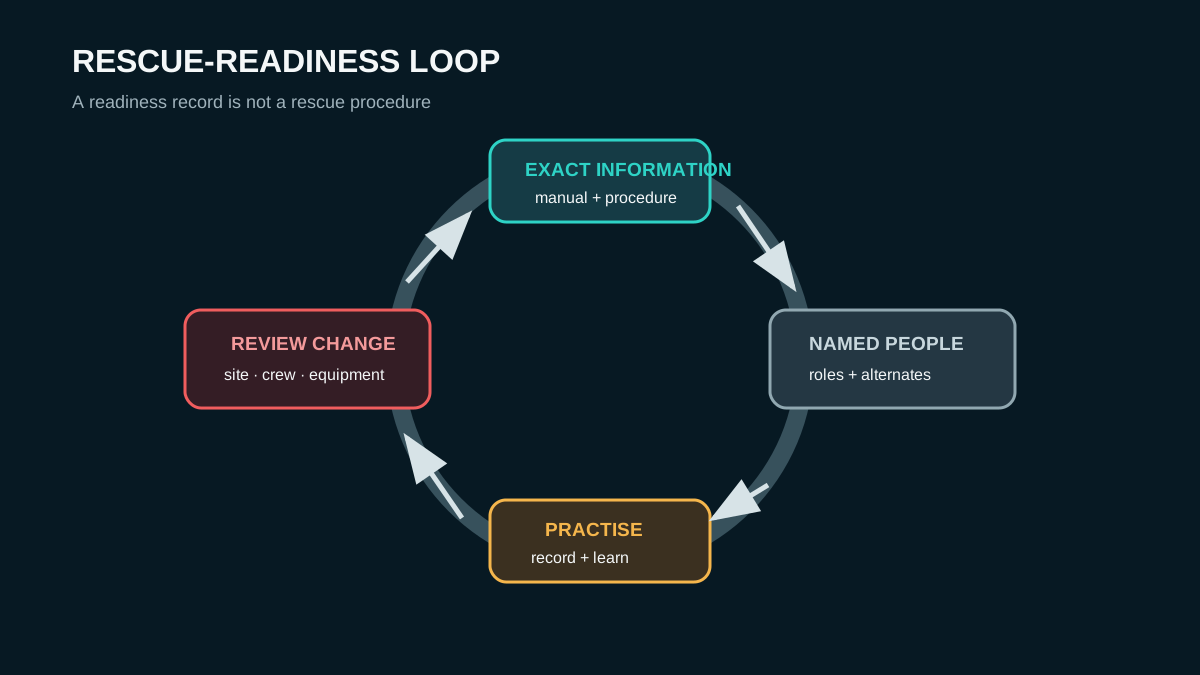
AI-assisted editorial diagram; not evidence of ARCLIFT equipment, configuration, project, capability or result. Tap to open the full-size editorial diagram. Follow the exact manufacturer instructions, approved site emergency arrangement and applicable local requirements; this loop is not a rescue procedure.
Confirm exact equipment information and procedures
Obtain the current manual
Verify the equipment identity, configuration, manual revision, language and controlled source. The record should identify where the manual is available at the work location and who confirms it matches the equipment. An archival range page, marketing image or another machine’s manual is not an acceptable substitute.
Do not extract isolated control labels into public content. The under-ceiling platform buyer guide keeps rescue beside access, floor, task and power inputs; it does not establish an ARC-F function.
Link to the approved site procedure
The site owner and employer should connect the equipment information to the site emergency arrangement, work zone, access restrictions, communications and external response interface. The competent person should review conflicts between the manual, task method and site conditions.
This article deliberately gives no button sequence, lowering step, override instruction or rescue technique. Those details can be dangerous when copied across equipment or contexts. Only the exact current instructions and approved site procedure control the response.
Confirm each function before it enters the record
List functions as unknown until the exact source confirms them. Record the function name, source section, applicable condition, authorised user and any stated limitations inside the controlled project file. If the function cannot be verified, redesign or hold the method.
Do not infer ground controls, emergency descent, lowering speed, remote rescue, auxiliary power or rescue points from the words “aerial platform,” “remote control” or “dual power.” The dual-power selection guide similarly treats a second source as an interface, not an emergency-function promise.
Name and prepare site-based people
Assign rescuers and alternates
Name the employer and site roles responsible for initiating the approved arrangement, using any confirmed equipment-specific function, controlling the area, communicating and meeting external support. Provide alternates for absences and shift changes. Public records should use role labels, not names or telephone numbers.
UK HSE’s GEIS6 official PDF supports, in UK MEWP guidance context, nominated and trained site-based people who are familiar with the specific machine, plus practice and review of rescue arrangements. It does not classify an ARC-F reference, prove a function, supply a universal procedure or establish legal applicability outside its scope.
Preserve familiarisation and training evidence
The employer should retain evidence that named people understand their assigned role, the exact equipment information and the site arrangement. Familiarisation with one machine or project does not automatically transfer to another. Record trainer or competent source, date, scope and expiry or review condition.
The trade-off is operational discipline: maintaining alternates and current evidence takes time, but an unpractised plan can depend on a person, control or access path that is not available. Treat a staffing change as a reason to review readiness.
Test communications and access
Identify the primary communication channel, fallback, alarm recipient and responsible coordinator. Confirm that the channel works in the actual work zone and that the people involved understand the message format. Keep sensitive telephone numbers and security information in the controlled record only.
Map the access route for site responders and external support. Barriers, stored materials, live operations, locked doors and another machine can block the route. Record who keeps it available and what condition stops the task.
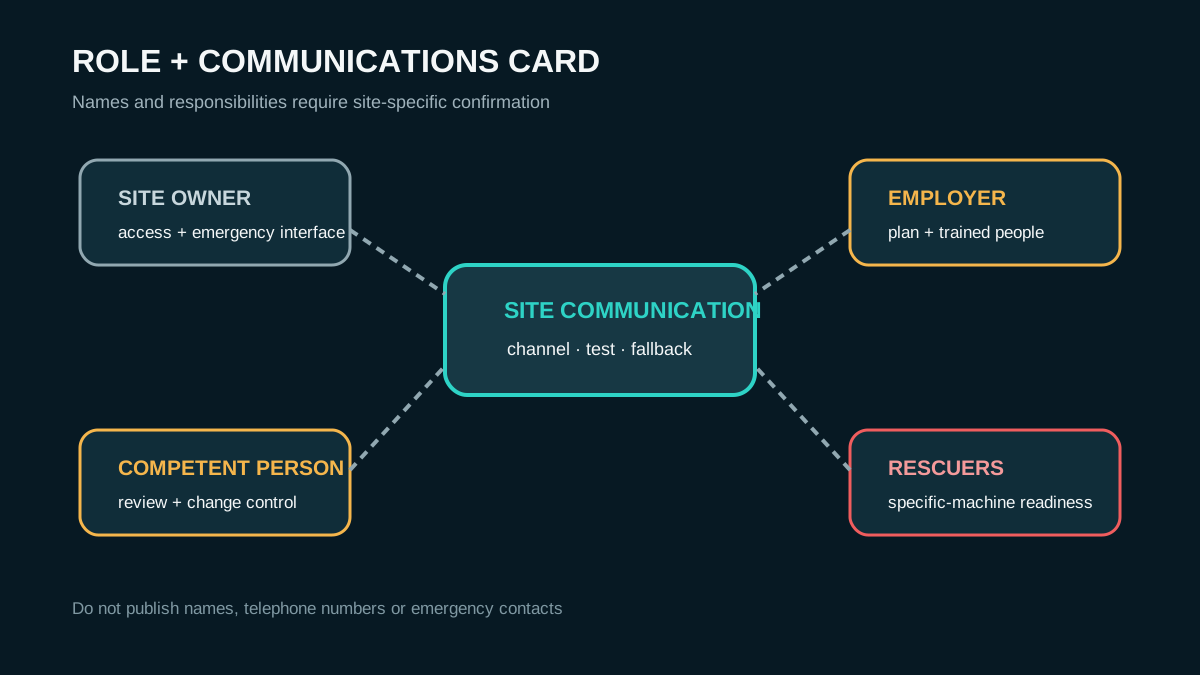
AI-assisted editorial diagram; not evidence of ARCLIFT equipment, configuration, project, capability or result. Tap to open the full-size editorial diagram. This role map cannot confirm responsibilities, control functions, training or access; site and exact-machine records must do so.
Practise, review and maintain readiness
Record practice without publishing sensitive detail
The employer and site owner should arrange practice appropriate to the exact equipment, approved procedure and work location, under competent control. The readiness record should capture date, participants by role, scenario, equipment identity, observations, corrective actions and closure.
Do not publish scenario details that reveal site security, access boundaries, contacts or equipment-control information. An exercise record is evidence that a defined practice occurred; it is not proof that every future scenario will be resolved.
Review changing conditions
Revisit the record when equipment, configuration, manual, work zone, ceiling geometry, route, floor, crew, shift, communication system, task, power source, barriers or site emergency arrangement changes. Withdraw superseded copies and confirm that named people receive the new version.
Different scenarios may need different escalation and immediate site decisions. Keep them separate rather than compressing them into one generic “lower the platform” statement. The record is not fit when the exact information and current conditions do not align.
Set a stop-work trigger
The method may not fit when the exact manual is unavailable, a required function is unknown, no trained site person is present, communications fail, the access route is blocked, practice reveals an unresolved issue, or the site emergency arrangement conflicts with the equipment instructions. Stop and route the issue to the site owner, employer, competent person and relevant manufacturer information owner.
Do not claim one-button or automatic rescue, universal ground controls, a lowering time, remote-control rescue assurance or rescue certification. Emergency services alone are not a substitute for an equipment-specific site arrangement.
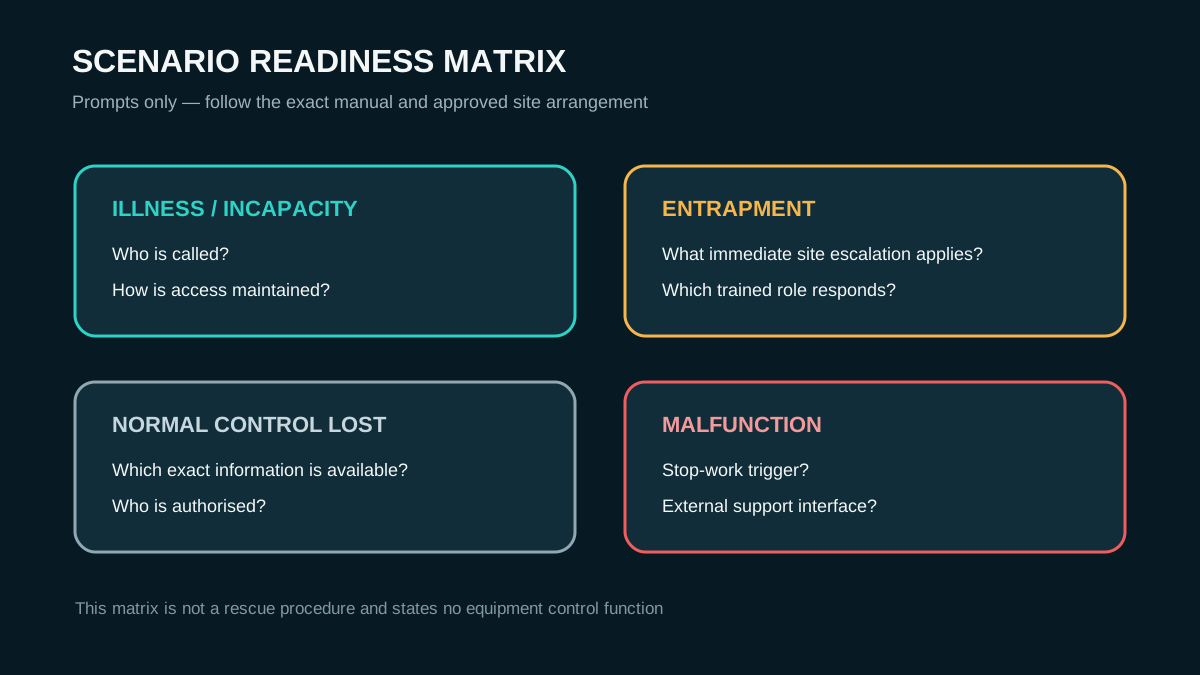
AI-assisted editorial diagram; not evidence of ARCLIFT equipment, configuration, project, capability or result. Tap to open the full-size editorial diagram. This is an editorial prompt, not a rescue procedure; controls may be used only by authorised, trained people following the exact approved information.
Issue the equipment-specific rescue-readiness record
- Site and destination jurisdiction, work-zone height, ceiling geometry, task owner and revision
- Exact equipment identity, configuration, current manual, manufacturer instruction and controlled source
- Access and transport route, floor status, work state, barriers and maintained response path
- Plausible scenario list without invented control functions, diagnosis or generic operating steps
- Approved site emergency procedure, employer owner, competent reviewer and interface with the manual
- Confirmed function reference, applicable conditions, authorised role and every unresolved unknown
- Named rescuers and alternates, familiarisation and training evidence, shift coverage and change trigger
- Primary communication channel, tested fallback, alarm recipient and external-support interface
- Practice date, scenario, role participation, observations, corrective action and closure owner
- Site access controls, protected area, service or power status and stop-work condition
- Redacted contacts, anonymised records, secure transfer owner and written publication boundary
Send only the readiness record for interface review
Send only the equipment-specific rescue-readiness record through a secure project channel to ARCLIFT as a technical selection and supply partner. Include the site and zone, height and ceiling context, access and transport route, floor status, destination context, exact manual reference, named-role coverage and unresolved interfaces. This request does not promise suitability, fit, approval, quotation, configuration, availability, result or response time. Final work requires project-specific signed arrangements controlled by the site owner, employer, competent person and current manufacturer instructions.
This article is editorial readiness guidance, not a rescue procedure, equipment manual, training course, legal conclusion or statement of an ARCLIFT function. Its AI-assisted editorial diagrams cannot establish controls, lowering, access, configuration, capability or result.
FAQ
What makes the record equipment-specific?
It identifies the exact equipment, configuration, current manual, applicable approved procedure, named trained people, work location, communications, access and practice evidence. Generic category information is not enough.
Who must be named?
The controlled record should name the employer and site roles assigned to coordination, the trained rescuers and alternates, the competent reviewer and the people who maintain access and communications.
Why practise?
Practice can reveal unavailable people, unclear communications, blocked access, document conflicts or misunderstood responsibilities before a real event. It must follow competent control and the exact approved information.
Does a remote control prove rescue capability?
No. A remote control label or image establishes no rescue function. Confirm every relevant function from the exact current manual and approved technical information, then integrate it into the site arrangement.