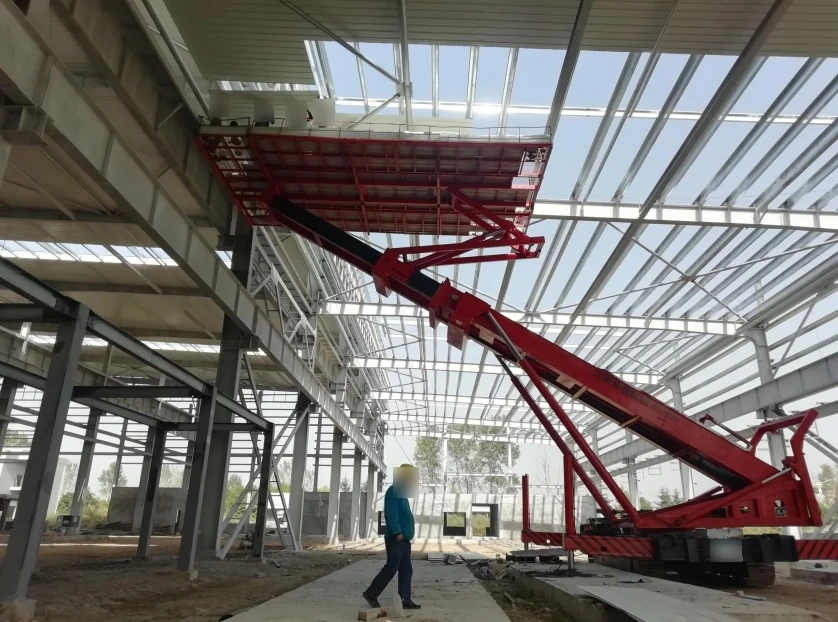
A training line in an equipment offer should explain what service is actually being proposed, for whom and with what stated outcome. It may describe an equipment introduction, a separately offered course or another defined activity. Those are different purchases. The buyer’s useful output is a purchased-service brief that names the audience, equipment basis, provider, deliverables and exclusions before the project treats the service as part of its receiving plan.
The familiarisation and handover guide addresses machine-specific information at delivery. This article asks how to specify a separate service offer. A crawler ceiling-platform reference establishes no course, qualification scheme or ARCLIFT training availability.
Contents
- Identify the service and intended participants
- Define the proposed equipment and delivered outcome
- Compare a handover introduction with a separate course
- Request a clear training-service proposal
- FAQ
Identify the service and intended participants
Ask the provider what the service actually is
Request its actual description of the proposed activity and distinguish it from the machine-supply heading. A sales demonstration can show selected features; a handover introduction can address identified equipment information; a separately proposed course can have its own stated audience and outcome. Do not rename one as another because the purchase order uses training as shorthand. Ask the actual provider to state the service offered, its scope and exclusions. This lets the buyer compare a real deliverable rather than an assumed promise about every knowledge or competence need of the receiving organisation.
Describe the participant roles without assuming a common need
Ask the receiving employer which roles the purchase should address. Operators, supervisors or a maintenance coordinator can need different information or service outcomes. Keep that audience definition with the enquiry, using role descriptions rather than private personal details in public examples. If several contractors are involved, ask which organisation is buying the service and whose participants it covers. One attendance record should not silently expand into an undertaking for all present and future staff. The actual provider must respond to the named audience, while the employers retain their own decisions.
Keep existing competence and requested service separate
Ask the receiving organisation what information about participant prerequisites it needs to establish and what the provider requires for the actual proposed activity. Do not invent eligibility rules, qualifications or equivalence. The buyer can identify the question and obtain the provider’s stated conditions without becoming a training authority. HSE’s training and competence guidance provides Great Britain work-equipment context for needs that depend on the activity, equipment and people. It does not approve a particular course or establish the requirements for this destination.
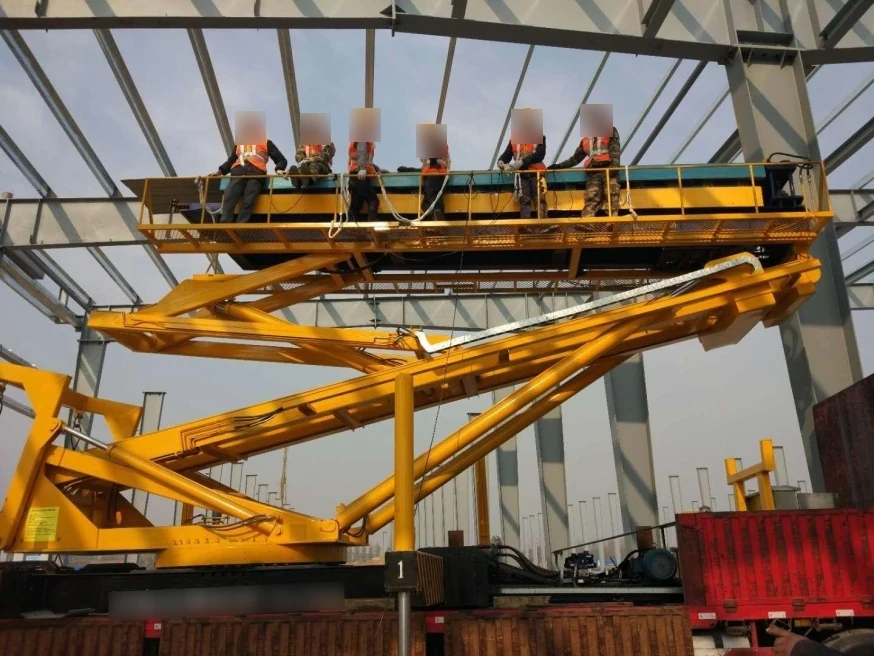
Reference photograph showing a yellow working platform beneath roof framing with vehicle-bed context. It does not verify a training session, qualified participants or a truck-platform model.
Define the proposed equipment and delivered outcome
Name the equipment basis of the service
Ask whether the proposed activity refers to the supplied configuration, another identified machine or a wider equipment category described by the provider. Record the actual scope instead of assuming all platform references share controls or use conditions. Where final equipment identity is still pending, ask what must be confirmed before the service can address it. A course description and a machine-specific explanation can both be useful while answering different needs. The buyer should know which one the actual offer proposes, rather than accepting a photograph of a platform as the service’s equipment specification.
Separate attendance, assessment and stated records
Request the actual deliverables: what record is issued, what it describes and who issues it. If an assessment is proposed, ask the provider to state its scope and outcome without inventing a pass condition or a credential. An attendance acknowledgement records participation; it should not be silently presented as proof of every competence or permission decision. The actual employer and applicable project process need to decide what information they require. Procurement should preserve the limited meaning of each proposed record so the purchased service can be checked against its own description.
State location, format and dependencies as commercial inputs
Ask the provider to identify the proposed location and format, equipment or facilities it needs and what the purchaser supplies. A remote document session and an activity using an identified machine have different dependencies. The buyer can request dates and participant availability through the actual proposal without this article setting a course duration or promising a provider schedule. Keep instruction language and access to the relevant documents visible. A service can be well defined yet still depend on equipment or people that are not available in the requested project window.
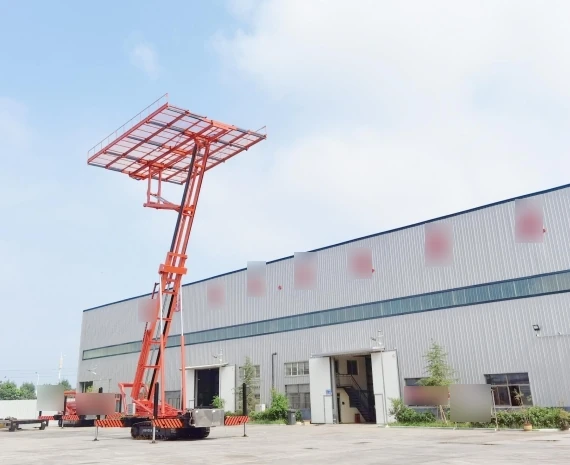
Reference photograph showing an empty platform beside building openings. It does not verify control functions, instruction coverage or operating permission.
Compare a handover introduction with a separate course
Work through two hypothetical service offers
Imagine an equipment offer includes an introduction to the supplied machine’s documents and options. A separate provider offers a defined course for a stated audience and equipment scope. These hypothetical services should not be ranked as if one automatically replaces the other. The introduction may address information specific to the delivered configuration, while the course has its own stated outcome and coverage. Ask the receiving employer which need each service addresses. The useful comparison identifies remaining gaps without declaring participant competence, course equivalence or permission to use a platform at the site.
Use a purchased-service comparison
| Service field | Equipment introduction | Separately proposed course |
|---|---|---|
| Purpose | Named machine-information handover | Provider’s stated course objective |
| Audience | Agreed receiving roles | Actual intended participant group and prerequisites |
| Equipment basis | Supplied configuration and documents | Provider’s identified equipment or category scope |
| Delivered record | Factual record of the agreed introduction | Actual record and stated assessment outcome, if proposed |
| Purchaser inputs | Machine, documents and receiving availability | Facilities, equipment and participant dependencies stated in offer |
| Exclusions | Other competence or site decisions | Machine-specific or site needs outside its stated scope |
The trade-off concerns coverage, format and dependencies. A more extensive service description is not automatically appropriate for every participant, and a convenient introduction is not automatically sufficient for a different training need.
Verify a claimed scheme through its actual source
If an offer names a scheme, recognition or credential, ask for the actual issuing body and scope before relying on the claim. This article establishes no approved scheme or provider and supplies no equivalence between records. The buyer should obtain current attributable information and let the receiving organisation’s responsible parties determine relevance. Keep the service offer separate from site permission and task suitability. Purchasing a course, receiving a card or attending a briefing does not itself assess the building, equipment condition, material interfaces or particular ceiling assignment described elsewhere in the project.
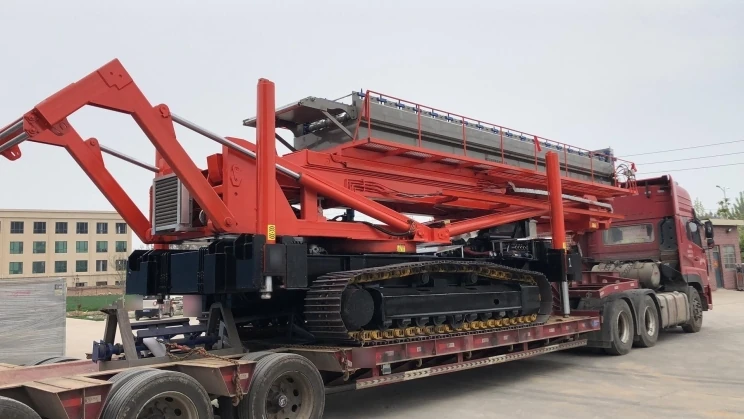
Reference photograph showing folded crawler equipment carried on a separate low-bed trailer. It does not verify a training delivery, provider capability or approved equipment transport.
Request a clear training-service proposal
Include six service-definition inputs
- State the actual service requested and distinguish it from equipment familiarisation or a sales demonstration.
- Identify the receiving roles and organisation, asking the provider for its actual participant prerequisites.
- Name the equipment or category basis and matching documents the service is expected to address.
- Request location, format, language, delivered records and any proposed assessment scope with exclusions stated.
- Give task height, site floor/access and work-zone context only as relevant project inputs, not proof of course coverage.
- Include destination documentation, transport and equipment-availability dependencies affecting the proposed service arrangement.
Ask the provider to return its own defined scope and any qualification of the request. The result should be a reviewable commercial service proposal rather than an unqualified promise that the workforce will be trained.
Keep completion evidence limited to the actual activity
After the purchased service, the receiving organisation should compare the actual delivered records with the agreed offer through its own process. Describe what occurred and preserve exclusions or missed scope rather than expanding a completion note retrospectively. If the equipment or participant requirement changes, ask the responsible employer and provider what further service is needed. The handover guide supplies the adjacent machine-information discussion. This page’s contribution is the initial service purchase: who provides what to whom, on which basis and with which actual deliverable.
Recognise a service proposal that may not fit
A proposal may not fit when it addresses another audience, equipment basis, language or outcome from the buyer’s need, or when essential facilities remain unavailable. This guide establishes no training provider, credential equivalence, competence, operating authorisation or service availability from ARCLIFT. It supplies no syllabus or equipment procedure. Actual provider claims require their own current evidence, and the receiving employer and project parties retain their applicable decisions. An equipment photograph cannot show that a training activity occurred or that a participant is qualified.
Ask about the separately requested service boundary
Send the training-scope enquiry to ARCLIFT with the audience, equipment basis and requested deliverables. Include site task height, floor/access context, destination and transport dependencies where they affect the proposed arrangement. Ask which equipment information can be coordinated and which service needs a separately identified provider. Final project-specific commitments require actual offers and responsible review. ARCLIFT is a technical selection and supply partner; these editorial photographs show no training session, qualification or course approval.
FAQ
Is machine familiarisation the same as a separate course?
Do not assume the scopes are interchangeable. Ask what the actual provider offers and which need the receiving organisation wants addressed. Keep machine-specific information, stated course outcomes and site decisions separate.
Does attendance establish competence or permission?
An attendance record has its own limited meaning. The responsible employer and project process must determine what evidence is needed for their decisions. This article grants no qualification, authority or permission to operate equipment.
Does ARCLIFT offer the training described here?
No particular training service is established by this article. Ask about actual available scope and provider identity through the enquiry. Any separate course or service needs its own attributable offer and evidence.
Can a proposed credential be treated as universally accepted?
No universal acceptance follows. Verify the actual issuer, scope and current information, then ask the receiving organisation’s responsible parties about the intended setting. Do not infer equivalence from a course title or sample card.